

A Short Narrative of Ishi
California History

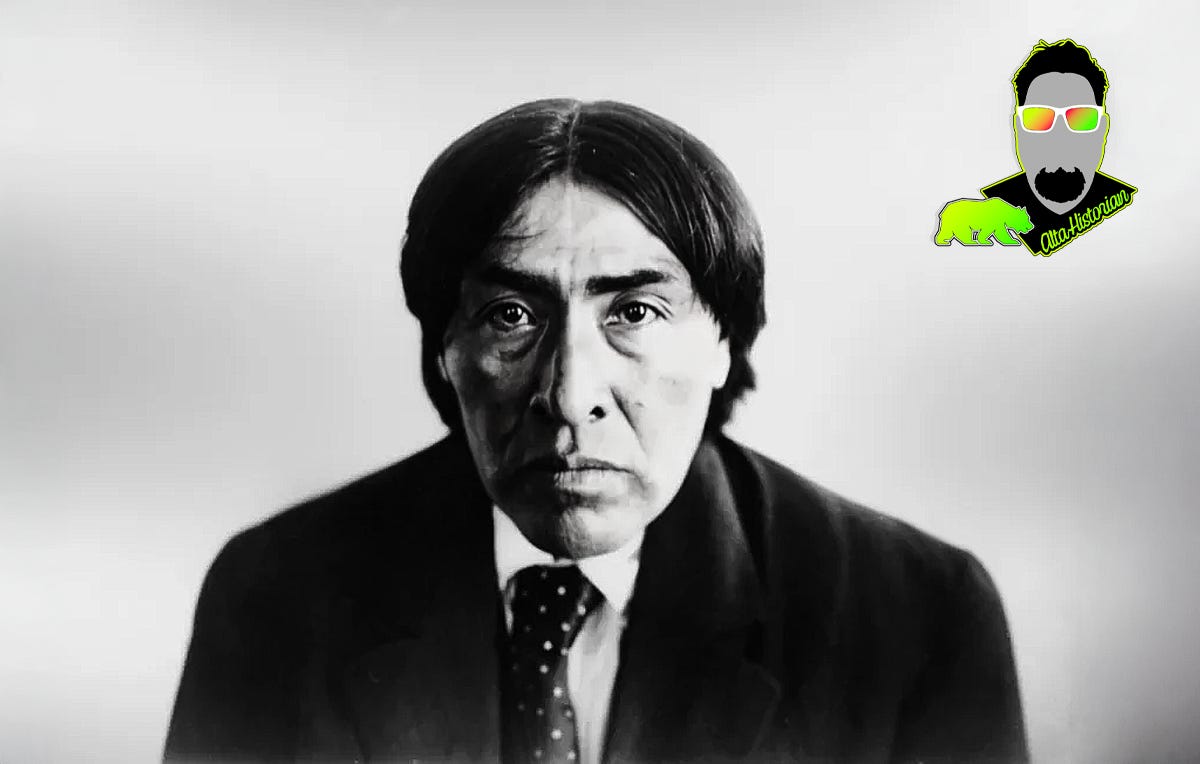
In August 1911, a starving Native American man emerged from the wilderness of Butte County and walked into Oroville, California, seeking food. What he found instead was instant spectacle. Newspapers seized upon his appearance and proclaimed him a marvel — a living remnant of a world they believed already extinguished. Anthropologists from the University of California, Alfred L. Kroeber and T. T. Waterman, identified him as the last known survivor of a remnant band of Yahi people, native to the Deer Creek region of northern California. With no one left who could speak his name, they supplied one themselves: Ishi — simply “man” in the Yahi language.
To understand how Ishi arrived alone in Oroville in 1911, we go back to the 1840s: a time when roughly 400 Yahi lived in California, part of a larger Yana population numbering perhaps 1,500. Even then, the world they inhabited was fragile. By 1849, the California Gold Rush tore open the region, unleashing a flood of settlers into Yahi territory. Violence followed with grim predictability. By the time Ishi was born, believed to be around 1860, his people were already under siege.
Beginning in 1865, the destruction of the Yahi accelerated into a systematic massacre. At the Three Knolls Massacre, roughly thirty were killed, including members of Ishi’s family — cattlemen hunted and killed another fifteen. In 1871, thirty were killed at Kingsley Cave in Morgan Valley. Between 1870 and 1911, the survivors entered what would later be called the Period of Concealment, when a remnant band — perhaps five to twenty individuals — withdrew into the Mill Creek. The group hid in the wilderness near Deer Creek and disappeared from the visible world.
For decades, they survived in silence. That silence was broken briefly on November 10, 1908, when a surveying party stumbled upon a small Yahi camp. Four people were present. Ishi escaped and disappeared into the surrounding landscape. The surveyors, acting not with violence but with curiosity, removed tools and artifacts from the abandoned site. Two years later, in October 1910, Waterman led an expedition into the Mill Creek region in search of the hidden band. He found, as he later wrote, “incontrovertible evidence of their existence in a wild state,” but encountered no one.
Less than a year later, Ishi emerged alone.
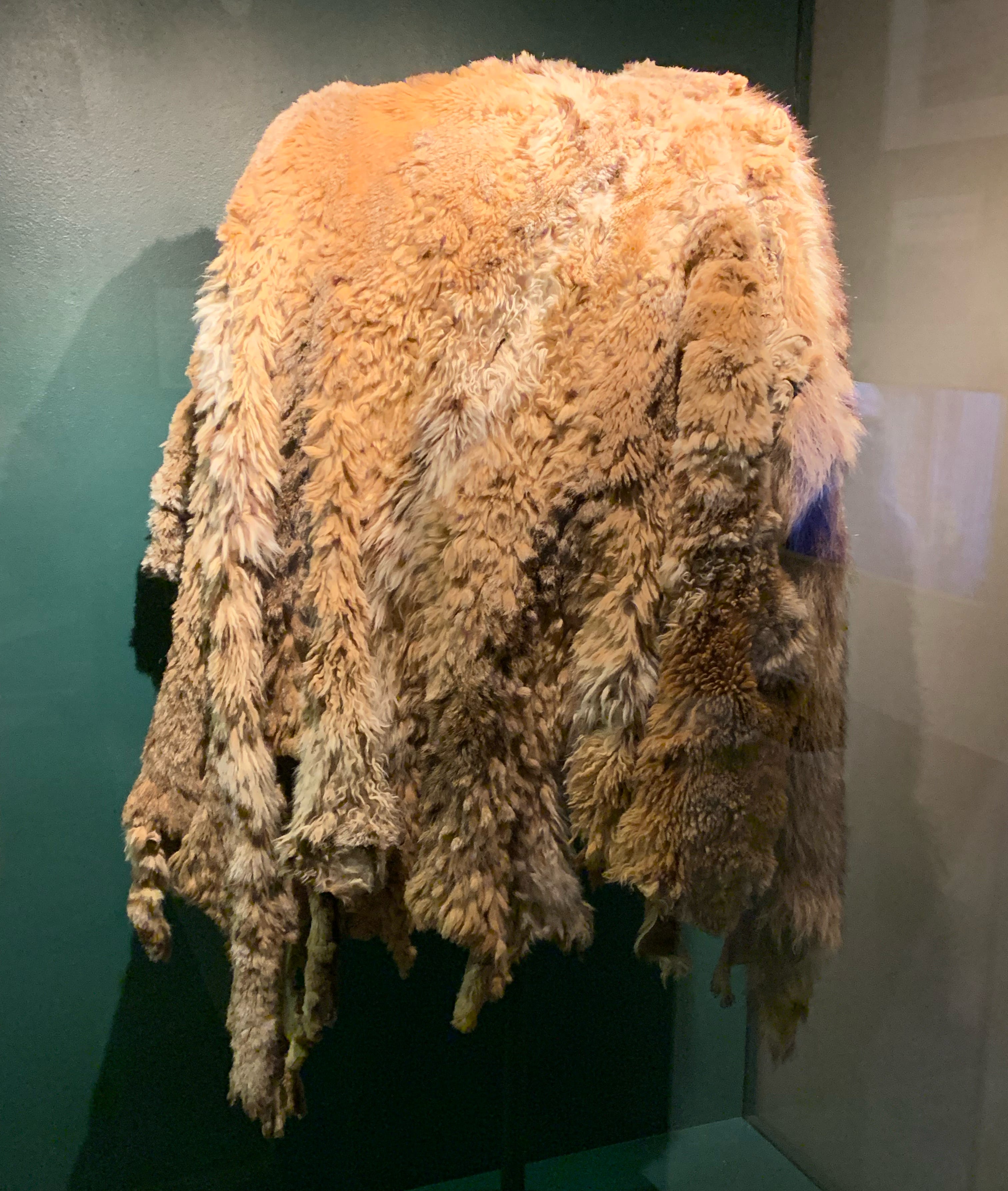
On September 4, 1911, Waterman brought Ishi to San Francisco, where he took up residence on the Parnassus campus of the University of California. Ishi went into the world of 20th-century civilization: Ishi stepped off the ferry boat, streetcars, bicycles, multistory buildings, and automobiles — and Ishi took up residence in a room at the Museum of Anthropology near Golden Gate Park. On one of the tables in the museum, he found the bows, arrows, and harpoons of his family members, and his fur cape, which the surveyors had stolen during a camp raid.
When the Museum of Anthropology opened there in October, Ishi was placed at its center. Over the next six months, more than 24,000 visitors passed through the museum to watch him make arrows, build fires, and perform the daily practices of Yahi life. On weekends, hundreds gathered to observe him. Newspapers repeatedly referred to him as the “last wild Indian,” delighting in accounts of his reactions to streetcars, theaters, and airplanes — as if modernity itself were the spectacle, reflected back through his eyes.
Within the university, however, a more complicated relationship unfolded. Anthropologists and physicians learned from Ishi as he demonstrated hunting techniques, toolmaking, and the songs and stories of his people. Respect, if uneven and incomplete, ran both ways. Waterman wrote admiringly of Ishi’s “gentlemanliness, which lies outside of all training and is an expression of inward spirit.” The surviving records suggest a relationship shaped not only by study, but by genuine regard.
Ishi’s health, meanwhile, steadily declined. On November 22, 1911, he was hospitalized with a respiratory infection — tests for tuberculosis were negative. On December 26, he was hospitalized again with bronchopneumonia, during which photographs and casts were taken of his feet. In September 1912, he returned to the hospital with abdominal pain. Around this time, he became acquainted with the university surgeon Saxton Pope, and the two began a collaboration centered on archery.
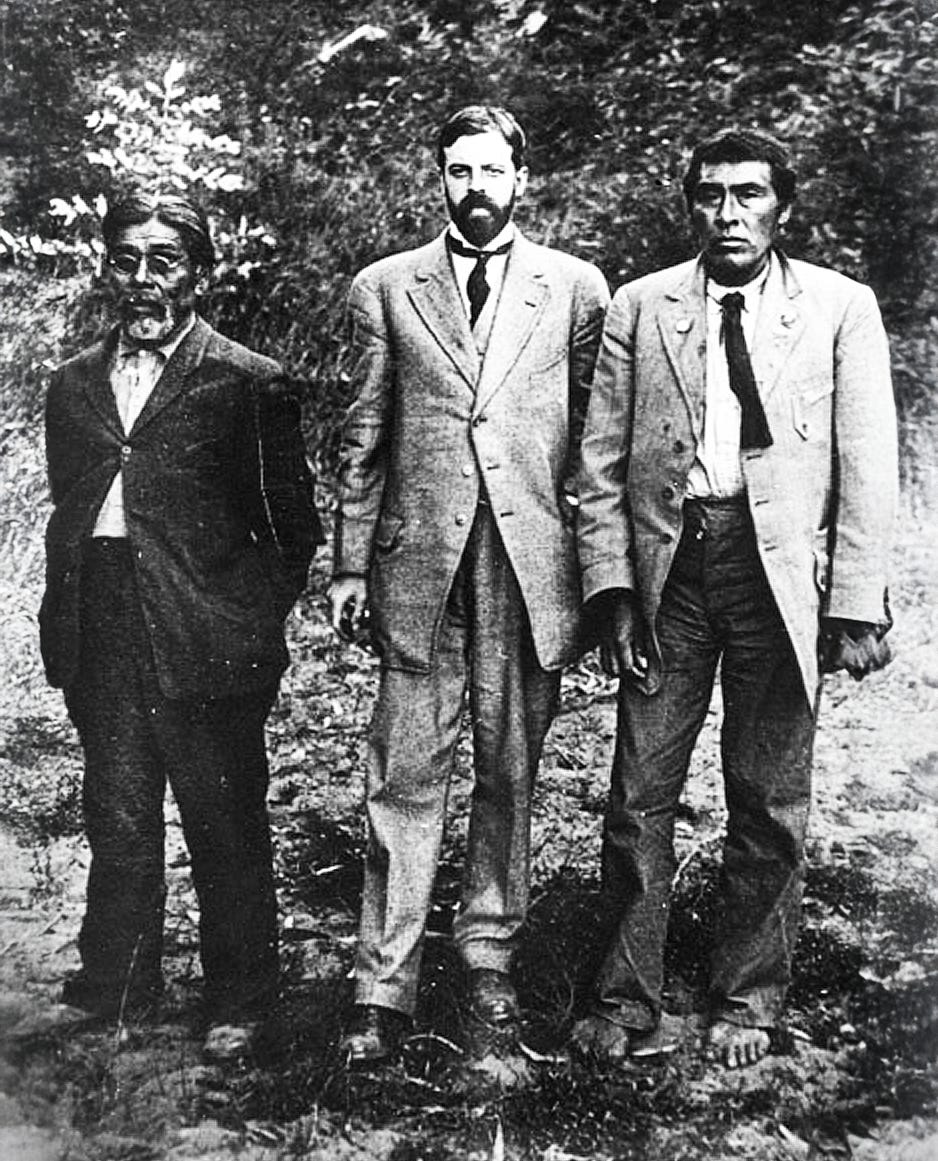
The hospitalizations continued. In May 1913, Ishi was treated for back pain. In May 1914, Pope compiled a complete clinical history, noting “no premonition of illness.” That summer, Ishi returned with Waterman, Pope, and Kroeber to the Deer Creek region of Tehama County, revisiting and mapping the landscape of his homeland — a place emptied of its people but not of memory.
From December 10, 1914, to February 1, 1915, Ishi spent sixty-two days hospitalized. Early in 1915, tuberculosis was diagnosed for the first time. That summer, he worked with linguist Edward Sapir and stayed with the Watermans in Berkeley, where he was described as being “carefully looked after.” On August 22, 1915, he was hospitalized again for six weeks before returning to the Museum of Anthropology.
As his condition worsened, Kroeber — writing from New York — grew increasingly concerned about how Ishi should be treated in his final days. He insisted that Ishi was not a specimen but a friend. In a letter dated March 24, 1916, Kroeber rejected the claims of scientific entitlement with rare clarity: “As to the interests of science, say for me that science can go to hell. We propose to stand by our friends.”
The next day, March 25, 1916, Ishi died at the UC Hospital from advanced pulmonary tuberculosis. An autopsy was performed, and his brain was removed and preserved, despite earlier objections. His funeral was private. A small circle of friends — Waterman, Pope, Gifford, and others — accompanied his body to cremation. Placed in the coffin were items believed to reflect his wishes: a bow, dentalium shells, shell bead money, tobacco, rings, and obsidian flakes. His ashes were sealed in a Pueblo jar and interred at Mount Olivet Cemetery.
For decades, Ishi’s story persisted through scholarship, memory, and retelling. Then, in 1997, renewed scrutiny revealed that his brain had not been cremated with the rest of his remains. Investigations confirmed that it had been sent to the Smithsonian Institution in 1917, where it remained for more than sixty years.
In response, federally recognized tribes joined together to seek reunification and repatriation. After investigations, hearings, and sustained public debate, Ishi’s remains were returned to culturally affiliated Native people. In May 2000, a conference in Oroville memorialized him as a man whose life had carried the accumulated weight of an entire people’s history.

Bibliography | Notes
University of California, San Francisco. “Ishi with Kroeber and Batwai,” A History of UCSF. UCSF Library. Accessed January 22, 2026. https://history.library.ucsf.edu/theme_photo8b.html.