


The Declaration of Independence catalogued many offenses committed by the British Crown, but one accusation carried a particularly vivid emotional charge. King George III, the document charged, was “transporting large Armies of foreign Mercenaries to complete the Works of Death, Desolation and Tyranny.”
The Declaration did not identify these mercenaries by name. To Americans, however, little doubt remained: they were the Hessians. Soldiers from several German states fought under the British flag, but Americans collapsed them all under that single name, as though contempt itself had settled the taxonomy.
Curiously, Thomas Jefferson’s original draft — approved by fellow committee members John Adams, Benjamin Franklin, Roger Sherman, and Robert Livingston — named only one foreign person by region. Near the conclusion of that draft, Jefferson lamented that Americans had appealed to “our British brethren,” only to see them permit their magistrate to send “not only soldiers of our common blood, but Scotch & foreign mercenaries to invade and deluge us in blood.” The Hessians would arrive in infamy later. In the drafting room, it was the Scots who first drew Jefferson’s pen.
War is a great clarifier of power, and not always in ways that flatter the powerful.
One of the darkest aspects of the Revolutionary conflict involved sexual violence. In early American society, men often leveraged their positions as masters, fathers, or civic authorities to coerce sexual relations — a violence insulated by custom and shame. Military personnel operated differently. They relied upon their identity as warriors, and during the Revolutionary War, that identity produced assaults that were more overt and more brutal than those common in peacetime.
First-person accounts from the era describe rapes committed by British soldiers that were public, forceful, and frequently accompanied by other forms of violence. Unlike peacetime attackers, soldiers rarely bothered to simulate consensual social norms. They weren’t hiding.
Because of that very openness, women assaulted by enemy soldiers often reported their grievances more quickly and with less mediation by community leaders. Ironically, such cases more closely matched the prevailing cultural image of rape in early America than did many peacetime assaults. As a result, wartime offenders were sometimes prosecuted more vigorously and punished more severely than their domestic counterparts — not because the law had grown more just, but because the enemy wore a uniform.
Print culture of the Revolution frequently placed sexual violence alongside other wartime atrocities. One observer described how even Loyalist homes “were burnt: their wives and daughters pursued and ravished.” A newspaper printed a letter from a Continental Army colonel who condemned British soldiers as “devils incarnate,” declaring that murder, rape, and violence formed the full dark catalogue of their transactions. Other reports denounced the “burning, plundering, ravaging and ravishing” attributed to British soldiers and their Hessian auxiliaries. Patriot publications used such stories not merely to record suffering but to justify resistance. Sexual violence was reframed as a crime not only against women but against families and the social order itself — a violation of the household that stood as a microcosm of the republic being born.
A letter from the Philadelphia Council of Safety urged Americans “to secure your property from being plundered, and to protect the innocence of your wives and children” by joining the Patriot cause. A newspaper in 1777 warned readers that resistance to the British advance would save “female innocence from brutal lust and violence.” In 1778, a New England minister asked his congregation how they could hear “the cries and screeches of our ravished matrons and virgins that had the misfortune to fall into the enemies’ hands” and still contemplate a return to British rule. Another newspaper concluded grimly that nothing had united the colonies more firmly than “the brutal cruelty of the British troops … they ravish virgins before the eyes of their parents.”
Such rhetoric framed Americans as victims of improperly wielded power. One writer extended the language of natural rights itself when condemning British soldiers for their “merciless depredations upon the chastity, property, liberty, and happiness of their vassals.” Another catalogue of British misbehavior, published in 1777, went further still, comparing the soldiers’ assaults on women with the moral corruption emanating from “persons and bodies of the highest rank in Britain … King and Parliament.” The soldiers and their sovereign were, in this reading, of a piece.
Within this moral framework, rape became evidence of illegitimate rule. Legitimate patriarchs — whether fathers of households or fathers of nations — did not commit such crimes. Narratives of assault, therefore, helped construct a collective identity of resistance, uniting American men as defenders of families and communities against an empire that had revealed its true nature.
Even George Washington cast the struggle in these terms. American soldiers must distinguish themselves from their enemies through restraint and humanity, he insisted, declaring that “humanity and tenderness to women and children will distinguish brave Americans, contending for liberty, from infamous mercenary ravagers, whether British or Hessians.” The contrast was not a rhetorical ornament. It was, for Washington, a matter of republican survival.
Stories of wartime sexual violence thus served a powerful political purpose: they contrasted American virtue against British savagery and deepened the moral argument for rebellion.
Then came the Christmas crossing.
On Christmas night 1776, Washington led his troops across the Delaware River and struck the German soldiers stationed at Trenton. The victory was swift and decisive. More importantly, it lifted the morale of an army that had been bleeding retreat for months.
The three-week campaign culminating at Trenton displayed Washington’s qualities at their best — fidelity to republican principles, perseverance under pressure, dignified personal conduct, aggressive strategic thinking, and decisive leadership. It was the kind of concentrated character that tends to appear only when circumstances leave no room for anything else.
The consequences reached beyond morale. The victory shattered the British “pacification” campaign in New Jersey. Earlier that month, British forces had driven the Continental Army from the state and spread garrisons throughout the region, confident that resistance had been crushed. By striking the outpost at Trenton, Washington forced the British to consolidate. Patriot militias emerged from hiding and punished those who had reaffirmed their loyalty to the Crown. The well-timed blow disrupted General William Howe’s strategy and turned the war’s momentum in ways that neither side had quite expected.
British planners had long hoped to divide and conquer the colonies by seizing New York and controlling the Hudson River. They believed the region contained the largest concentration of loyal subjects, and that severing the Hudson corridor would isolate New England from the rest of the colonies — cutting the rebellion at its neck.
In 1777, General John Burgoyne began advancing south from Canada with an army of approximately 7,800 soldiers along the Hudson River valley. The operation — sometimes called the “lake-route” invasion — brought with it nearly a thousand camp followers, four hundred horses, and four hundred Native American allies. It was a substantial machine. What it lacked was an exit.
On July 6, British forces captured Fort Ticonderoga with surprising ease after American troops abandoned the position. Burgoyne pushed slowly southward. General William Howe, who was supposed to coordinate a complementary push, sailed instead toward Philadelphia. The strategy required two armies moving in concert. What it got was one army moving alone into an increasingly hostile country.
After reaching the Hudson River, Burgoyne encountered a much larger American force commanded successively by General Philip Schuyler and General Horatio Gates, with the aggressive energy of Brigadier General Benedict Arnold animating the resistance from within. Cut off from reinforcements and short of supplies, Burgoyne’s army began to grind down.
A western column under Barry St. Leger was halted at Fort Stanwix, where American defenders refused to yield between August 2 and August 23. Reinforcements sent to relieve the siege encountered fierce militia resistance. The campaign also produced one of the bloodiest single engagements of the war, at Oriskany, New York, where Mohawk leader Joseph Brant and British-allied Native forces ambushed New York militia in a narrow ravine. Roughly five hundred of the eight hundred forty men engaged in that multiethnic battle were killed — a stunning cost for a single afternoon’s fighting.
Despite the carnage, Burgoyne continued southward until he found American forces waiting near Saratoga. The first battle on September 19 shook his army after sharp clashes with Arnold and Daniel Morgan’s riflemen, though the British held the field by day’s end. The second battle, on October 7, changed everything. Arnold led an assault that forced the British to retreat. With no aid coming from Howe, no relief from St. Leger, and no way forward, Burgoyne surrendered to Gates on October 17, 1777, north of Saratoga Springs.
The American victory at Saratoga halted Britain’s attempt to divide the colonies and transformed the international character of the war. What had been a rebellion became, in the eyes of Europe’s courts, something else entirely — and the consequences of that transformation would reach further than any army could march.
The surrender at Saratoga did not merely end a battle. It changed what kind of war this was.
In February 1778, diplomatic efforts and military successes persuaded France to formally enter the conflict as an ally of the United States. French agents had already been supplying weapons and advisers from the shadows, but the alliance transformed a colonial rebellion into an international struggle — one that Britain’s enemies had been waiting years to join. France’s motivations were strategic as much as ideological. French leaders wanted to bleed their longtime rival, and they were patient enough to understand that even an American defeat, drawn out long enough, would drain British money and men.
By 1779, the war had gone global. Spain joined as France’s ally and declared war on Great Britain. What had begun in Lexington now stretched across oceans.
None of this made the American situation comfortable. British forces captured the Patriot capital at Philadelphia. British leaders even proposed a negotiated settlement that would end the war without recognizing American independence — a deal that might have appealed to a people exhausted enough. Americans refused. Morale held, but shortages of food and equipment gnawed at the Continental Army. In December, a weary and determined force marched into winter quarters at Valley Forge. Later, the army endured even worse at Morristown, New Jersey, where supplies were scarcer and the cold more severe. The republic was surviving on will.
While the war ground on along the eastern seaboard, a different and older conflict raged across the interior of the continent. Native American nations fought for their own independence, their land, and their survival amid a war that white Americans described as being about liberty.
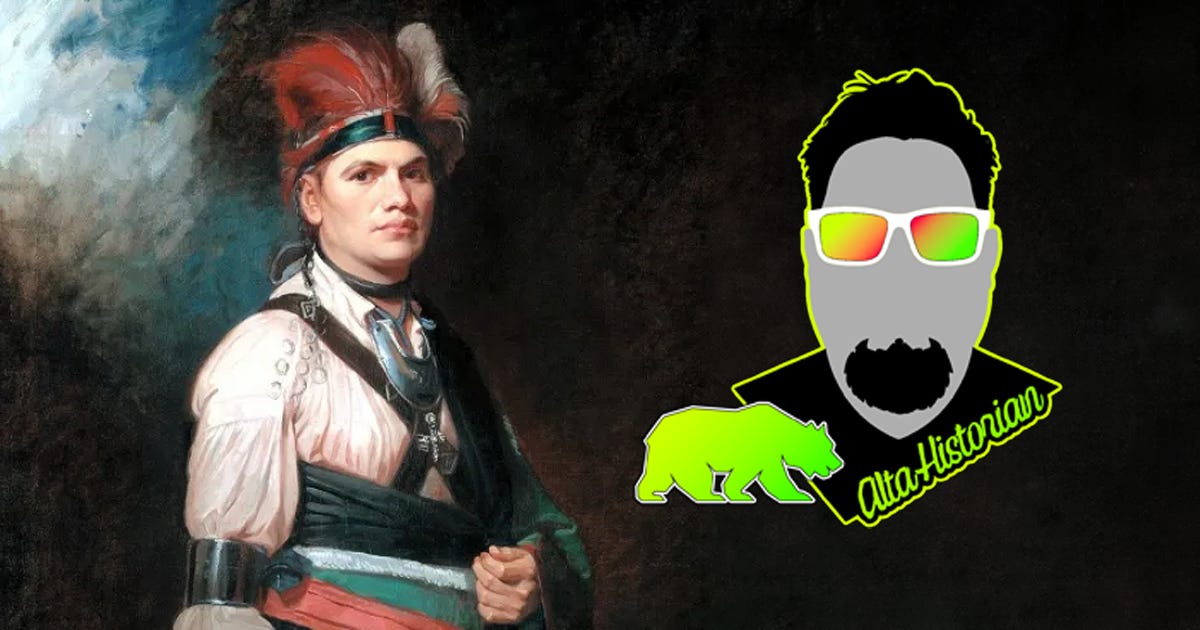
In New York’s Mohawk Valley, the violence was exceptional in its intensity. The Battle of Oriskany marked the beginning of three years of terror for local inhabitants. Throughout 1778, Loyalists and Native warriors raided farms, killing or capturing residents with a ferocity that made the valley’s name synonymous with ruin.
American forces retaliated by destroying Joseph Brant’s home village. In 1779, George Washington authorized a campaign against the Iroquois intended to bring “total destruction and devastation” to Native settlements across central New York. Nearly forty towns were burned to the ground. The man who had insisted his soldiers distinguish themselves from “infamous mercenary ravagers” had now authorized a campaign that would have been recognizable to any empire.
By 1780, few Native groups remained neutral. Most allied with the British or moved toward Spanish territory. Those who sided with the Americans often did so out of calculation rather than sympathy, believing the Americans were likely to prevail and hoping that alignment might preserve some measure of autonomy. It rarely did. Even friendly Native allies frequently suffered poor treatment — a demonstration, if one was needed, of how little room for victory existed for Indigenous nations in any outcome of this war.
Meanwhile, the war moved south, chasing a new British theory of victory.
British leaders had abandoned the effort in New England and concentrated their strategy on Georgia and South Carolina, convinced the region harbored large numbers of Loyalists and that its enslaved population might destabilize the Patriot cause from within. Georgia fell quickly at the end of December 1778. British forces then besieged Charleston, where ten Continental regiments held the city for five weeks before surrendering in May 1780.
General Charles Cornwallis imposed military rule across South Carolina. American forces attempted to resist and suffered a devastating defeat at the Battle of Camden in August 1780 — one of the worst American losses of the entire war.
The year 1780 was a disaster by almost any measure. Economic turmoil, military defeat, and treason arrived together, as though conspiring to test whether the republic had the constitution to survive.
The treason was Benedict Arnold’s, and it hit differently than a battlefield loss. Arnold had been a genuine hero in earlier campaigns, but he had convinced himself that he had not received proper honor or adequate financial compensation for his sacrifices. Beginning in 1779, he quietly traded information to the British for money and laid plans to surrender the strategic fortress at West Point. When American forces intercepted the courier carrying Arnold’s designs to British commander Henry Clinton, the plot collapsed. Public outrage proved useful — it drew a sharp moral line between American virtue and treachery at a moment when the republic desperately needed the distinction.
The war’s decisive phase unfolded in Virginia, of all places, and it turned on water.
In 1781, a French fleet defeated British naval reinforcements near the Chesapeake Bay after five days of fighting, leaving the French in control of the coast. That naval victory proved the hinge of everything. Without it, the British could rescue Cornwallis. With it, they could not.
British forces had already captured Williamsburg and raided Charlottesville, seizing members of the Virginia assembly in the process — audacious moves that encouraged Cornwallis to move toward Yorktown and await reinforcements. Instead, he found himself surrounded. Nathanael Greene’s strategic campaign in the Carolinas had steadily weakened British positions across the South, while French and American armies converged on Virginia from the north. Cornwallis’s force of roughly 7,500 men faced a combined Franco-American army of about 16,000.
For twelve days, allied artillery worked steadily through British fortifications at Yorktown. On October 19, 1781, Cornwallis surrendered.
Yet Yorktown did not end the war immediately — a fact that tends to get lost in the clean narrative of triumph. British garrisons remained in several American cities. Skirmishes continued along the frontier. It was not until the spring of 1782 that Britain began peace negotiations, and not until November that a preliminary agreement was drafted. Fighting continued at sea among British, French, and Spanish fleets, and warfare with Native nations persisted along American frontiers with a momentum that no treaty would easily arrest.
The Treaty of Paris, signed on September 3, 1783, formally recognized American independence. It established the Mississippi River as the western boundary of the new nation, guaranteed that creditors on both sides could collect debts in sterling, and prohibited the British from evacuating enslaved people — a provision that revealed, with quiet precision, what the revolution had and had not resolved.
When the war ended, George Washington did something that astonished the world.
Having completed his task, he resigned his military commission to Congress, offered an emotional farewell to his officers, and returned quietly to his plantation in Virginia. In many revolutions — French, Russian, Chinese — victory produced dictatorship. The American Revolution produced a republic. Washington’s refusal to hold power was one of the chief reasons why.
The war had revealed both cruelty and restraint, sometimes in the same army. British authorities often treated captured Americans as traitors rather than prisoners of war. Thousands were confined on prison ships anchored between Manhattan and Brooklyn, where overcrowding, disease, and starvation killed more than half of the fifteen thousand prisoners held there. Parliament suspended habeas corpus in 1777 for colonists accused of treason. The empire, it turned out, had its own catalogue of darkness.
Washington insisted on a different standard. British prisoners were placed in rural camps where they could cultivate gardens, move during the day, and sometimes hire themselves out as laborers. Whether this was principle or strategy or both, it amounted to the same thing — a visible contrast that the new republic needed the world to see.
Economic strain was another matter. The Continental Congress had printed paper currency that depreciated rapidly, unbacked by gold or silver. Congress borrowed from wealthy individuals through certificates promising repayment with interest and paid soldiers partly with land grants that lost their value almost as fast as the paper. Inflation and scarcity ground people down. Rising prices demoralized Americans, and a black market in luxury goods flourished alongside the austerity — human nature being what it always is.
After independence, the challenge became building something that could last.
In February 1789, George Washington was elected the first president unanimously, the electoral vote confirming what the country already understood. John Adams became vice president. Washington knew that every action he took would establish precedent — that the republic had no template, only the man. His greatest achievement may have been transferring his own reputation for integrity into the office itself, elevating the public good above private ambition and maintaining a dignified distance that made respect for the new government feel natural rather than demanded.
His cabinet reflected both experience and talent: Henry Knox at the Department of War, Alexander Hamilton at the Treasury, Thomas Jefferson as Secretary of State, Edmund Randolph as Attorney General, and John Jay as the first Chief Justice of the Supreme Court. These were not small appointments. They were the architecture of a government that had not yet proven it could stand.
Many states would not ratify the Constitution without explicit guarantees of individual liberties. Seven ratified only on the condition that amendments protecting personal freedoms be added. James Madison drafted what became the Bill of Rights, drawing heavily from language in existing state constitutions. The amendments guaranteed freedoms of speech, press, and religion — the rights of petition and assembly, protection against unreasonable searches, and the right to bear arms in support of a “well-regulated militia.”
Ratification took two years but proceeded without serious doubt, and ten of the twelve proposed amendments were approved. Interestingly, few at the time objected to the absence of the right to vote. Only later would voting be widely regarded as a fundamental liberty requiring its own constitutional protection — a silence that the republic would spend generations learning to hear.
The early republic’s first test of authority arrived from an unexpected direction: whiskey.
To finance the national debt, Alexander Hamilton persuaded Congress to impose a twenty-five percent excise tax on whiskey. Farmers would pay when bringing grain to distilleries, and the cost would ultimately be passed on to consumers. The measure proved deeply unpopular across western Pennsylvania, Virginia, Maryland, Kentucky, and the Carolinas. Many farmers simply ignored the law. Others threatened tax collectors with violence.
When collector John Neville filed charges against seventy-five farmers and distillers for evasion, tensions escalated into something that looked, from a distance, uncomfortably like another rebellion. By late July, nearly seven thousand Pennsylvania farmers were planning a march on Pittsburgh.
Washington responded without hesitation. He nationalized the Pennsylvania militia and personally led an army of thirteen thousand troops into the region, Hamilton riding at his side. By the time the force arrived, the rebellion had already collapsed — less a defeat than a dissolution, the farmers concluding that this government, unlike the last one, was not going to negotiate with defiance.
The Whiskey Rebellion demonstrated that the new federal government possessed both the authority and the will to enforce its laws. Thomas Jefferson and others feared the government had overreached. They were not entirely wrong. But the episode showed that the fragile republic could withstand internal disorder without becoming the tyranny it had been built to replace.
Thus, the Revolution that began with philosophical arguments about natural rights concluded with something rarer and more difficult — a functioning political order. An experiment in republican government sustained not by conquest or coercion, but by institutions, restraint, and the deliberate exercise of power by men who understood, at least sometimes, what they were building and what it would cost to keep it.

Bibliography | Notes
Davis, Paul K. 100 Decisive Battles: From Ancient Times to the Present. New York: Oxford University Press, 2001.
Foner, Eric, and John A. Garraty, eds. The Reader’s Companion to American History. Boston: Houghton Mifflin Harcourt Publishing Company, 1991.
Jefferson, Thomas. Drafts and debates surrounding the Declaration of Independence.
Locke, Joseph L., and Ben Wright, eds. The American Yawp: A Massively Collaborative Open U.S. History Textbook. Vol. 1, To 1877. January 2019.
Roark, James L., Michael P. Johnson, Patricia Cline Cohen, Sarah Stage, and Susan M. Hartmann. The American Promise, Value Edition, Volume 1: To 1877. Bedford/St. Martin’s, 2014.
Schweikart, Larry, and Michael Allen. A Patriot’s History of the United States: From Columbus’s Great Discovery to the War on Terror. New York: Sentinel, 2004.
Sharon Block, “Rape in the American Revolution: Process, Reaction, and Public Re-Creation, chapter in book Sexual Violence in Conflict Zones (University of Pennsylvania Press, 2011).
Zinn, Howard. A People’s History of the United States. New York: Harper & Row, 1980.Luther, Martin. Protestant Reformation, sixteenth century.