

Andrew Jackson & the Bank War
United States History

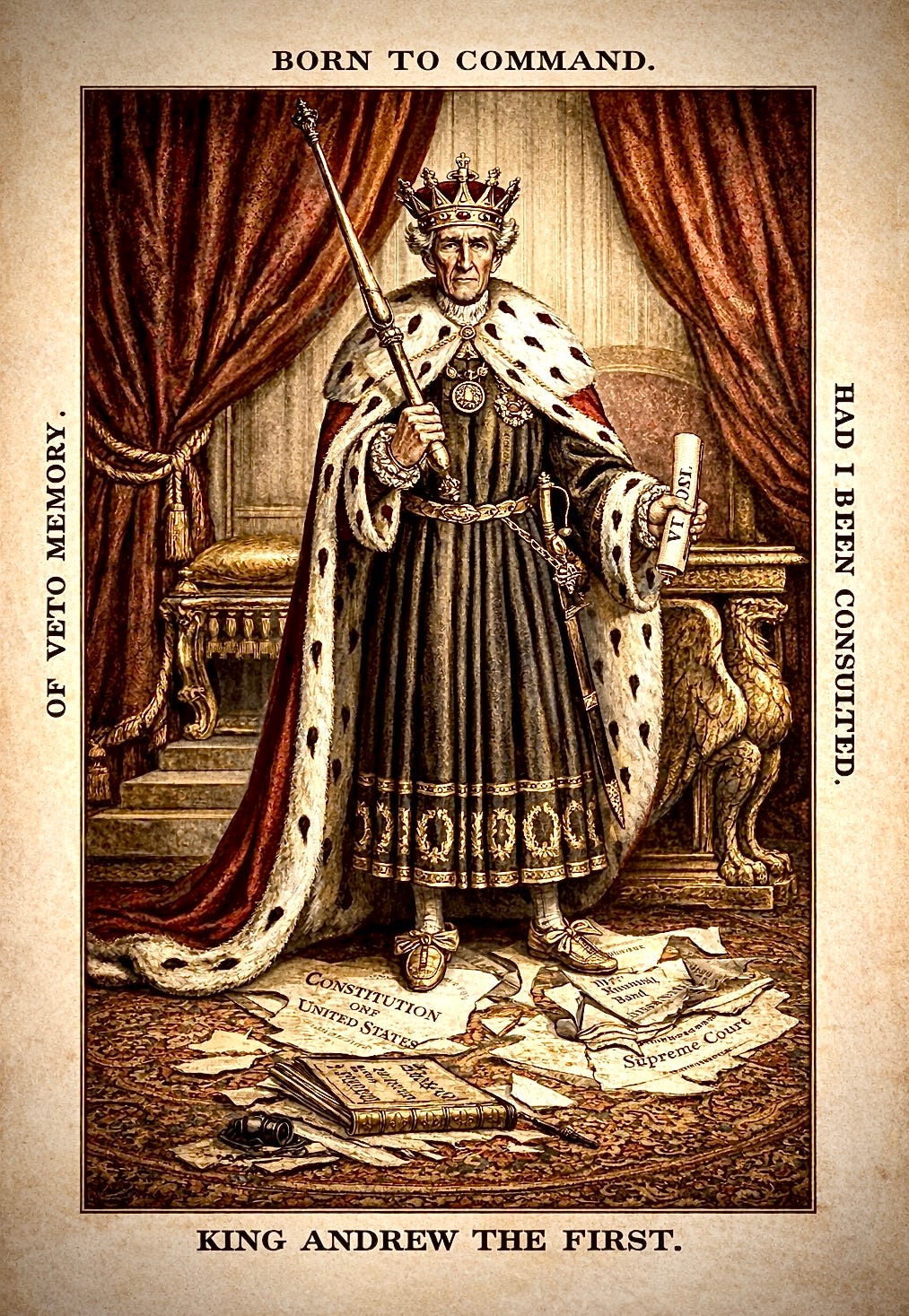
I thought this might be an appropriate post, considering what The Donald is up to these days. If it’s not clear now, it may clear up as we move past midterms. My prediction? The Don is going after the banks.
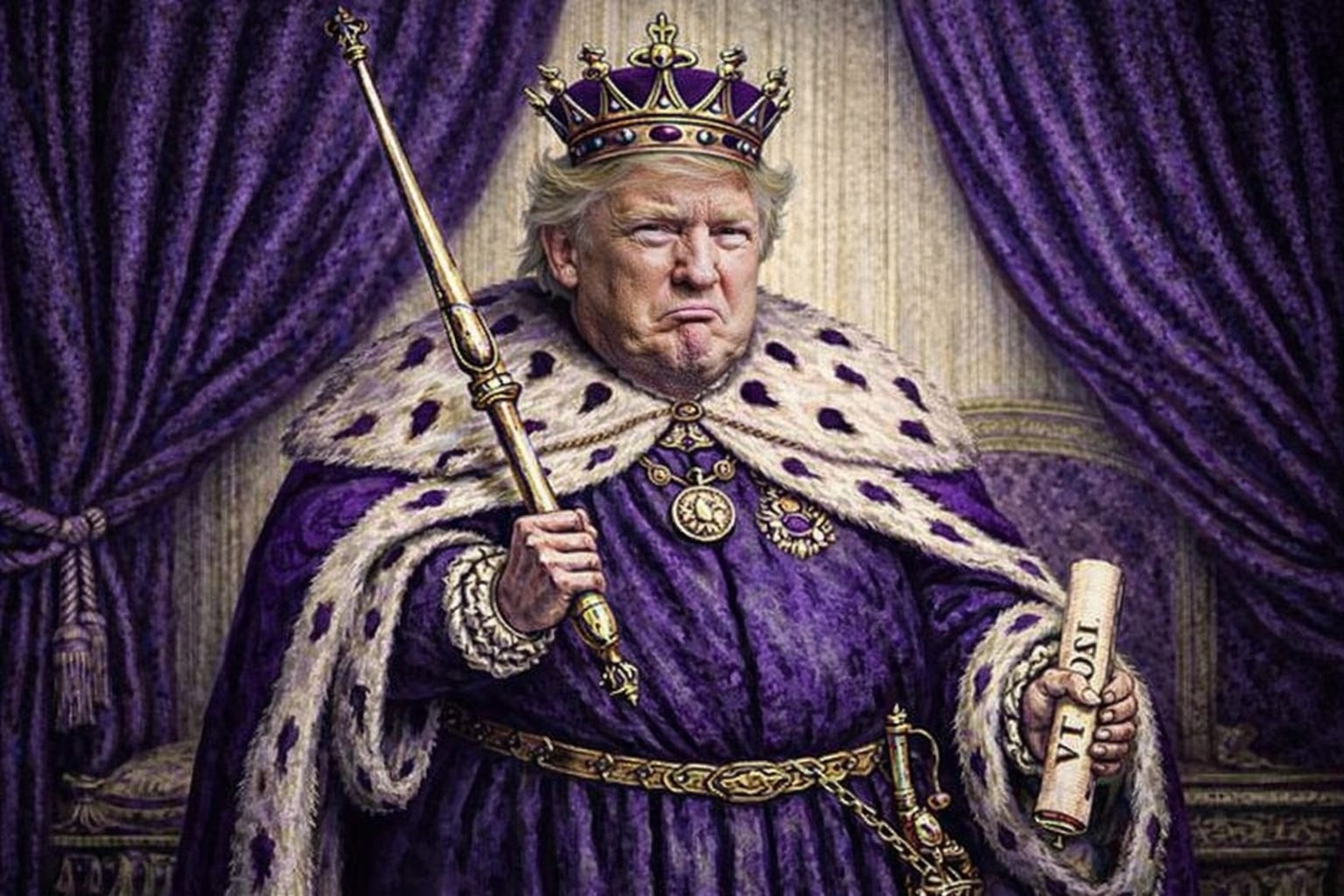
Now, here is how Andrew Jackson did it:
Andrew Jackson did not wake up one morning & decide to go to war with the Bank of the United States. Like most long feuds in American politics, it simmered. But by the time it reached a boil, the United States no longer had a central banking system — & would not have one again until the Federal Reserve Act of 1913. A full lifetime without a central bank — in part because Jackson believed paper money was a con.
The Second Bank had been chartered in 1816. It stumbled at first, but once Nicholas Biddle took charge in 1822, it became what its supporters always claimed it could be: a functioning central bank. It held federal funds, issued credit to the government, & acted as a financial clearinghouse for the national debt. This was the stabilizing institution of the young republic’s financial system (Hamiltonian, not Jeffersonian).
Jackson never bought it. He distrusted banks, credit, & especially paper money — a worldview formed on the frontier where specie mattered & paper meant nothing. He also suspected something important: the Bank was playing politics. Biddle was using public financial power to reward allies & influence elections. The “hydra of corruption,” as it would soon be called, was not just imaginary.
Still, Jackson’s early messages to Congress read like reform rather than revolution. Restrain the Bank, curb its abuses, keep it in a constitutional lane.
Then came 1832.
With four years still left on the charter, Biddle pushed Congress to renew it early. The gamble was political: Jackson, up for re-election, would never veto a cornerstone of the national economy in an election year. Congress approved the renewal. Jackson vetoed it — & then detonated the national conversation. The Bank, he declared, made “the rich richer and the potent more powerful.” Populist fire met constitutional theory, & the veto held.
But Jackson didn’t stop at rhetorical victory. He ordered Treasury Secretary William Duane to pull federal deposits out of the Bank and move them to state-level “pet banks.” Duane refused. Jackson fired him and replaced him with Attorney General Roger B. Taney, who did not refuse.
The Senate — still very much Daniel Webster and Henry Clay territory — struck back, voting to censure the president for withdrawing federal funds and discarding his Treasury Secretary. Jackson answered with a blistering protest, insisting that the presidency was the “direct representative of the people,” not a servant to the Senate or to chartered corporations.
Meanwhile, the Bank tried to survive as a state institution. It didn’t. Bankruptcy came swiftly.
Jackson famously said that the Bank was trying to kill him, “but I will kill it.” And he did — but at a cost. Economic historians have long pointed out that the Bank played a stabilizing role in American finance. Robert Remini, in his study of the Bank War, refuses to hand either side a posthumous victory:
“Jackson and Biddle were both responsible for permitting what could have been prevented. Both were reckless, both were insufferably arrogant & vindictive… Instead they preferred to sacrifice it to their need for total victory.”
The result? No national bank, a fragmented financial system, & a government that would not rebuild central banking infrastructure for eighty years. Jackson won — until the next century.
Extra fun: Andrew Jackson vetoed the Bank recharter in 1832, & between 1833–1834 removal of deposits & Senate censure & political warfare all occur.
On January 30, 1835, Richard Lawrence attempted to assassinate Jackson outside the Capitol, making Jackson the first POTUS to experience an assassination attempt. 🤔

Bibliography | Notes
Blakemore, Erin. “Andrew Jackson’s Duels.” JSTOR Daily, June 12, 2015. https://daily.jstor.org/andrew-jacksons-duels/.
Brogdon, Matthew S. “Defending the Union: Andrew Jackson’s Nullification Proclamation and American Federalism.” The Review of Politics 73, no. 2 (Spring 2011): 245–73. Cambridge University Press for the University of Notre Dame du Lac on behalf of Review of Politics.
Greenstein, Fred I. “Andrew Jackson: Force of Nature.” In Inventing the Job of President. Princeton, NJ: Princeton University Press, 2009.
Willis, Matthew. “Was Andrew Jackson Really a States’ Rights Champion?” JSTOR Daily. https://daily.jstor.org/was-andrew-jackson-really-a-states-rights-champion/.
Wyatt-Brown, Bertram. “Andrew Jackson’s Honor.” Journal of the Early Republic 17, no. 1 (Spring 1997): 1–36. University of Pennsylvania Press on behalf of the Society for Historians of the Early American Republic.
Zinn, Howard. A People’s History of the United States: 1492 to Present. Revised and Updated Edition. New York: Harper Perennial Modern Classics, 2015.