Before Alta California
California History

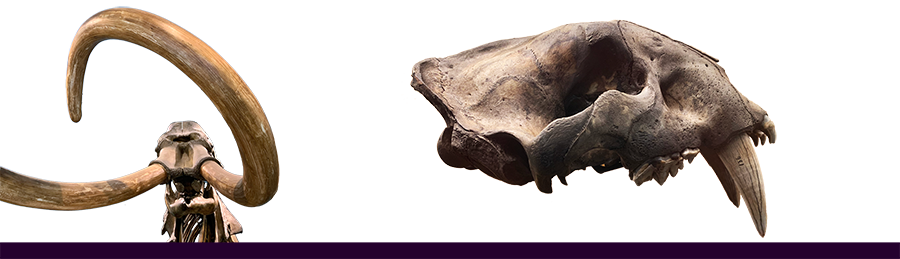
From its ancient form to the present, California presents itself as a larger-than-life character with the best (and sometimes, the worst) elements of organic life. From its ancient glaciers that expanded and contracted a half dozen times or so, carving the state’s valleys, carrying gold, bringing in rich soil, creating fresh lakes, and creating the majestic Yosemite. Even the ancient animals were exceptional — shaggy camels, horses (Archaeohippus and Equus scotti), imperial mammoths, giant bears, saber-toothed cats — all roamed California’s grassy plains littered with the bright orange contrast of the state’s flower, the California Poppy (Eschscholzia californica). If you ever have the chance, visit the La Brea Tar Pits.
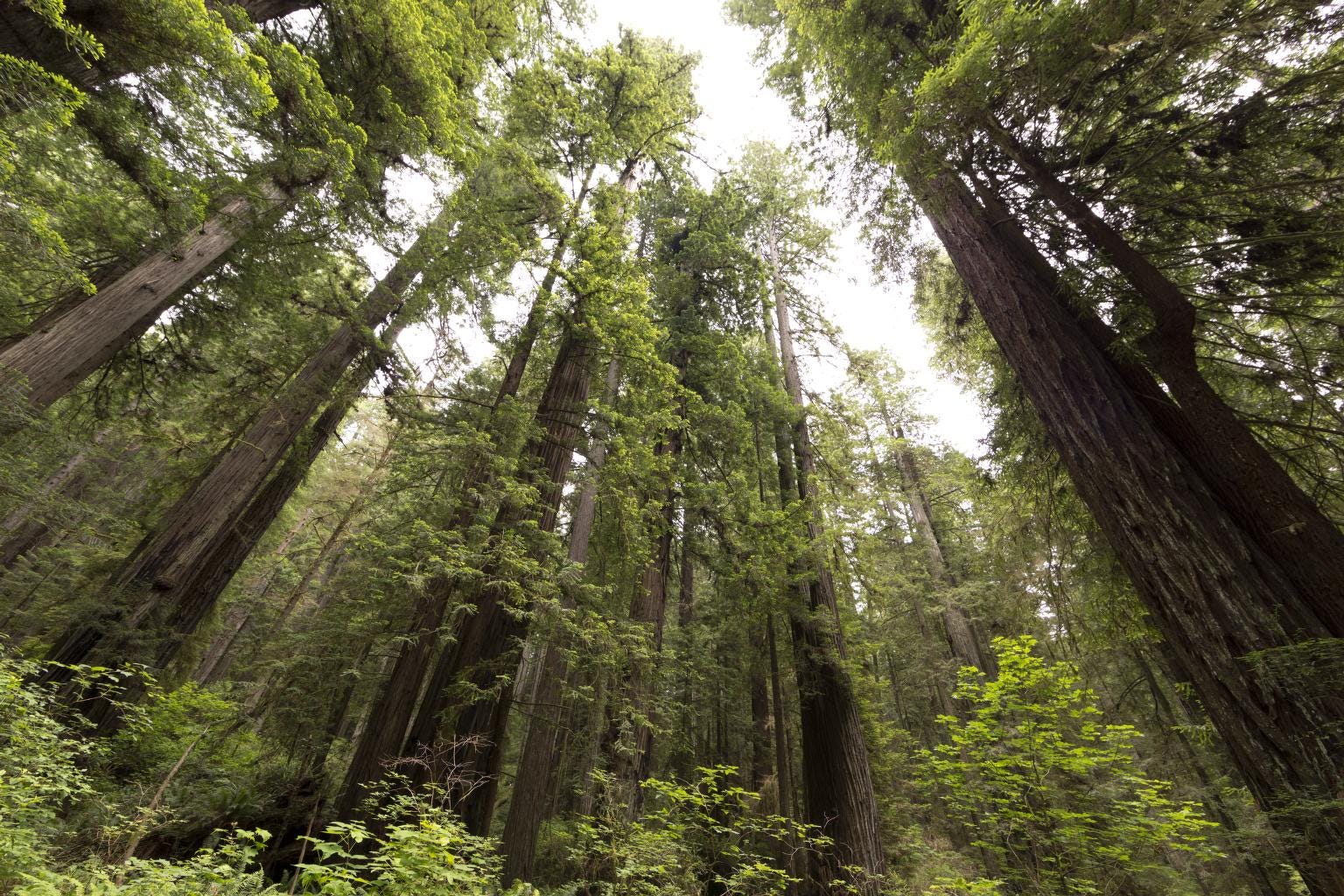
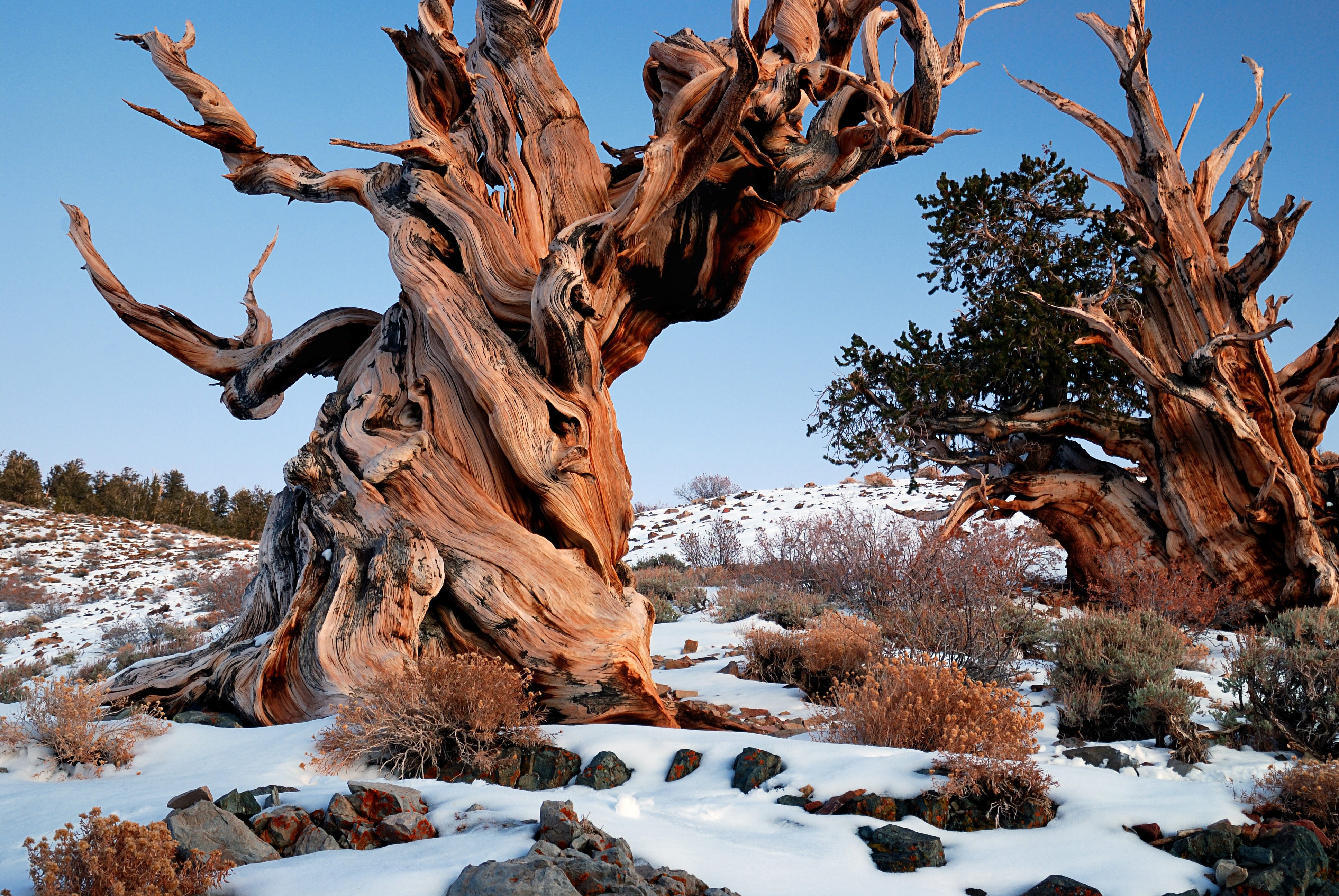
California is the third-largest state in the Union. The coastline is massive, 1,264 miles, and equally as massive mountain cover covering roughly one-fifth of the state. The only real break in the coastal mountains is the San Francisco Bay, which is considered one of the “world’s finest natural harbors.” Some of the oldest organisms in the world — Great Basin Bristlecone Pines (Pinus longaeva) — are in the Owens Valley. California has the largest mass of any on planet earth, the Sierra Redwood (Sequoiadendron giganteum) — California wins in age, size, and survival.

In the southern part of the state, on the Coastal Plains of San Diego and the Los Angeles Basin, most of the 20th century’s growth and population centers evolved. Further inland, we have the Joshua tree (Yucca brevifolia) — part of the Agave family — and, like the California fan palm (Washingtonia filifera), it is a monocot. The American Indian, Cahuilla people, referred to it as hunuvat chiy’a (hoo-NOO-vaht chee-YAH) or humwichawa (hoom-wee-CHAH-wah).
Natives used the tree’s tough leaves to weave into baskets and sandals, and the tree's flower buds and seeds were a precious food source. As for the name “Joshua,” according to the National Park Service, legend has it that the name came from the Mormon settlers:
“In the mid-19th century, Mormon settlers gave the tree its common name, believing its outstretched branches resembled the biblical Joshua guiding them westward. However, historical records offer little evidence for this tale. Some theories suggest that pioneers saw the tree as a symbol of Joshua’s military leadership, its sharp leaves evoking the image of an armed force.”
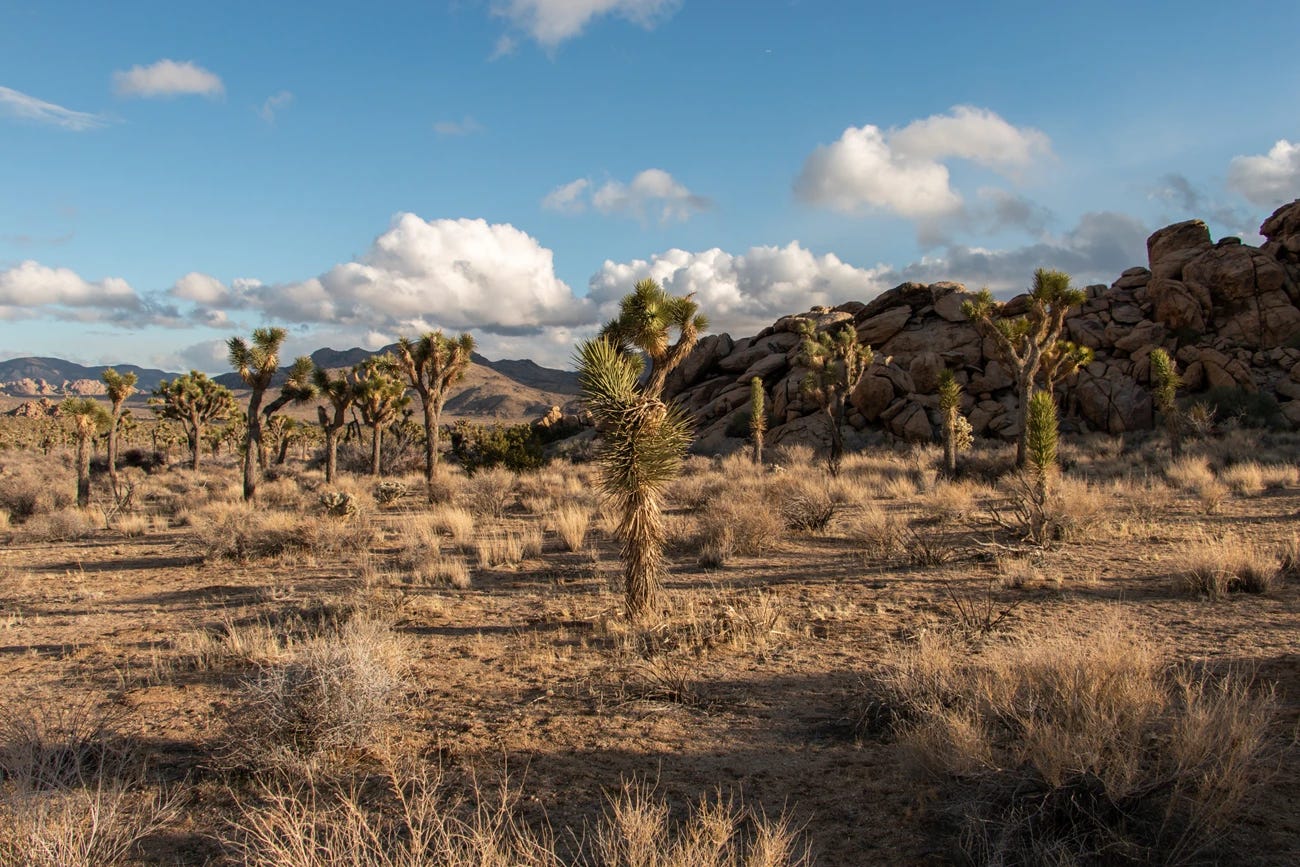
Continuing further inland, we come to the Mojave Desert, covering an impressive 20 million acres (for context, Los Angeles County is roughly 2.5 million acres). Death Valley has been described as “the very manifestation of Medieval Hell,” but not by the Chemehuevi (CHEM-uh-WAY-vee) people, who lived on the prickly pear of the desert, along with mesquite, roasted agave blooms, deer, and bighorn sheep. Tribal life centered on the Colorado River, with the Mojave Trail serving as the main trade thoroughfare.
Europeans encountered the Mojave tribe in 1776, when Father Francis Garces. Friar Francisco Palou, whom we will explore as one of Alta California’s early historians, noted Garces was loved by the indigenous peoples, and “lived unharmed for a long time” — referring to him as “Viva Jesus.” Other explorers made their way through the Mojave, notably Jedediah Smith (1826) and John C. Frémont (1844), until the government created outposts to protect the travel of mail wagons through the region.
California almost has it all: only the tropical climate is missing from the five on planet Earth. The state is rich in soil, gold, oil, furs, and fish, and has the ability to dominate just about every industry it chooses to enter. There have been many: Agriculture — avocado, almonds, citrus. Manufacturing — cars, tires, aviation, ships, military. Hollywood. Are there any natural downsides? Of course, especially in the late 20th century, air pollution was/is trapped by a combination of onshore winds, mountainous terrain, and temperature inversions. The same mountains that can seem like protection become containment, and the same winds that cool can also deliver what the valley cannot release.
Land obstacles kept European settlements out of California. In 1769, Spain’s first settlement was San Diego with Mission San Diego de Alcalá. The flag of Spain came with the settlement, and the British with Francis Drake, and between that point and the American takeover, the flags of Russia, Mexico, Argentina, and Juan Bautista Alvarado’s Independent Alta California. Amid the turmoil, population growth remained limited until the Gold Rush in 1848. Not until the Transcontinental Railroad in 1869 was there major statewide growth with the railway moving into the Southern part of the state.

Bean, Walton, and James J. Rawls. California: An Interpretive History. 8th ed. Boston: McGraw-Hill, 2003.
Catholic News Agency. Servant of God Francis Garces and Companions. Catholic News Agency. https://www.catholicnewsagency.com/saint/servant-of-god-francis-garces-and-companions-679.
Goldwaser, Rick. Identifying Bristlecone Pines. National Park Service, Great Basin National Park. Last modified July 31, 2025. https://www.nps.gov/grba/planyourvisit/identifying-bristlecone-pines.htm.
National Park Service. Joshua Trees. Joshua Tree National Park. Last updated August 27, 2025. https://www.nps.gov/jotr/learn/nature/jtrees.htm.
National Park Service. History & Culture. Mojave National Preserve. Last updated December 30, 2025. https://www.nps.gov/moja/learn/historyculture/index.htm.
Rolle, Andrew, and Arthur C. Verge. California: A History. 8th ed. Chichester, West Sussex: Wiley-Blackwell, 2014.
The Nature Conservancy. Mojave Desert. The Nature Conservancy. https://www.nature.org/en-us/get-involved/how-to-help/places-we-protect/mojave-desert/.