

Benito Mussolini: The Man Riding the Fascist White Horse
The Alta Historian’s Works

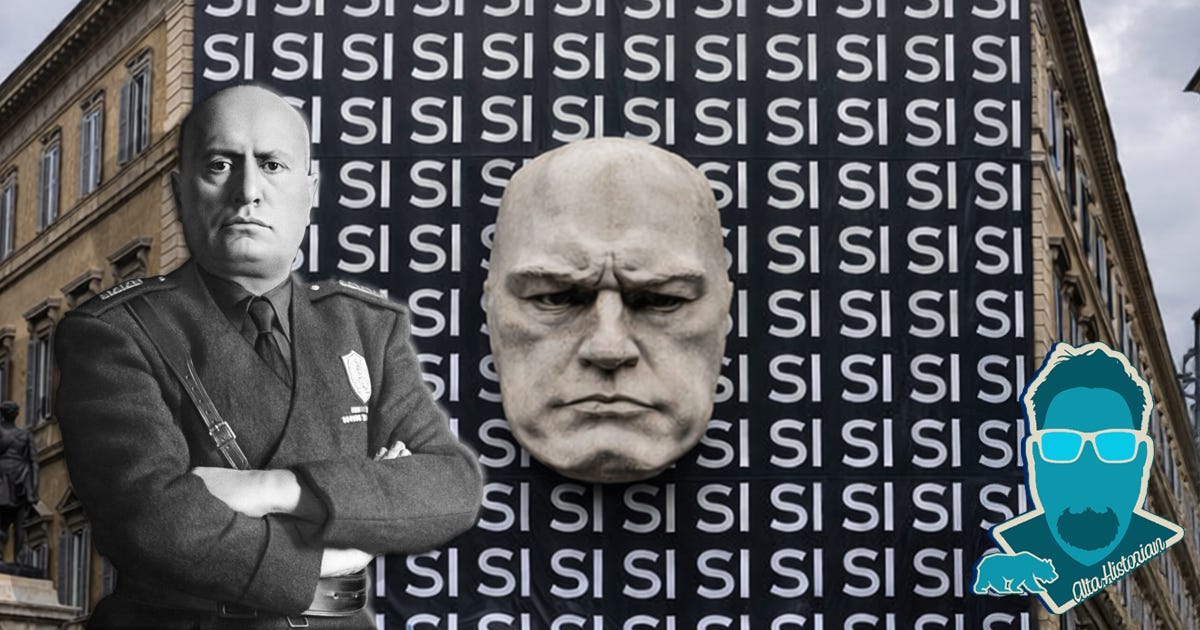
This piece was originally submitted on February 4, 2012, as a graduate student in history. The origins of WWII, born out of the ashes of WWI, have always fascinated me (since I was a kid, ask my parents), so I chose this project in a seminar on modern Europe. Though my career went on to focus on the ancient world and the Americas, this era and topic were the seed of my original love for history.
Benito Mussolini is difficult to pin down — and that difficulty is not accidental. Was he a warlord or a political performer? A man with clear direction or one improvising from crisis to crisis? The embodiment of fascist ideology or its greatest contradiction? Historians have wrestled with these questions for decades, often arriving at opposing conclusions using the same evidence.
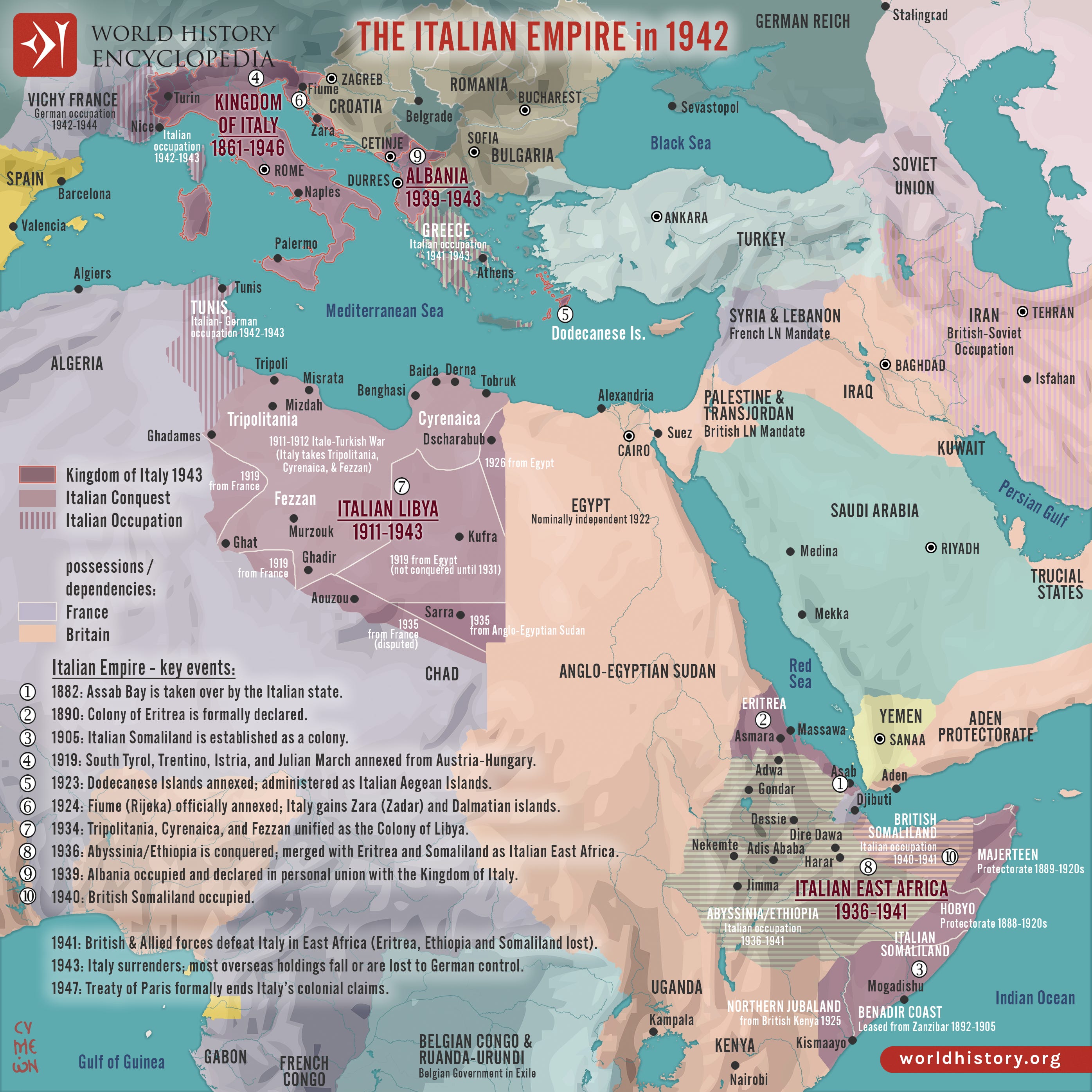
That confusion mirrors the nature of Italian fascism itself. Fascism was never a fixed doctrine but a rolling accumulation of ideas, symbols, and ambitions. As William Kilborne Stewart observed with a more contemporary view in 1928,
“Fascism, indeed, has been likened to a great river into which numerous tributaries have poured their waters. Among these tributaries are such movements as Nationalism, Futurism, and Syndicalism. Besides, Fascism is more than a practical experiment in government. It has developed a theory and a philosophy, and, one may even add, an art, a mysticism, and a religion.”
If fascism were a river rather than a blueprint, then Mussolini’s contradictions were not failures of leadership but structural features of the system he led. Mussolini did not resolve these contradictions — he simply managed them.
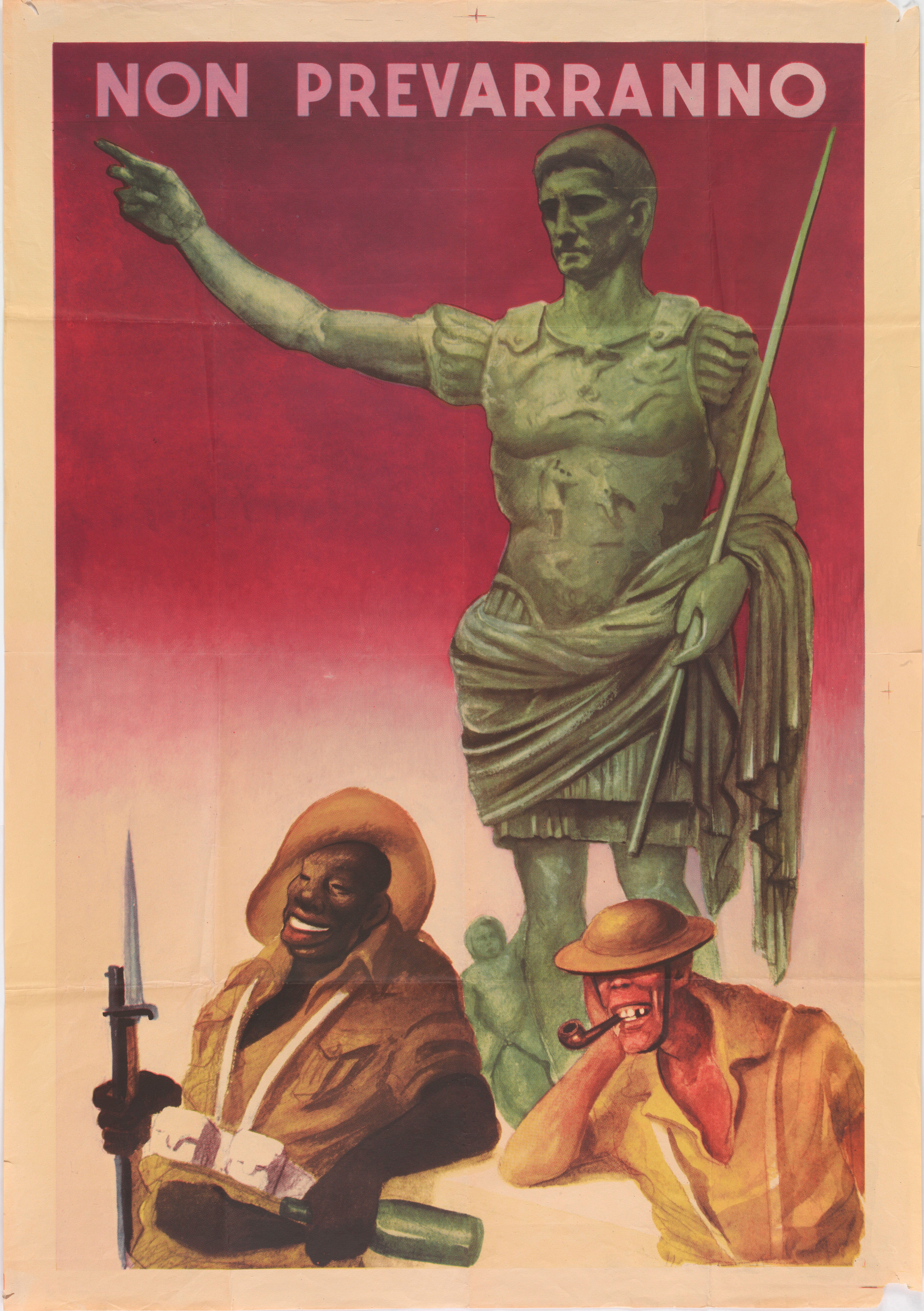
What gave coherence to this instability was romanità. Romanità, often mentioned by Cicero, holds that ignorance of the past is to remain a child forever. Memory and learning the lessons of the past are part of what it is to be mature. The definition means the “Romaness” within — and from within each is the history, blood, culture, conquering, empire, geography, future — that is the word that first emerges in the Oxford Dictionary in London in the 1920s.
Romanità offers the clearest historical perspective on Mussolini and his version of Italian fascism. It was not merely an ideological reference to ancient Rome, but an emotional and symbolic framework that united Italians under a shared historical identity. While fascist ideology, economic policy, and foreign alliances shifted repeatedly, romanità remained the most consistent feature and almost a centerpiece of the regime’s image. It legitimized authoritarian rule, elevated Mussolini as the embodiment of national destiny, and sustained popular consent — it gave him a restorative platform, from the Roman salute to Mediterranean dominance — until it could no longer do so.
Disagreements over the origins of Italian fascism often obscure this continuity. Some scholars trace fascism to Mussolini’s early career as editor of the socialist newspaper Avanti!, emphasizing ideological evolution from Marxism to authoritarianism. Others locate fascism firmly in the post–World War I crisis, arguing instability rather than ideology drove its emergence. A mixture of the two could also ring true. Mussolini’s ideological evolution has therefore confused historians, raising questions as to whether fascism was a coherent belief system or merely a vehicle for power.
A. James Gregor situates the origins of fascism within Italy’s “ideological and cultural matrix,” describing it as “an ideology of modernization of clear antiparliamentarian nature, a dictatorship but a ‘developmental’ dictatorship… no less than Leninism, Castroism, and even Maoism.” Gregor emphasizes failure of the elites and mass mobilization, noting that Italy’s governing class was “faction-ridden and corrupt,” and that replacement required “a mass mobilization led by… [a] counter-elite.” In this view, Mussolini’s fascism was programmatic. It was developmental. It was future-oriented, built on the blueprint of the Roman past — a shared historical experience to which tired Italians could rest their anxieties of an uncertain future.
Mussolini’s own words complicate this interpretation. In What Is Fascism (1932), he rejected Marxian materialism outright, stating, “Fascism [is] the complete opposite of… Marxian Socialism, the materialist conception of history… Fascism, now and always, believes in holiness and in heroism.” He further declared, “The Fascist State organizes the nation, but leaves a sufficient margin of liberty to the individual… the deciding power in this question cannot be the individual, but the State alone.” These statements elevate myth, sacrifice, and authority above class struggle and economic determinism, aligning fascism more closely with cultural symbolism than with modernization theory.
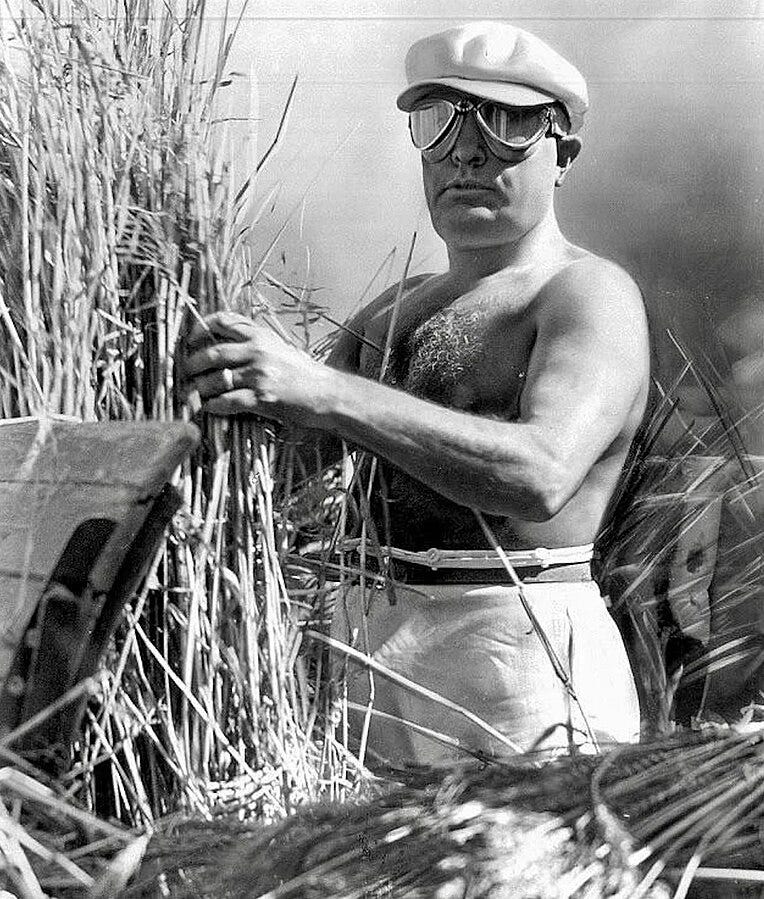
Other historians move even further from doctrinal explanations. Paolo Farneti argues that Mussolini’s consistency lay not in ideology but in mass psychology, writing that “Mussolini was, since his early writings and his political activity, very attracted by the principle of the ‘mass’… capable of rapid mobilization, highly emotional, susceptible to the oratory of the leader.” This “rough and simplistic… collective psychology,” Farneti contends, had “nothing to do either with ‘class’ or with ‘nation’… it was the concept of ‘people’.” Romanità reconciled these perspectives by providing an identity that was neither class-based nor doctrinal, but historical, emotional, and often fantastically performative.
Jan Nelis captures this synthesis when he writes, “This ‘culturalist’ approach views Fascism as a culture of the masses, united as they were in the Italian piazza. Every aspect of Fascism is delineated in those terms.” Romanità transformed fascism into performance. History became spectacle, ritual replaced debate, and identity was rehearsed publicly. Fascism did not need ideological coherence so long as it maintained momentum.
The First World War supplied the emotional gravity that made this performance credible. Mussolini, like many veterans of his generation, interpreted the war not as a catastrophe but as a purification. In a 1918 text honoring fallen soldiers, he declared that “war is religion and poetry together.” This sacralization of violence reappeared in fascist doctrine. In 1932, Mussolini insisted, “War alone brings up to its highest tension all human energy and puts the stamp of nobility upon the peoples who have [the] courage to meet it.” War became a moral test — a historical necessity and an inevitability.
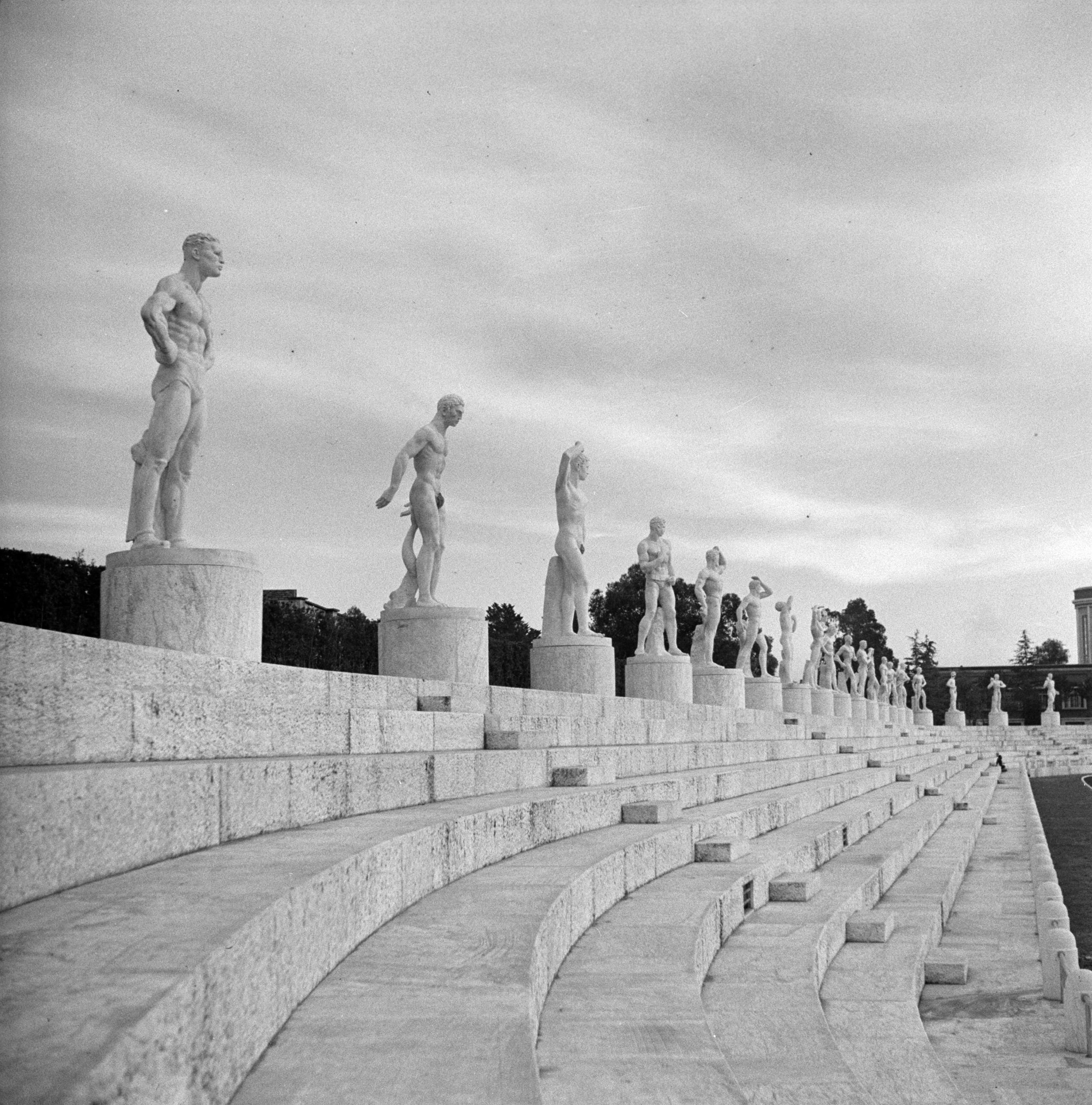
Italian fascism framed war differently than its German (Nazi) counterpart, with a similar cultural rallying to the past, with the German approach focused more centrally on their racial ties to their culture. Romanità emphasized civilization rather than race. Nelis notes that Mussolini’s understanding of antiquity was limited, observing that “his knowledge of classical Rome was very narrow and influenced by eighteenth-century Enlightenment and nineteenth-century revolutionary thinking.” Yet this limitation proved useful. His limited foundational knowledge of the Roman past was on par with what an average Italian would know. Fascism required symbolic clarity, not scholarly accuracy. As Stefan Goebel demonstrates in a broader European context, the symbolic resurrection of the fallen bridged “the gap between the nation and the individual, between the political and the personal realms.”
This mythic framing may help to explain why Mussolini’s rise encountered so little resistance. Contemporary observers often interpreted fascism not as tyranny but as restoration. Luigi Villari wrote in 1924 that:
“the revolutionists only demand the re-establishment of law and order, respect for life and property, equal justice for all without distinction of class, retrenchment and economy in the administration, more and harder work for all, self-sacrifice and austerity of life for the common good, and a Government born of this revolution which abstains from vengeance on its beaten enemies.”
Villari concluded, “We shall see… how Mussolini and the Fascisti are endeavoring to make good, and the large measure of success which has hitherto attended their efforts.” This passage captures fascism at the moment before its outcomes were known — when it appeared disciplined, restrained, and even virtuous.
The problem emerged when myth confronted governance. Mussolini’s contradictions intensified as fascism moved from mobilization to administration. Nowhere was this clearer than in economic policy. Jon Cohen bluntly observes that “Fascist economic policies were not based on a logically consistent theoretical framework,” concluding that “Mussolini had no overriding long-term goal… [and] economic achievements of the regime were quite modest.” Fascism functioned rhetorically rather than systematically.
Still, Mussolini continued to project certainty. In “Mussolini Speaks English” (1929), he declared,
“I am very glad to be able to express my friendly feelings toward the American nation… These feelings, by mutual interests… [will] contribute to an even brighter era in the lives of both nations.”
Rather than contradiction, this reflected fascism’s elasticity. As Claudia Baldoli demonstrates, outreach abroad was aimed not at ideological conversion but at reinforcing loyalty among Italians overseas — even Latins and Catholics more broadly — an extension of romanità rather than its abandonment.
That flexibility collapsed with the Nazi alliance. Aaron Gillette notes that Mussolini initially emphasized Italy’s Mediterranean identity and “fascist antipathy for Nazi racial theory.” Italians viewed German racism as stemming from “inferiority complex… parvenu status, lack of culture.” Romanità and Nazism were fundamentally incompatible as an intersectional coalition of Roman past (Mussolini’s “Third Rome” and Hitler’s “Third Reich”).
The rupture became visible in 1938. Paul Baxa identifies Hitler’s visit to Rome as the turning point, noting that “domestically, the visit marked the beginning of radical policies like the Racial Laws which gave fascist Italy an increasingly Nazi look.” Mussolini later admitted the error himself, stating, “The Racial Manifesto could have been avoided… I am far from accepting Rosenberg’s myth.” But the damage was irreversible. As Gillette concludes, “Mussolini’s decision to adopt a racial ideology… met with derision from many Italians.”
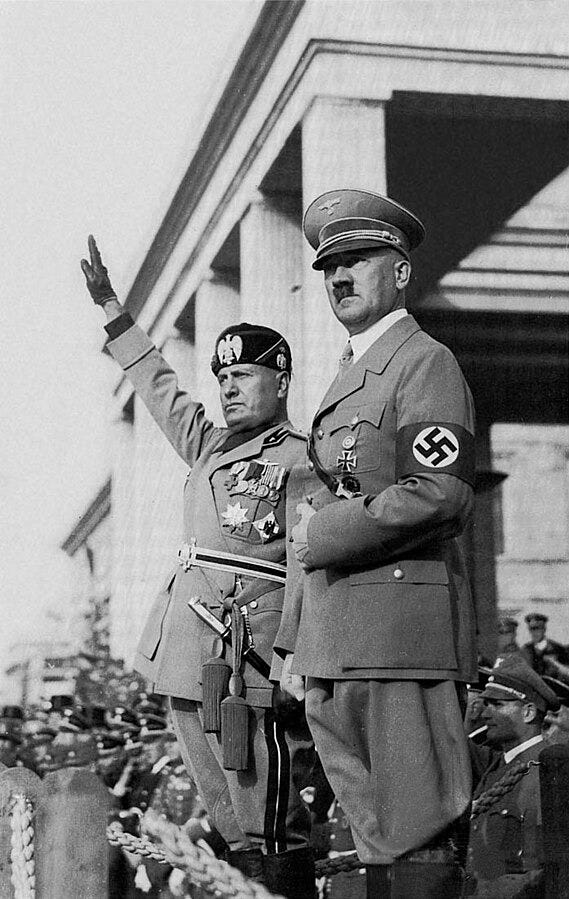
Mussolini’s rise was inseparable from romanità. As Nelis summarizes, “Antiquity serves as legitimization and example for the new Fascist empire, which draws its force from the past.” Romanità unified Italians, legitimized authoritarianism, and masked ideological incoherence beneath historical grandeur. Yet it imposed limits.
Mussolini did not fall because he lacked ambition, vision, or propaganda. He fell because the myth he constructed could not survive the compromises he made. In the end, the man riding the fascist white horse was undone by the very past he sought to resurrect.

Bibliography | Notes
Baxa, Paul. “Capturing the Fascist Moment: Hitler’s Visit to Italy in 1938 and the Radicalization of Fascist Italy.” Journal of Contemporary History, vol. 42, no. 2 (April 2007): 227–242.
Boccasile, Gino (attributed). Non Prevarranno [They Shall Not Prevail]. Poster. Italy, 1944. Broadsides and Ephemera Collection, Duke University Libraries. https://idn.duke.edu/ark:/87924/r4h70b402.
Bosworth, R. J. B. Review of Common Destiny: Dictatorship, Foreign Policy, and War in Fascist Italy and Nazi Germany, by MacGregor Knox. The International History Review, vol. 23, no. 2 (June 2001): 454–456.
Cohen, Jon S. “Was Italian Fascism a Developmental Dictatorship? Some Evidence to the Contrary.” The Economic History Review, New Series, vol. 41, no. 1 (February 1988): 95–113.
Corner, Paul. “The Road to Fascism: An Italian Sonderweg?” Contemporary European History, vol. 11, no. 2 (May 2002): 273–295.
Delzell, Charles F. Review of Mussolini Il Duce, by Renzo De Felice. The Journal of Modern History, vol. 55, no. 4 (December 1983): 762–765.
Farneti, Paolo. Review of Italian Fascism and Developmental Dictatorship and Young Mussolini and the Intellectual Origins of Fascism, by A. James Gregor. The Journal of Modern History, vol. 53, no. 3 (September 1981): 565–568.
Flett, Keith. Review of Liberal Fascism: The Secret History of the Left from Mussolini to the Politics of Meaning, by Jonah Goldberg. Reviews in History, August 2009.
Foot, John. Review of Exporting Fascism: Italian Fascists and Britain’s Italians in the 1930s, by Claudia Baldoli. Reviews in History, September 2005.
Gillette, Aaron. Racial Theories in Fascist Italy. London: Routledge, 2002.
Goebel, Stefan. “Re-Membered and Re-Mobilized: The ‘Sleeping Dead’ in Interwar Germany and Britain.” Journal of Contemporary History, vol. 39, no. 4 (October 2004): 487–501.
Luce, Istituto. “Benito Mussolini & Adolf Hitler, 1938.” World History Encyclopedia, July 21, 2025. https://www.worldhistory.org/image/20697/benito-mussolini--adolf-hitler-1938/.
Mussolini, Benito. “Benito Mussolini: What Is Fascism.” 1932. Reprinted August 1997. Fordham University Internet History Sourcebooks. https://www.fordham.edu/halsall/mod/mussolini-fascism.html.
———. Mussolini Speaks English. Fox Movietone Newsreel, 1929.
Nelis, Jan. “Constructing Fascist Identity: Benito Mussolini and the Myth of ‘Romanità.’” The Classical World, vol. 100, no. 4 (Summer 2007): 391–415.
Photographer, Unknown. “Propaganda Picture of a Shirtless Mussolini.” World History Encyclopedia, March 19, 2025. https://www.worldhistory.org/image/20239/propaganda-picture-of-a-shirtless-mussolini/.
Poll, Willem van de. "Foro Italico (Inaugurated As Foro Mussolini)." World History Encyclopedia, March 20, 2025. https://www.worldhistory.org/image/20243/foro-italico-inaugurated-as-foro-mussolini/.
Sarti, Roland. Review of Mussolini Unleashed 1939–1941: Politics and Strategy in Fascist Italy’s Last War, by MacGregor Knox. The Journal of Modern History, vol. 56, no. 2 (June 1984): 370–373.
Stewart, William Kilborne. “The Mentors of Mussolini.” The American Political Science Review, vol. 22, no. 4 (November 1928): 843–869.
Stone, Marla. Review of Donatello among the Blackshirts: History and Modernity in the Visual Culture of Fascist Italy, edited by Claudia Lazzaro and Roger J. Crum. The American Historical Review, vol. 111, no. 1 (February 2006): 275–276.
Villari, Luigi. “The Awakening of Italy: The Fascista Regeneration.” In A Pro-Fascist View of the March on Rome. London, 1924. Accessed January 22, 2012.
WW2 Italian Newsreels. Mussolini in Colour. n.d.