

Columbus to Oñate
The prequel to North American History

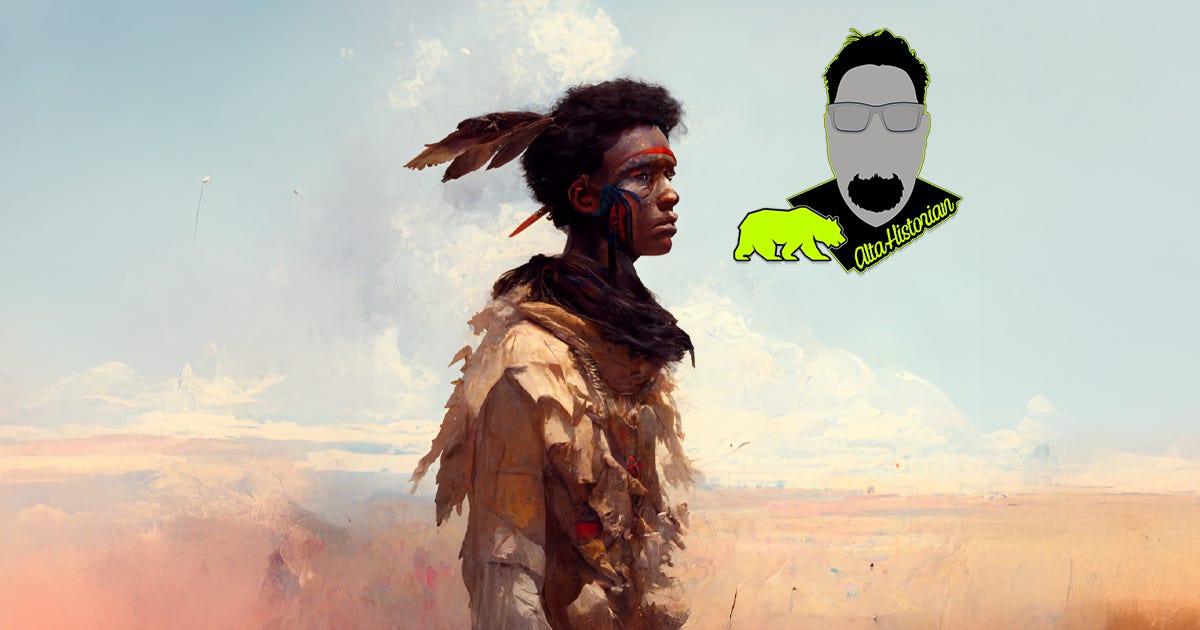
Columbus made landfall in 1492 on a Caribbean island roughly 300 miles north of Cuba. The Niña, the Pinta, and the Santa María anchored there, and he claimed the place for Isabella and Ferdinand, naming it San Salvador in honor of Jesus Christ. Believing he had reached the East Indies, he called the inhabitants “Indians.” They were, in fact, the Taino.
The Taino are subgroup of the Arawak peoples from northeastern South America, the Taino inhabited the Greater Antilles — Cuba, Jamaica, Hispaniola, and Puerto Rico. Their culture included a complicated religious system with a hierarchy of deities. They believed Zemis — gods of both sexes, human and animal — who provided their people protection.
As Columbus came ashore, carrying swords and speaking an unfamiliar tongue, the Taino greeted him with food, water, and gifts. They helped his men salvage the wrecked Santa María and brought parrots, balls of cotton, spears, and many other things, trading them for glass beads and hawks’ bells. Columbus logged in his journal:
“They willingly traded everything they owned…. They were well built, with good bodies and handsome features…. They do not bear arms, and do not know them, for I showed them a sword, they took it by the edge and cut themselves out of ignorance. They have no iron. Their spears are made of cane…. They would make fine servants…. With fifty men we could subjugate them all and make them do whatever we want.”
Yet the encounter soured quickly. Columbus’s sailors terrorized the Taino, sexually abusing their women, among other abuses. In response, the Taino killed some of the sailors. This violence foreshadowed the long and fraught relations between Native Americans and Europeans to come.
Columbus had other problems — he had overpromised riches to his patrons and feared underdelivering to Ferdinand and Isabella.
The consequences unfolded with horrific speed. Columbus’s men and later settlers imposed the encomienda system, granting Spaniards control over Taino labor in mines and fields. Brutality was rampant: Spaniards grew tired on long hikes, forcing Taino to carry them 10–15 miles at a time — when the sun beat down, Taino shaded them with leaves or goose feathers. Men labored in mines, women in fields. For amusement, Spaniards stopped two boys for their parrots and beheaded them, and at other times, tested blade sharpness on Taino flesh. Exhaustion and depression halted procreation — families reunited only every 8–10 months. Mothers, overworked and famished, produced no milk to nurse their infants.
Bartolomé de las Casas, a Dominican friar, arrived in the Spanish West Indies on Columbus’s second voyage and became one of the earliest settlers. It was later claimed by las Casas that in Cuba, 7,000 children died in three months.
When gold reserves dwindled, the Spanish enslaved men on vast estates. Thousands died by suicide, murder, or mutilation. Estimates suggest 1–8 million Taino inhabited Hispaniola in 1494 — by 1508, only 60,000 remained. By 1650, no original Arawak or their descendants lived in Haiti.
Las Casas himself was not entirely innocent. He owned Indian slaves and held an encomienda (the right given by the Spanish to demand tribute and forced labor from the Natives). But witnessing the savagery with which encomenderos treated Natives reversed his views. In 1515, he released his slaves, relinquished his encomienda, and began advocating for humane treatment. He lobbied for the New Laws to eliminate slavery and the encomienda system.
His accounts exposed the brutality that fueled the Black Legend abroad.
Driven by gold, glory, and the myth of youth-restoring waters (a Taino legend of a spring on Bimini or a river in Florida), explorers surged forward. In 1513, Juan Ponce de León sailed from New Spain to Florida, initiating recorded history there. Classified as a conquistador, he had conquered Puerto Rico. His voyage sought gold, though the fountain of youth myth endures. Ponce’s achievement lay in discovering and settling Puerto Rico and Florida.
Hernán Cortés founded Mexico City in 1521, toppling the Aztec empire.
In 1527–1536, Álvar Núñez Cabeza de Vaca survived one of the era’s most astonishing feats. Part of Pánfilo de Narváez’s doomed Florida expedition, shipwrecked near Tampa Bay in 1528, he and three companions (including the African slave, Estevanico) traversed Texas, perhaps New Mexico, and Arizona, living among Natives as traders and healers. Returning to Spain in 1537, he published his account urging gentler policies toward Natives.
Francisco Pizarro raided Peru in 1532, enslaving Incas and inspiring further conquests.
Hernando de Soto, enriched in Pizarro’s 1532 conquest of Peru (where he contacted Inca emperor Atahualpa and shared in the ransom), received a commission for La Florida. Landing at Tampa Bay in 1539 with 600 men, he ravaged through Georgia, the Carolinas, Tennessee, Alabama, and beyond, crossing the Mississippi in 1541. After his death in 1542, survivors rafted to Mexico in 1543, decimated by battles and hardship.
In the Southwest, Hernán Cortés hoped to find another gold empire in North America, and dispatched Francisco de Ulloa in 1539. Sailing from Acapulco with three ships, Ulloa navigated the Gulf of California (naming it the Sea of Cortés in some accounts), lost one vessel in a storm, reached the Colorado River delta, and claimed lands for Spain by sword on tree and water ritual — extending tentative possession to California and Arizona.
Francisco Vázquez de Coronado (1540–1542) pursued those fabled cities through Arizona, New Mexico, Texas, Oklahoma, and Kansas, guided by Zuni tales. Reaching central Kansas by 1541, he found Quivira—likely the lost city of Etzanoa, a vast settlement of perhaps 20,000 people in beehive-shaped thatched houses along the Walnut and Arkansas rivers, rivaling Cahokia in scale.
Pedro de Alarcón, in 1540, ascended the Colorado (naming it Rio de Buena Guía), proclaiming himself the “Son of the Sun” to awe Yuma peoples, distributing crosses, and inquiring about the Seven Cities of Cibola before returning.
Melchior Díaz, another Coronado spin-off in 1540–1541, trekked the Camino del Diablo, renamed the Colorado Rio del Tizon for Natives’ firebrands, found Alarcón’s cross, and died, it was said, by self-impalement chasing his dog amid hostile encounters. Juan Rodríguez Cabrillo, a veteran of Cortés’s campaigns (including the Noche Triste), explored California’s coast in 1542, stepping ashore near modern San Diego and charting northward.
Later Spanish efforts included missions to convert and control Natives, but resistance flared. Juan de Oñate’s expeditions in the Southwest led to brutal reprisals. The Pueblo Revolt of 1680 (beyond this period’s strict frame) expelled Spaniards temporarily, underscoring enduring native defiance.
By the late sixteenth century, English writers like Sir George Peckham (1583) justified their own expansion, citing trade, religion, and aid against “cannibals,” while translations of Las Casas’s The Spanish Cruelties fueled the Black Legend and anti-Catholic sentiment. For Peckham, he would get caught in the crossfire, as he himself was of the Catholic faith. Religious zeal, economic ambition, and moral outrage intertwined, ensuring empire was argued into existence — by crown, cross, and commerce — long before Jamestown.

Bibliography | Notes
Foner, Eric, and John A. Garraty, eds. The Reader’s Companion to American History. Boston: Houghton Mifflin Harcourt Publishing Company, 1991.
Locke, Joseph L., and Ben Wright, eds. The American Yawp: A Massively Collaborative Open U.S. History Textbook. Vol. 1, To 1877. January 2019.
Roark, James L., Michael P. Johnson, Patricia Cline Cohen, Sarah Stage, and Susan M. Hartmann. The American Promise, Value Edition, Volume 1: To 1877. Bedford/St. Martin’s, 2014.
Schweikart, Larry, and Michael Allen. A Patriot’s History of the United States: From Columbus’s Great Discovery to the War on Terror. New York: Sentinel, 2004.
Zinn, Howard. A People’s History of the United States. New York: Harper & Row, 1980.\
—
Cabeza de Vaca, Álvar Núñez. Narrative accounts, 1537.
Coronado expedition records, 1540–1542.
Las Casas, Bartolomé de. The Spanish Cruelties. English translation, 1583.
Monge, Pedro. Report of encounter north of the Colorado River.
Ulloa, Francisco de. Expedition narrative, 1539.