How to Tell Time in History
World Civilizations


Time is a strange thing, and we use it as a barometer of our lives: seconds, minutes, hours, days. As an athlete in my younger days, the question was always, “What is your 40 time?” We know how that kind of time works, but how do we measure time in hundreds, thousands, and even multi-thousands of years?
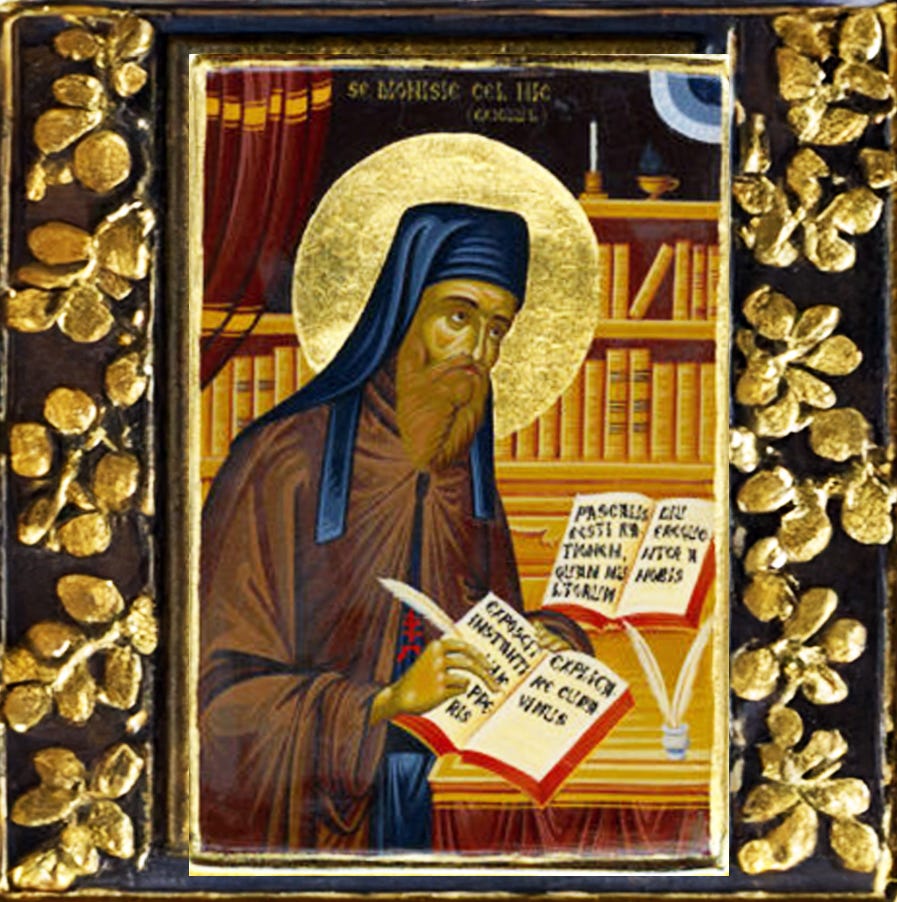
When you see my articles in this course, you will see me use the system devised by a 6th-century monk named Dionysius Exiguus. Exiguus developed the BC and AD system around AD 520. It was not adopted broadly until the 8th century when the Venerable Bede, an English monk, scholar, and historian known as the “Father of English History,” who lived AD 673 to AD 735. He wrote in his famous Ecclesiastical History of the English People, completed in AD 731, which helped to standardize the time structure in later medieval chronicles and among scholars.
The term “AD” is short for anno Domini, meaning "in the year of the Lord" in medieval Latin. From year zero backward from anno Domini is the designation “BC” — simply meaning “Before Christ.” Why do I prefer these designations over others? As a historian, this makes the most sense in the Western world (where we live). Whether Christian, Jew, Muslim, or anything else, the biggest event that would come to define history is this center point — empires have risen and fallen, and the world's influence has emanated from it. My take, as a historian, is that this is the dividing line.
This brings me to the systems of CE and BCE, which began in the 19th century, primarily in Jewish scholarship. How do they measure the dividing line? The same exact way as AD and BC do — by the birth of Jesus Christ — CE meaning “Common Era” and BCE meaning “Before Common Era.” This has become mainstream in universities, museums, and scientific writing in the late 20th century. If you see this notation, it means an exact dividing line as AD and BC.
The next time designation you may see is “BP” — and this one is easy to remember because it simply means “Before Present” — “Present” is standardized as the year 1950 CE or AD 1950. That means that “10,000 BP” means 10,000 years before 1950 (roughly 8050 BCE). With that many years, seventy-five years or so is a rounding error. This aligns better with the development of radiocarbon dating and with fields such as geology, paleoclimatology, and archaeology. In my courses, I do not anticipate a ton of BP designations being used, but if you see one, I want you to be prepared.
Now you are prepared to study events in time. Here are my top five big events in history:

The birth of Jesus Christ, Year 0
The “finding” of the New World, AD 1492
The creation of the nuclear bomb, AD 1945
The Declaration of Independence, AD 1776
The fall of the Roman Republic, 27 BC