

Norte Chico (Caral–Supe)
World Civilizations

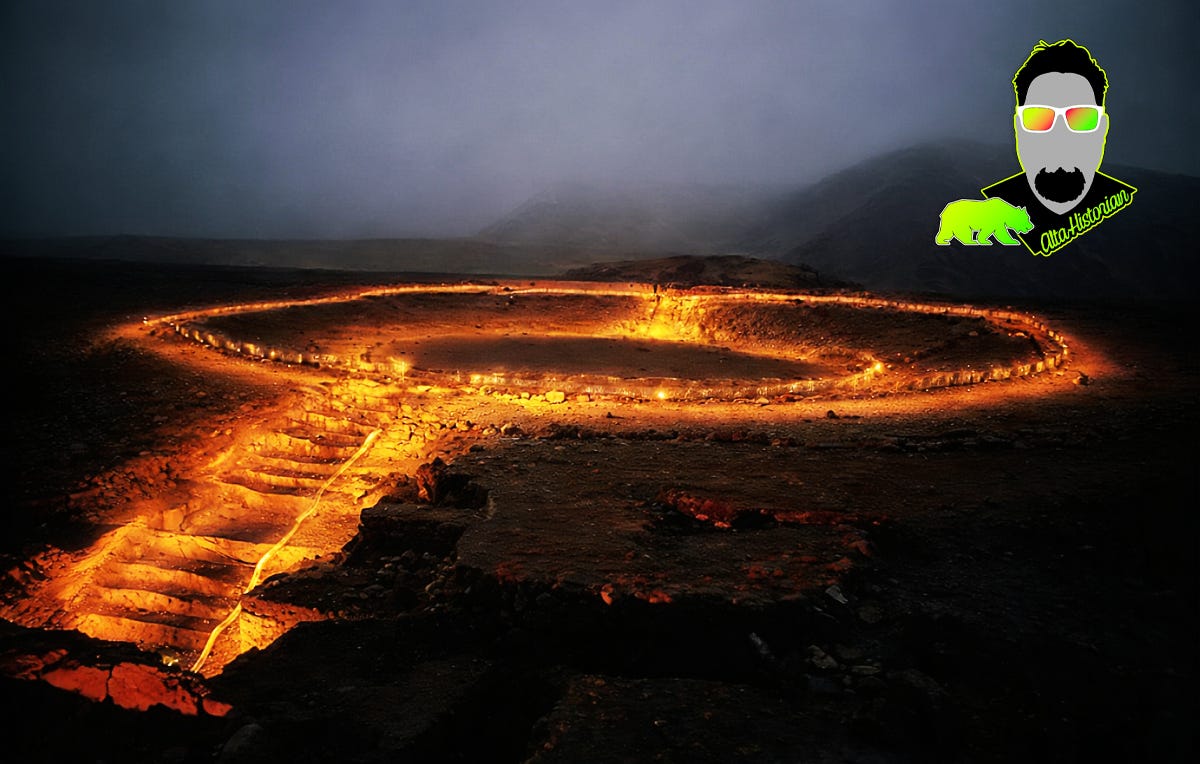
Estimated Date Range: 3500 BC – 1600 BC
Six earth-and-rock mounds rise out of the windswept desert of the Supe Valley on the Peruvian coast. Dune-like and immense, they appear at first glance to be the accidental work of geology — but these are human-made pyramids. And they are the remains of a city that flourished nearly five thousand years ago — the oldest known urban center in the Americas, and among the most ancient cities anywhere on earth.
This civilization is known today as Norte Chico, or more precisely Caral-Supe, after its largest ceremonial center. Its roots reach deep. Human activity in the region extends back to roughly 9000 BC, but by the late fourth millennium BC, those long-settled populations crossed a civilizational threshold. By 3500 BC, coordination, planning, and monumentality appear together.
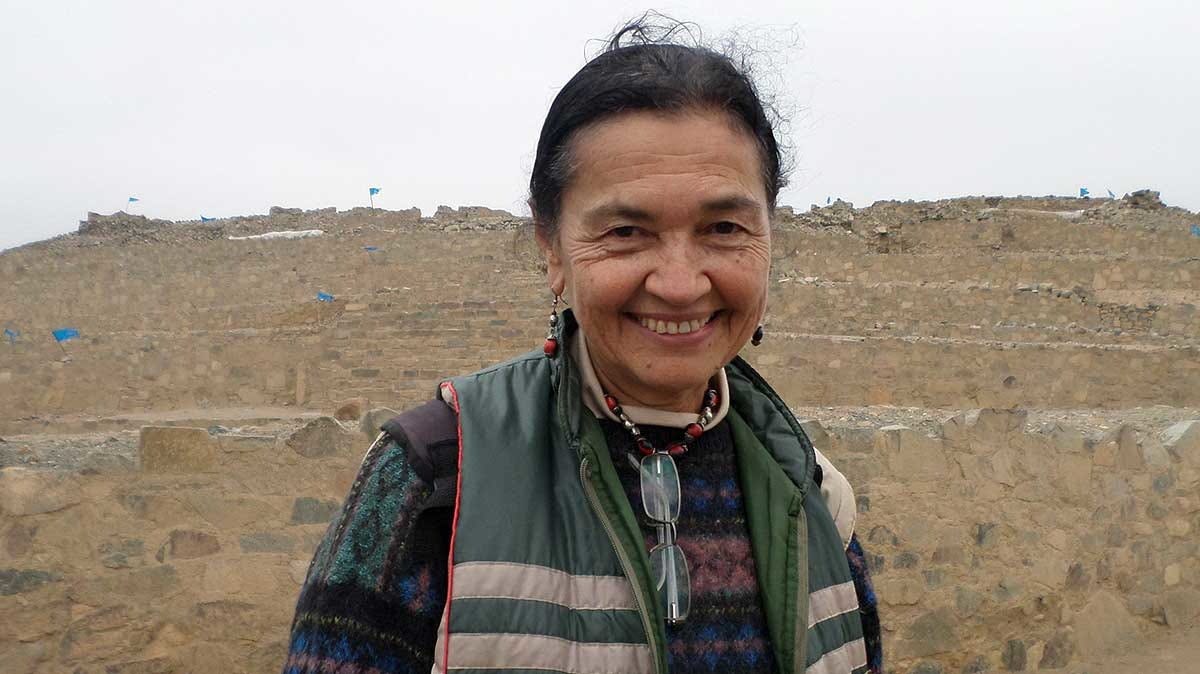
Caral lies about fourteen miles inland from the Pacific and roughly 120 miles north of modern Lima, in a desert landscape without paved roads, electricity, or public water. It was here that archaeologist Ruth Shady Solís arrived in 1994 and confronted a landscape that did not fit accepted chronologies. “This place is somewhere between the seat of the gods and the home of man,” she recalled. Though Caral had been identified as early as 1905, it was long dismissed as comparatively recent. The scale of the pyramids, however, suggested otherwise.
Excavation began in 1996, and for months, Shady’s team searched for potsherds — the broken remains of ceramic vessels that anchor archaeological dating across much of the ancient world. None appeared. What might have disappointed another researcher only sharpened her conviction. A city without ceramics was not primitive, but rather, it was early. Pre-ceramic. Older than expected.
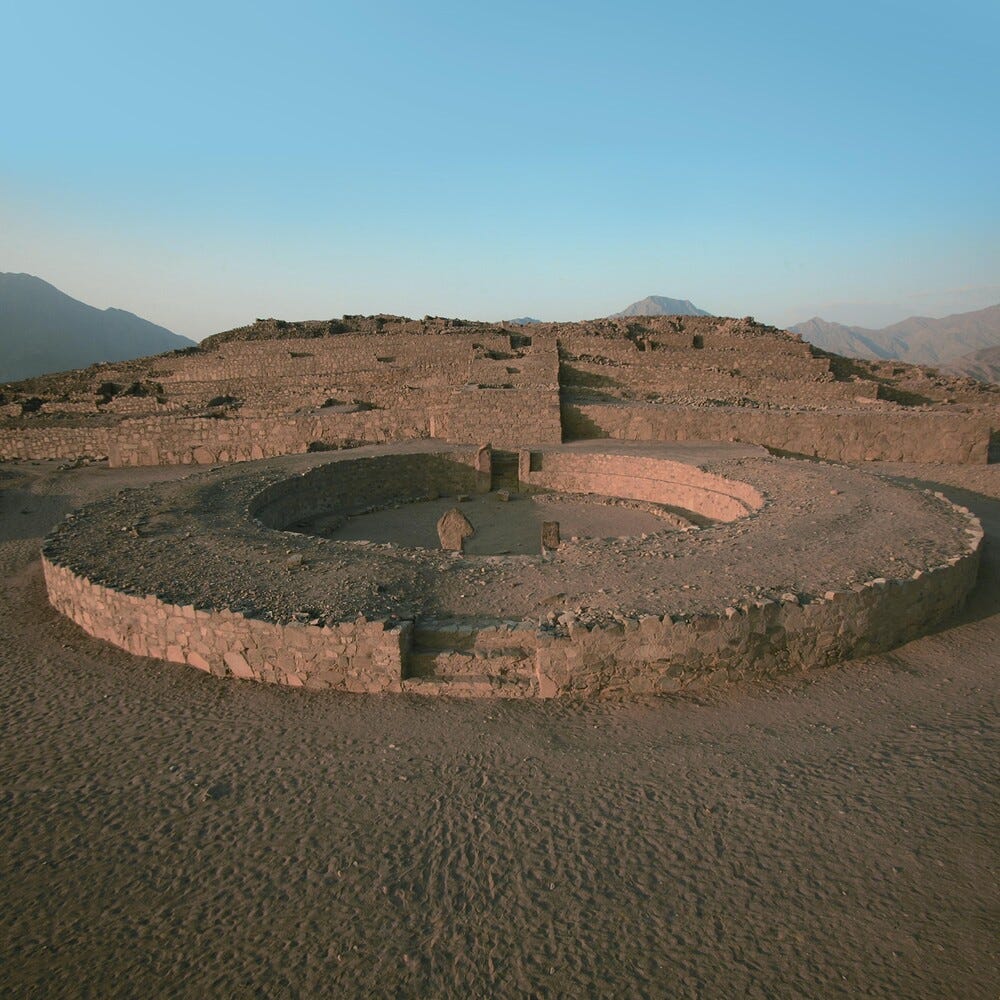
The breakthrough came at Pirámide Mayor, the largest of Caral’s six major pyramidal mounds. Beneath millennia of sand and collapse, Shady uncovered staircases, circular walls bearing traces of colored plaster, and squared brickwork arranged with deliberate symmetry. At the foundation lay the decisive evidence: woven reed bags, known as shicras, packed with stones. These bags, filled from a hillside quarry over a mile away, had been stacked within retaining walls to raise the pyramids themselves.
Radiocarbon dating followed. In 1999, samples were sent to Field Museum researchers Jonathan Haas and Winifred Creamer. The results, confirmed in 2000, dated the reeds to approximately 2600 BC — 4,600 years old. When the findings were published in Science in 2001, they forced a recalibration of American prehistory. Caral and the Supe Valley, the authors wrote, were “the locus of some of the earliest population concentrations and corporate architecture in South America.”
The implications were immense. Caral was already a thriving metropolis when the Great Pyramids of Egypt were rising. Pirámide Mayor alone covers an area nearly the size of four football fields and stands sixty feet tall. A broad staircase ascends from a sunken circular plaza, climbing three terraces before reaching an upper platform with an atrium and a central hearth. Thousands of laborers, along with planners, architects, supervisors, and ritual authorities capable of sustaining collective effort over generations, would have been required.
Within a ring of platform mounds lay a sunken amphitheater, large enough to hold hundreds. There, Shady’s team uncovered bone flutes fashioned from pelican and condor, and later, cornets made from deer and llama bone. Music was not ornament — it was infrastructure. Ceremony was not peripheral — it was the organizing principle.
Residential patterns reveal hierarchy. Elite dwellings occupied elevated, well-maintained spaces atop the pyramids. Craftsmen lived in ground-level compounds. Workers occupied peripheral, less stable settlements. This was a stratified society, but not a militarized one. No fortifications appear. No weapons. No skeletal evidence of warfare. Sacred space shows no scars of siege. Violence may have existed elsewhere — history suggests it always does — but it was not inscribed onto the ceremonial core.
The question remains: why here? Why would populations with access to rich marine resources abandon the coast for an inland desert? Was there a coastal economy that worked with those in Caral? Shady’s excavations point to trade. Caral functioned as a regional hub linking the Pacific fisheries, the Andean highlands, and the distant Amazon. Achiote fruit, coca seeds, and non-local shells appear in the record. Cotton appears everywhere.
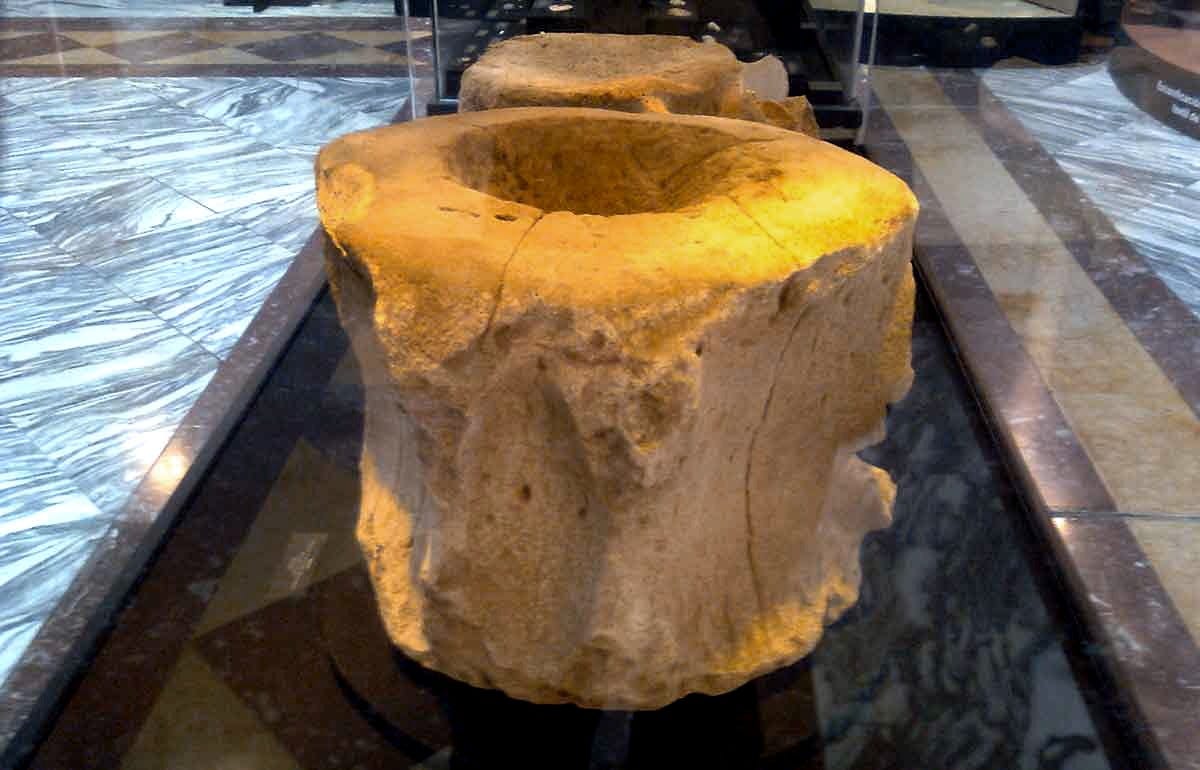
This cotton, Shady argues, was the foundation of Caral’s power. Farmers inland grew cotton that coastal fishermen needed for nets. Those fishermen, in turn, supplied dried fish and shellfish. Larger nets meant larger catches. Cotton bound land and sea into a single economic system — and dried squash served as floats and containers, eliminating the need for ceramics altogether. From this system emerged specialization. An elite class freed from food production could become priests, planners, and builders. Class distinctions followed. Urban life followed. Maybe.
At its height, Caral anchored at least seventeen other monumental centers scattered across a 35-square-mile network of valleys. Norte Chico was not a single city but a civilizational field — the earliest large-scale one in the Americas. Later Andean cultures would refine what began here. Shady has argued, persuasively, that Caral stands at the root of the Inca Empire, whose cities at Cusco and Machu Picchu echo Caral’s ceremonial logic across millennia.
Decline came slowly. Around 1800 BC, construction ceased. By 1600 BC, the population had dispersed into more fertile regions. Strikingly, the inhabitants buried their monumental structures with care, sealing them rather than abandoning them. Closure, not collapse.
As Norte Chico faded, other civilizations rose elsewhere — including, further north, the Maya Civilization. Civilizational gravity shifted, but the precedent endured. Caral reminds us that civilization does not require pottery, metallurgy, or war. It requires coordination, belief, and time — and even then, it leaves behind more questions than answers.

Bibliography | Notes
Field Museum. Proyecto Arqueológico Norte Chico publications and radiocarbon datasets, 2002–2004. https://www.fieldmuseum.org/page/science/research/area/cultural-heritage/culturalheritage-surveys/proyecto-arqueologico-norte.
Farias, Bianca Costi. “The Incredible Finds From Caral-Supe, Americas’ Oldest Civilization.” TheCollector, August 21, 2025. https://www.thecollector.com/caral-supe-archaeological-finds-oldest-civilization/.
Ross, John F. “First City in the New World? Peru’s Caral Suggests Civilization Emerged in the Americas 1,000 Years Earlier Than Experts Believed.” Smithsonian Magazine, August 2002. https://www.smithsonianmag.com/history/first-city-in-the-new-world-66643778/.
Shady Solís, Ruth, Jonathan Haas, and Winifred Creamer. “Dating Caral, a Preceramic Site in the Supe Valley on the Central Coast of Peru.” Science 292, no. 5517 (April 27, 2001): 723–726. https://www.sciencemag.org/article/10.1126/science.1059519.
Shady, Ruth. Proyecto Arqueológico Caral-Supe. Radiocarbon findings and site reports, 1996–2004.
UNESCO World Heritage Centre. “Sacred City of Caral-Supe.” Listing No. 1269. https://whc.unesco.org/en/list/1269/.