

Part II: Imperial Economies
United States | Systems of Forced Labor by Imperial Powers

The economic structure of Spanish America developed along lines familiar to every empire that sought to command distant lands while enriching a distant crown. Authority flowed downward from the monarchy — wealth flowed upward from the colonies. Between those two movements stood a carefully constructed system of regulation, taxation, and coercion that bound the colonial economy to the Spanish state.
At the center of that system stood the extraction of precious metals. Gold and silver from the Americas became the lifeblood of the Spanish imperial economy, transforming distant mines into instruments of royal finance. The Crown ensured its share through the quinto — “the royal fifth” — a rule requiring that one-fifth of all precious metals mined in the colonies be delivered directly to the royal treasury.
Trade itself was similarly constrained. Colonial commerce was limited to two designated ports through which all official exchange had to pass. These restrictions were not merely bureaucratic formalities. They represented the Crown’s effort to supervise imperial commerce, tax the circulation of goods, and preserve authority over colonial markets that might otherwise develop their own independent networks of exchange.
Yet regulation alone could not sustain an imperial economy built upon extraction. Labor was required, and labor had to be controlled. The Spanish colonial system, therefore, rested upon institutions that organized Indigenous work under European authority.
Foremost among these was the encomienda system — known as the mita in Portuguese areas. Under this arrangement, the Spanish king granted an individual mine owner or plantation proprietor — the encomendero — the right to the labor of a specified number of Indigenous workers.
In theory, the arrangement carried reciprocal obligations. The encomendero was expected to protect Indigenous communities from hostile tribes and to instruct them in Christian doctrine. In practice, however, the distinction between royal grant and private domination frequently disappeared. The system was often indistinguishable from chattel slavery. Indigenous laborers worked under the near-total authority of the landowner who possessed the royal concession.
A related institution, the Repartimiento, operated along similar lines. Land and, in some cases, Indigenous laborers were granted to settlers for a limited period. Although formally temporary, the system reinforced the same hierarchy that defined the broader colonial order.
Together, these arrangements revealed the underlying logic of the Spanish imperial economy. Colonial production served metropolitan wealth. Silver and gold moved outward toward Spain, sustained by tightly regulated markets and labor systems that compelled Indigenous peoples to serve the imperial project.
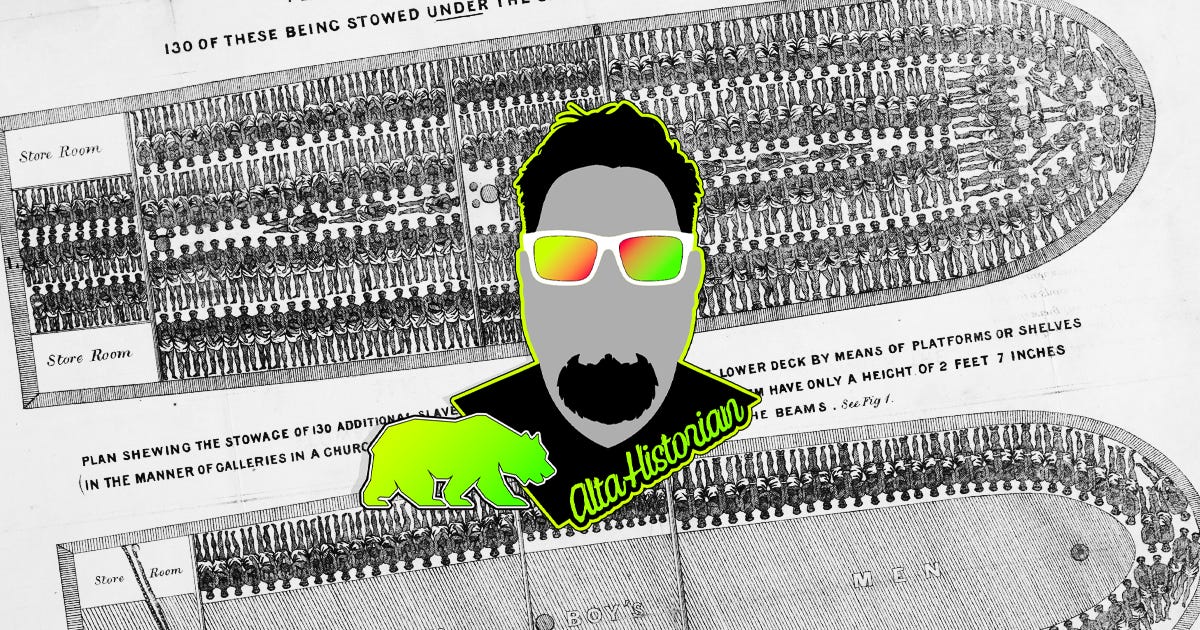
In time, the Portuguese, Spanish, and English would come to embrace the system of slave labor. In Virginia, sometime in 1619, the Portuguese slave ship São João Bautista departed from the port of São Paulo de Luanda, a Portuguese military outpost in west central Africa. Its destination was Vera Cruz in New Spain — present-day Mexico. Commanding the vessel was Captain Manuel Mendes da Cunha, who carried 350 enslaved Africans aboard. Two hundred of those captives had embarked legally under a license — an asiento — held by investors in Seville authorizing their sale in New Spain.
Yet the voyage did not unfold as planned.
When da Cunha reached Vera Cruz on August 30, he delivered only 147 enslaved Africans. Spanish records note that among them were twenty-four African boys whom he had earlier sold in Jamaica. Those same records also reveal what had occurred during the voyage: the ship had been attacked along the coast of Campeche, on the Gulf Coast of present-day Mexico, by “English corsairs,” or privateers.
One of these privateers was the 160-ton ship White Lion, which sailed from the port of Vlissingen — known in English as Flushing — in the Netherlands. Its captain, John Colyn Jope, carried Dutch letters of marque issued by Maurice, Prince of Orange. These documents authorized Jope, though a civilian, to attack and plunder Spanish ships.
The second vessel was the English ship Treasurer. Like the White Lion, it sailed from Flushing. The ship was jointly owned by Robert Rich, Lord Warwick, and Samuel Argall, the deputy governor of Virginia. The Treasurer already possessed a history in the Atlantic world. In 1612, Argall sailed the vessel on what was then the fastest recorded voyage from England to Virginia. Four years later, in 1616, the ship carried Pocahontas to England.
Commanding the Treasurer in 1619 was Captain Daniel Elfrith. He too sailed under a letter of marque — this one issued by Charles Emmanuel I, Duke of Savoy, ruler of an independent duchy whose territory would later be absorbed into modern France and Italy.
An eyewitness account suggests that when the White Lion and the Treasurer encountered one another at sea, Captain Jope assumed command of the joint enterprise. Soon afterward, he placed twenty-five men aboard the White Lion’s pinnace and sent them out to intercept the São João Bautista sometime in late July or early August of 1619.
Two or three days later, the pinnace returned.
One of the crewmen admitted they had attacked an Angolan ship. Another insisted they had discovered “an empty Angolan ship” drifting at sea. Whatever the precise circumstances, the result was unmistakable. They returned with approximately sixty enslaved Africans taken from da Cunha’s vessel, along with significant quantities of grain and tallow. Many others from the São João Bautista had already perished during the Atlantic crossing — likely one hundred or more.
With this human cargo aboard, the White Lion and the Treasurer sailed for Virginia. Their intention was straightforward: to sell the captives.
According to a letter written by John Rolfe — the colony’s secretary — to Sir Edwin Sandys, treasurer of the Virginia Company of London, the White Lion arrived first. The ship reached Point Comfort in late August, having lost sight of its “consort shipp” during the voyage from the West Indies.
Rolfe described the vessel as a “Dutch man of Warr,” likely because it carried Dutch letters of marque. He reported that the ship “brought not any thing but 20 and odd Negroes,” whom the governor of Virginia, Sir George Yeardley, and the cape merchant Abraham Peirsey purchased “for victualle [food] … at the best and easyest rate they could.”
Some of the Africans were subsequently transported to Jamestown and to Flowerdew Hundred, a plantation situated along the upper reaches of the James River that Peirsey was in the process of purchasing from Yeardley. Another colonial official, John Pory — who succeeded Rolfe as secretary — later suggested that the White Lion remained in Virginia for roughly a month. During that time, the vessel likely sold any remaining captives still aboard.
The Treasurer arrived three or four days later, carrying between twenty-eight and thirty additional Africans. Captain Elfrith sold two or three of them in Virginia. Yet he soon encountered an unexpected difficulty. The residents of Kecoughtan — present-day Hampton — refused to sell supplies to him or to his crew.
Their refusal likely arose from a legal complication. By the time the Treasurer reached Virginia, the Duke of Savoy had already concluded peace with Spain. As a result, Elfrith’s letter of marque was no longer valid. What had once been sanctioned privateering now hovered dangerously close to piracy. Virginia officials evidently wished to avoid entanglement in the matter.
By the time Rolfe, William Peirce, and a man named Ewins — sometimes spelled Ewens or Evans — arrived, the Treasurer had already departed. Some of the men who had sailed with Thomas West, twelfth Baron De La Warr, disembarked from the vessel, while the ship’s master’s mate — a man named Gray — was taken to Jamestown and interrogated under threat of death.
Elfrith sailed onward to the English colony at Bermuda. When he arrived, he still possessed twenty-five enslaved Africans. Deputy governor Miles Kendall took them into custody and held them until the arrival of the new governor, Nathaniel Butler.
Butler later explained to his superiors that without these Africans, he would not have been able “to rayse one pound of Tobacco this year.” He concluded with a stark assessment of their economic value:
“Thes[e] Slaves are the most proper and cheape instruments for this plantation.”
And so it began, the long saga of the English colonies joining their imperial counterparts as active participants in the TransAtlantic Slave trade, forever altering the history of the American colonies.

Bibliography | Notes
Locks, Catherine; Mergel, Sarah; Roseman, Pamela; Spike, Tamara; and Lasseter, Marie, “History in the Making: A History of the People of the United States of America to 1877“ (2013). History Open Textbooks.
Locke, Joseph L., and Ben Wright, eds. The American Yawp: A Massively Collaborative Open U.S. History Textbook. Stanford, CA: Stanford University Press, 2019.
Gallagher, Brendan. “Africans: Virginia’s First,” Encyclopedia Virginia.