

Patriota Tejano, III: Independence
U.S. West History | Latin American History


By the early 1830s, the contradictions that had accumulated quietly in Texas no longer remained contained. What had once been managed through patience, personal relationships, and constitutional language now demanded resolution. The political center in Mexico had collapsed inward, and Texas, long peripheral, felt the pressure first.
Vicente Guerrero’s execution in 1831 marked more than the fall of a president. It signaled the lethal volatility of Mexican politics. Faction had replaced deliberation. Survival required alignment not with principle but with advantage. Into this vacuum stepped Antonio López de Santa Anna — a man shaped less by ideology than by opportunity. Originally associated with the York Rite, Santa Anna later aligned himself with the Scottish Rite, swinging between factions as circumstances demanded. By 1833, he was elected president — and by 1834, he had consolidated power. By 1835, he ruled as dictator.
The Constitution of 1824 — the document Seguín had helped build — was dismantled. Santa Anna replaced the federal republic with a centralized system under the Siete Leyes (“Seven Laws”), a constitution that fundamentally altered Mexico's organizational structure. Militias were reduced. State legislatures were dissolved. Political autonomy vanished by decree. Revolts erupted across Mexico — not only in Texas, but in Zacatecas and other regions stripped of constitutional authority.
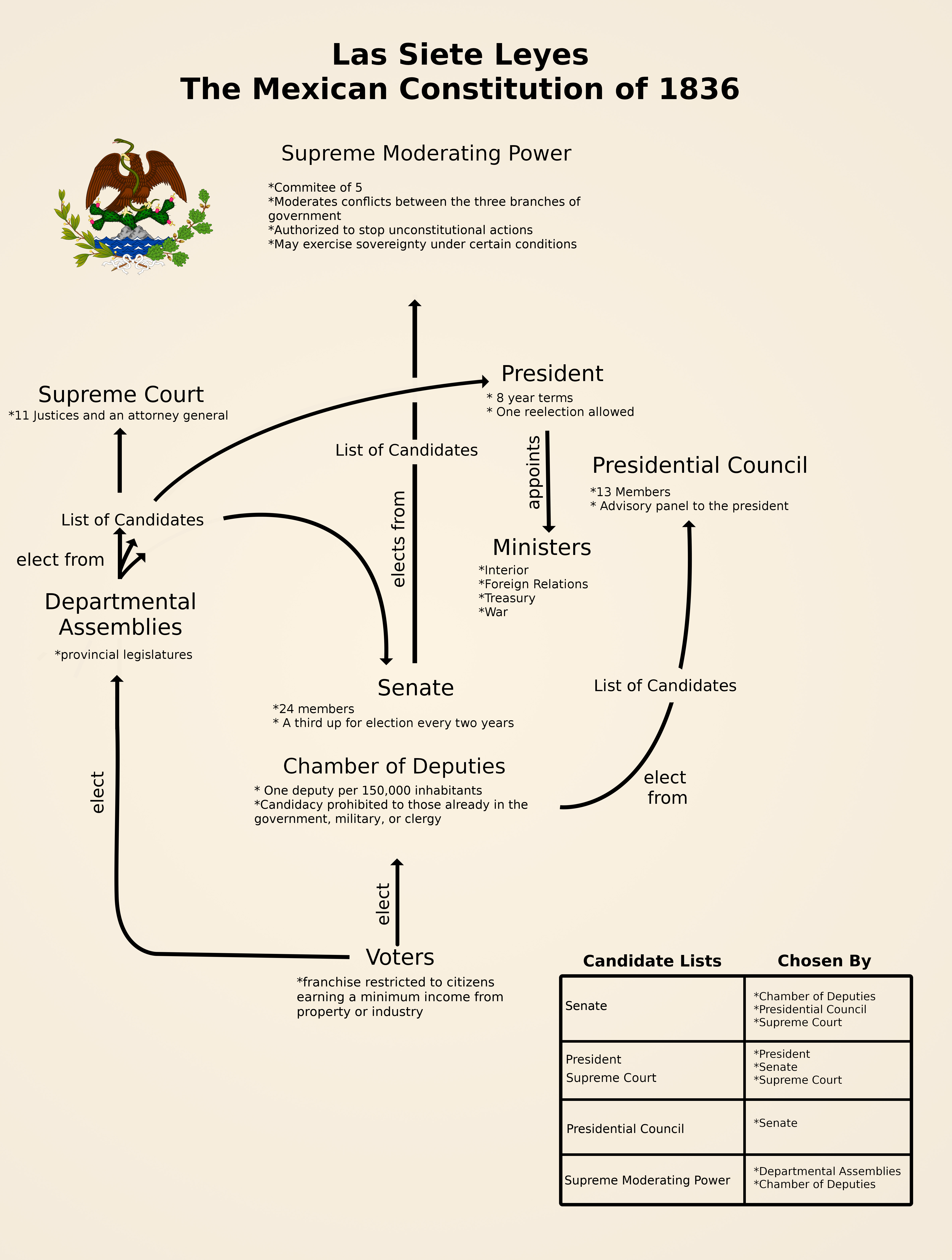
Texas, which had framed its grievances in the language of constitutional defense for more than a decade, reached its breaking point.
In January of 1835, Mexican soldiers arrived at Anahuac to reestablish a customs house, enforcing tariffs and authority that Texans believed had already been illegitimately imposed. The move escalated tensions already heightened by the Law of April 6, 1830, which had restricted American immigration and confirmed to many that Mexico intended to exercise control rather than compromise.
The sequence that followed moved quickly.
In October 1835, armed resistance began at Gonzales. Texans refused to surrender a small cannon — and a flag reading “Come and Take It” — a symbolic dispute that escalated into open rebellion. Battles followed in rapid succession: Gonzales, Goliad, Concepción, and the Grass Fight. The siege of San Antonio de Béxar culminated in December with the city's capture and the surrender of General Martín Perfecto de Cós.
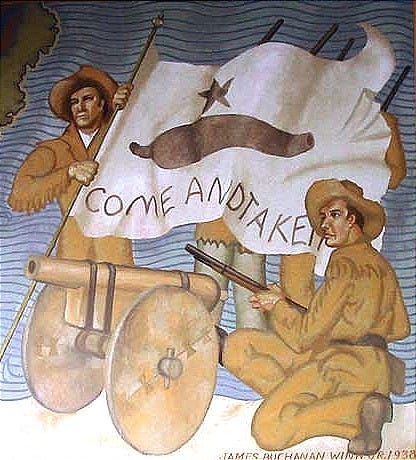
Texas was now in open revolt.
On March 2, 1836, delegates gathered at Washington-on-the-Brazos and declared independence from Mexico. The declaration listed grievances accumulated over years: the dissolution of state legislatures, the denial of trial by jury, Santa Anna’s military despotism, and the abandonment of constitutional guarantees. Independence was framed not as innovation, but as necessity.
Four days later, on March 6, 1836, the Alamo fell.
Juan Nepomuceno Seguín, Erasmo’s son, was present in the revolutionary movement, serving as a courier and scout. He left the Alamo before the final assault, carrying messages — a decision that would save his life and later haunt his reputation. The fall of the Alamo transformed the rebellion into a war of survival. Martyrdom replaced negotiation.
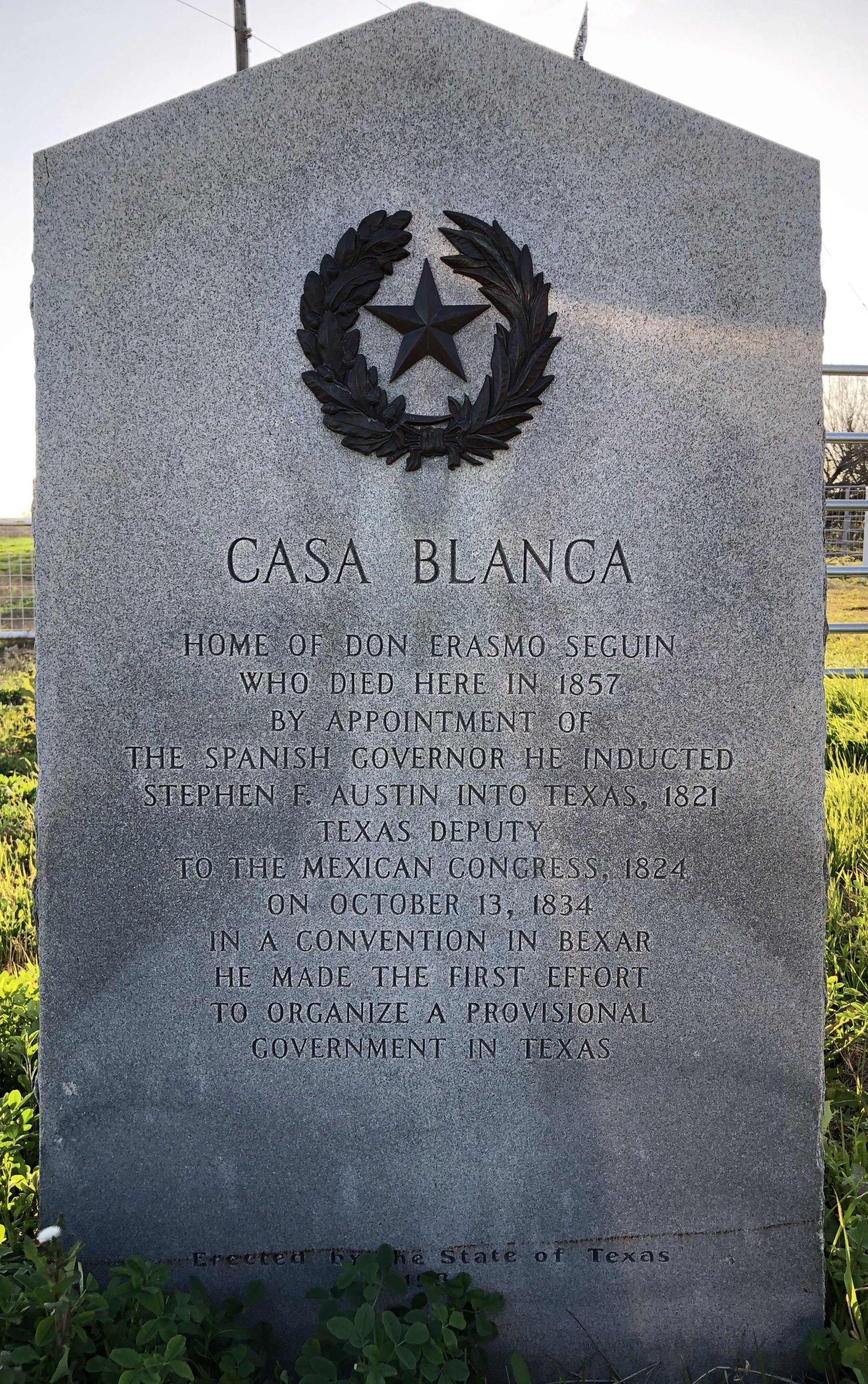
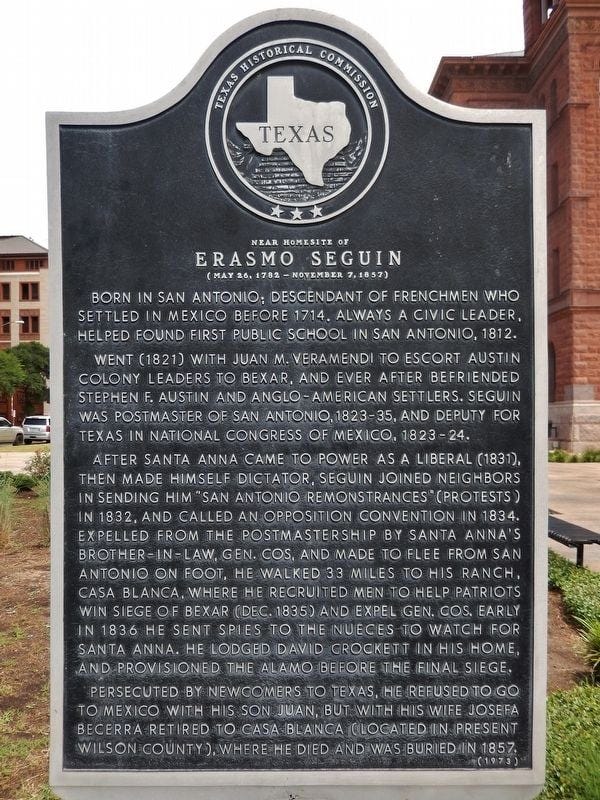
Erasmo Seguín remained loyal to the Texan cause in the only way an older frontier broker could. From Casa Blanca, he supplied food, horses, and weapons. Loyalty, for him, was logistical. He did not command armies. He sustained them.
Then came Goliad.
After surrendering at Coleto, Texan prisoners were executed on March 27, 1836. The order, initially countermanded, was ultimately carried out. Santa Anna’s decision — or acquiescence — hardened resolve. War was no longer about governance. It was about vengeance.
The conflict ended abruptly.
On April 21, 1836, Texan forces defeated Santa Anna at the Battle of San Jacinto. The victory was decisive. Santa Anna was captured. The Treaties of Velasco followed — one public, one secret — promising Mexican withdrawal and recognizing Texan independence. Mexico later refused to accept them, but the war had ended.
For Anglos, independence marked triumph.
For Tejanos, it marked the beginning of something else.
In 1840, the Texas Congress compensated Erasmo Seguín $3,004 for the supplies he had provided during the revolution. The payment was a formal recognition of loyalty, but it was also belated and insufficient protection against what followed.
By 1842, the social fabric that had once bound Tejanos and Anglos unraveled. The Anglo invasion continued. Racism hardened. Cattle were stolen. Accusations of collaboration with Mexico circulated freely. Old alliances dissolved under suspicion. Loyalty was no longer remembered — it was questioned.
Juan Seguín articulated the cost with painful clarity. Forced into exile, stripped of the home he had fought to defend, he wrote:
“Matters being in this state, I saw that it was necessary to take some [steps] which would place me in security, and save my family from constant wretchedness. I had to leave Texas, abandon all, for which I had fought and spent my fortune, to become a wanderer. The ingratitude of those, who had assumed to themselves the right of convicting me; their credulity in declaring me a traitor, on mere rumors, when I had to plead, in my favor the loyal patriotism with which I had always served Texas, wounded me deeply.”
This was the final irony.
The men who had helped build the bridge were now blamed for standing on it too long. Tejanos who had supported independence found themselves displaced by the very republic they helped create. Texas had been liberated but not reconciled.
Erasmo Seguín withdrew from public life. He returned to his ranch, carrying the quiet burden of survival into old age. He had escorted the Americans in. He had fed the revolution. He had endured suspicion under Spain, Mexico, and Texas alike.
He died on October 30, 1857.
The tragedy of Erasmo Seguín is not that he chose the wrong side. It is that he chose loyalty in a world that no longer honored it. The frontier he had navigated through patience and pragmatism hardened into a nation less tolerant of ambiguity. History did not forget him — but it did not protect him either.
Texas was built by men like Seguín.
And then it moved on.

Bibliography | Notes
Chabot, Frederick Charles. Genealogies of Early San Antonio Families. San Antonio, TX: Frederick Charles Chabot, 1937.
de la Teja, Jesús F. “Seguin, Juan Jose Maria Erasmo de Jesus.” Handbook of Texas Online. Texas State Historical Association.
de la Teja, Jesús F. Tejano Leadership in Mexican and Revolutionary Texas. College Station: Texas A&M University Press, 2010.
Jillson, Cal. Texas Politics: Governing the Lone Star State. 4th ed. New York: Routledge, 2014.
Seguín, Juan Nepomuceno. Personal Memoirs of John N. Seguin. San Antonio, TX: Ledger Book and Job Office, 1858.
McLeish, John Lewin. Highlights of the Mexican Revolution. Aurora, MO: Menace Publishing Company, 1918.