

Reverend Walter Colton: The Bear & Bull
California History

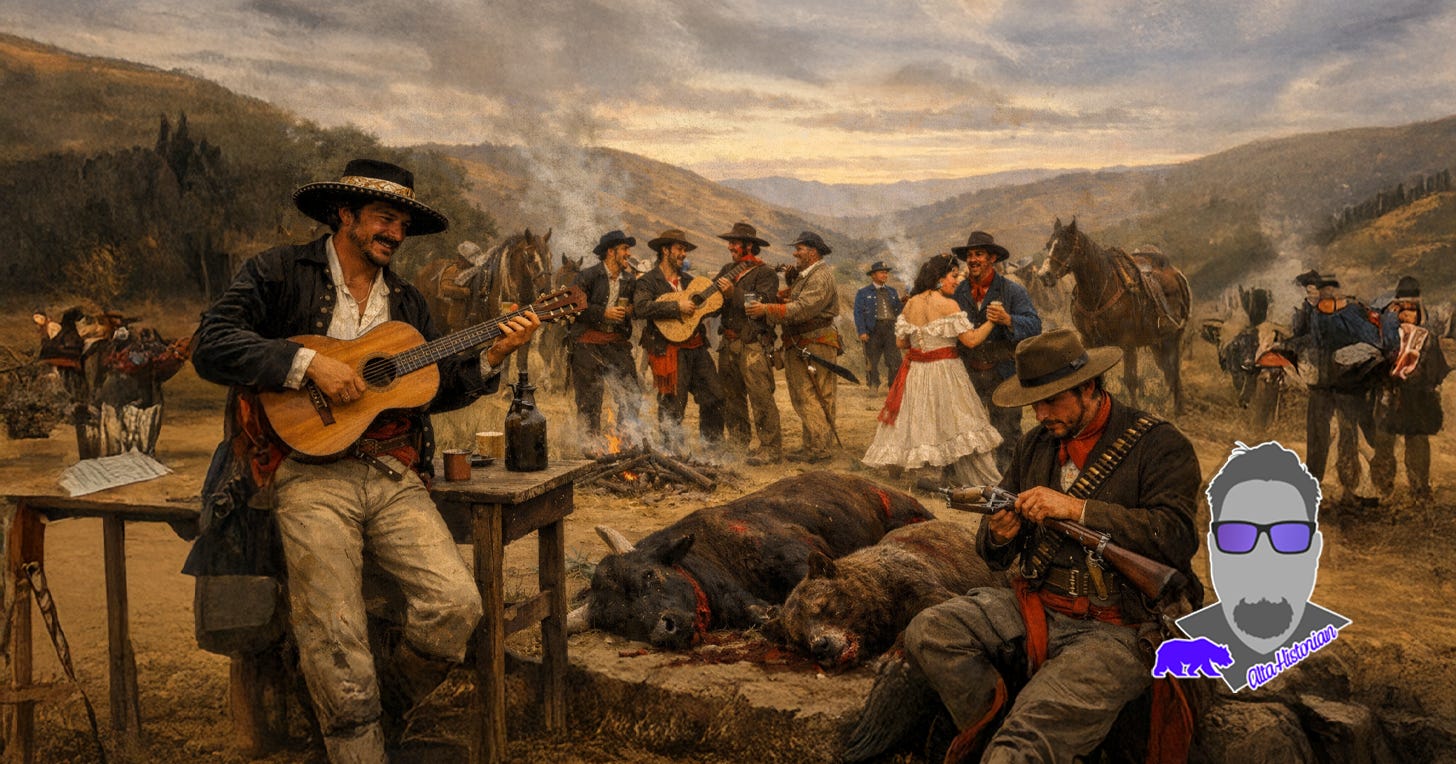
“It was the same thing to them whether their weapon was a rifle or a guitar, — whether they were going to a skirmish or a fandango.”
Reverend Walter Colton
Speaking on the Californio soldiers during the Mexican–American War
There are moments in California’s early American period that resist enclosure within any tidy historical narrative. They survive instead in the margins — in diaries, travelogues, reminiscences — preserved not for their strategic importance but for what they reveal about real life and experience during a time of cultural collision. These are moments of curiosity, misrecognition, and fascination with the forbidden — moments when the boundaries between Mexican and American, victor and defeated, observer and participant, blurred just enough to expose something truer than formal history often allows.
Over the last decade, I have stumbled into more than a few of these rabbit holes. They are stories too small, too awkward, too human to anchor a grand argument, yet essential in what they show us about daily life — about how Mexicans and gringos tested one another’s worlds while standing on the same soil.
This was the case with Reverend Walter Colton. A naval chaplain by commission, Colton became the first American alcalde of Monterey after the U.S. occupation. The building that bears his name — Colton Hall — where California’s first constitution was debated and drafted, was originally constructed under his direction as a town hall and school. By trade and temperament, Colton was a newspaperman — it was fitting that he co-published The Californian, the state’s first newspaper, which carried news of the war with Mexico to an uncertain and multilingual readership.
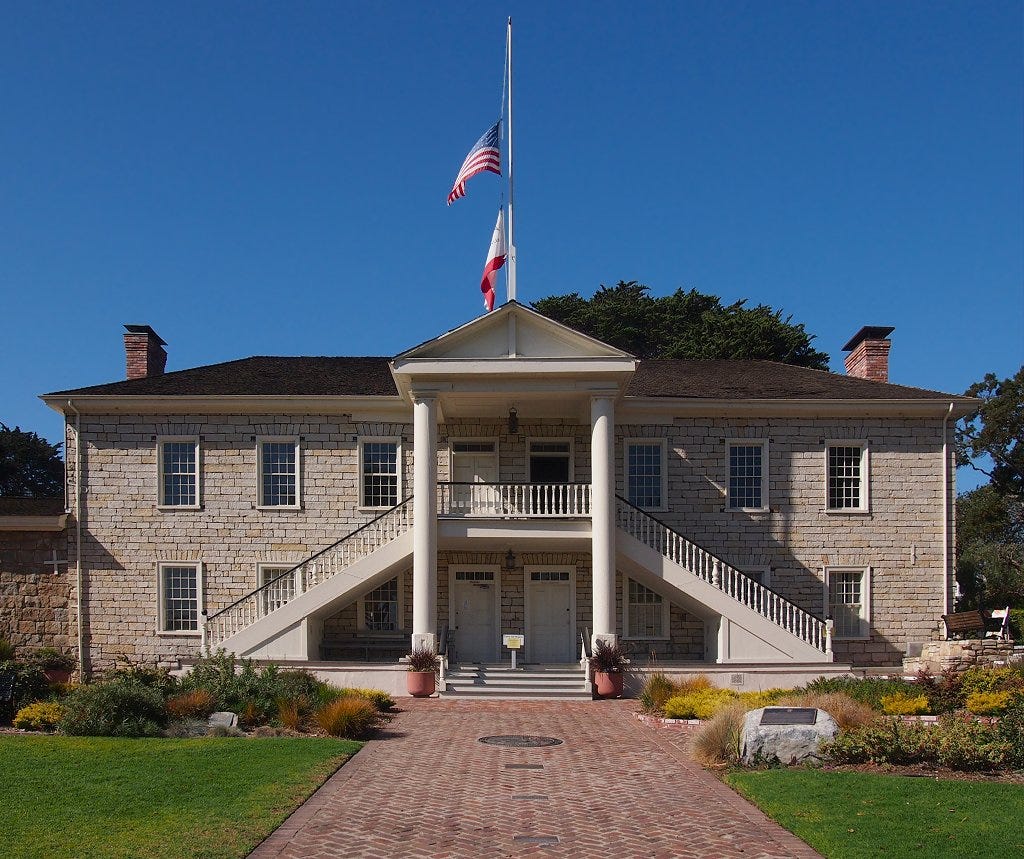
Colton would die in 1851, but not before publishing Three Years in California, dedicated to one of the most respected Californios of the era, Mariano Guadalupe Vallejo, whom he praised as “One of California’s distinguished sons, in whom the interests of freedom, humanity, and education have found an able advocate and munificent benefactor.” The admiration was unmistakable. It was personal. Cultural. Intellectual.
And it was observational.
The sun rose slowly one October morning a year or so before, casting a soft, golden light across California’s hills and gullies — the kind of light that warms the back and dulls the sharpness of hardship. A gringo, pale-faced and newly arrived from some damp New England corner of the republic, Reverend Walter Colton found himself in a land long spoken of in half-myth: wild, lawless, beautiful.
It was beautiful — unapologetically so. Oaks stood like old sentinels. Willow and birch traced the watercourses. The pastures opened wide and gentle, like a held breath released. Peaceful, and yet charged with tension, as though the land itself understood it was being watched and measured. This was the country of the Californios — proud horsemen, raised in the saddle, men whose movements carried the memory of older wars and older customs.
They rose early that day, not for war, but for something adjacent to it — a bear hunt. A test of nerve and skill. A ritual of manhood. Rifles rested across shoulders, pistols sat easy in sashes, and horses were mounted with the instinctive grace of those born to them. But the essential instrument was the lasso — long, coiled, silent — an object as elegant and dangerous as the men who wielded it.
Fifteen miles they rode into the hills, into brush and broken rock where the air cooled, and sound traveled differently. At the center of a natural clearing, they set the bait: an old cow, shot and dragged beneath the trees, its scent thickening the night. Then they waited. Back at the adobe, they drank London porter and passed time in low conversation, eyes restless, attention always drifting outward. They were waiting for the famed California Grizzly bear.
At midnight it came — heavy, deliberate, dense with dark strength. The Californios moved without command, slipping into saddles as if summoned by instinct. Moonlight glazed the hills in silver as the chase began — silent at first, marked only by breath and hoof and pulse — until lassos snapped and hissed through the air.
The bear roared, a sound vast enough to rattle sleep from the trees. Horses twisted and surged, half-wild themselves, bonded to their riders by years of trust. One man was nearly dragged to death before recovering his rope in a single, fluid motion. Horse and rider became one organism, and the bear — for all its power — was soon bound to a thick oak, held fast by rawhide and practiced precision.
But the day was not finished.
When the sun crested the ridge and spilled fire across the grass, no one slept. Blood still ran hot — the heart does not quiet so easily. A wild bull was released into the same arena. The bear, freed from its bonds but not from its fate, was set to meet it.
The horses withdrew. What followed was not sport in any modern sense, but ritual — a choreography older than rules. The bull charged and missed. The bear answered, teeth sinking deep. Horn met flesh. Flesh met fury. They stood bloodied, swaying, neither willing to fall, until finally they did.
Then the Californios stepped forward — no longer hunters, no longer performers, no longer spectators, but as compassionate executioners. They ended it with lead and smoke, granting the kind of mercy reserved for warriors.
The gringo Reverend Walter Colton watched, stunned. It confounded him — this theater of death, this seamless movement between violence and ceremony, between danger and celebration. But the Californios merely wiped their blades and holstered their pistols. Their task was finished.
There was always another part of the day waiting.
Whether Colton sensed it or not, his time in California — and on earth — was drawing to a close. The episode he set down would stand among his last, a final effort to give shape, in ink, to a world he had scarcely begun to comprehend.
A lifetime of stories pressed at the margins — far more than he would ever manage to record — for California in those years was nothing less than a crucible: gold, death, and rebirth colliding and recombining in relentless succession.
Colton played his part in it, modest though he believed that part to be, and one cannot help but imagine the exhilaration of bearing witness to such scenes — of living them, rather than merely reporting them.

Bibliography | Notes
Colton, Walter. Three Years in California. New York: A. S. Barnes & Co., 1850.