

The Olmec Civilization (MesoAmerica)
World Civilizations

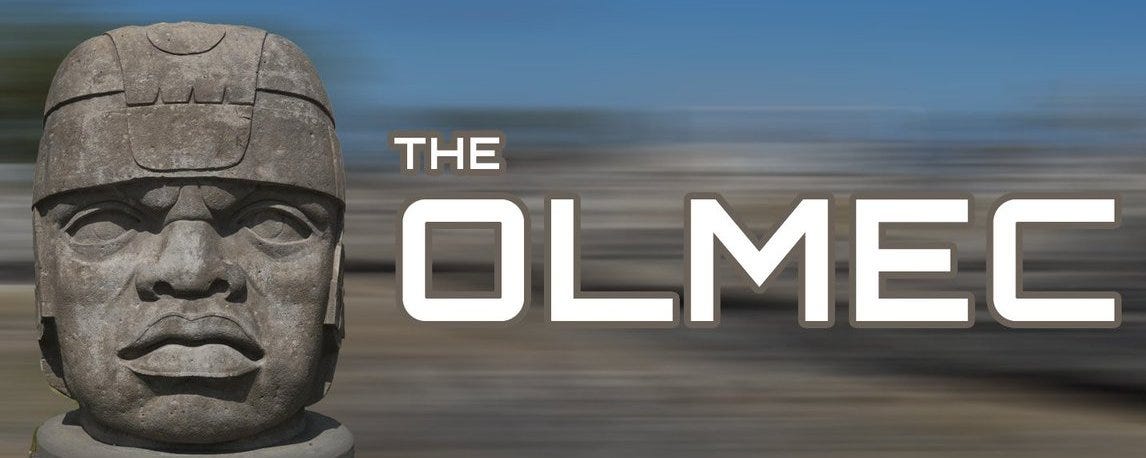
📍Place: Southern Mexico/Guatemala | Time: ca. 1600 and 400 BCE

The Olmec Civilization, often regarded as the “mother civilization” of Mesoamerica, thrived along the Gulf Coast of present-day Mexico between 1600 and 400 BCE. This enigmatic society, known for its colossal stone heads and extensive trade networks, laid the cultural foundations for later civilizations, such as the Mayans and Aztecs. Through its innovations in art, religion, and social organization, the Olmecs established traditions that would resonate across Mesoamerica for centuries.
One of the most distinctive features of the Olmec civilization is its monumental art, exemplified by the colossal stone heads. These heads, some weighing up to 50 tons, were carved from basalt and transported over long distances, a testament to the Olmecs’ engineering prowess and organizational capabilities. Scholars believe these heads represent Olmec rulers, their individualized features suggesting a society that greatly emphasized leadership and authority. There is also a theory that these sculptures could be ballgame players (see information below). Beyond their practical implications, the colossal heads reflect the Olmec's mastery of sculpture and their ability to mobilize labor for large-scale projects, hallmarks of a sophisticated civilization.
Religion was central to Olmec society, shaping its cultural and political structures. The Olmecs are thought to have worshipped a pantheon of deities, many associated with natural elements such as rain, fertility, and agriculture. The "were-jaguar" figure, a hybrid of human and jaguar traits, appears prominently in Olmec art and is believed to symbolize power, transformation, or shamanic practices. Ceremonial centers like San Lorenzo and La Venta served as hubs for religious and political activities, featuring pyramidal structures, altars, and stone monuments that reflected the Olmecs’ cosmological beliefs.
The Olmecs’ influence extended beyond their heartland through an intricate trade network. Artifacts such as jade figurines, obsidian tools, and ceramic designs have been found in regions as distant as Central Mexico and Central America, attesting to the reach of their economic and cultural exchanges. These goods facilitated material wealth and disseminated Olmec cultural motifs, including their characteristic iconography and religious symbols, which became integral to later Mesoamerican societies.
Agriculture was another cornerstone of the Olmec civilization. Cultivating maize, beans, and squash supported a growing population and allowed for the development of complex social hierarchies. Evidence of irrigation systems and surplus food production suggests that the Olmecs were adept at managing their environment and ensuring the stability of their settlements. This agricultural foundation enabled the rise of an elite class that oversaw religious and administrative functions, further solidifying the Olmecs’ role as pioneers of Mesoamerican civilization.
Despite their achievements, much about the Olmec civilization remains mysterious, including the reasons for its decline around 400 BCE. Some theories suggest environmental changes, such as river silting or climatic shifts, disrupted their agricultural base and trade routes. Others point to internal conflict or emerging regional powers' gradual absorption of Olmec traditions. Whatever the cause, the Olmecs’ legacy endured, influencing subsequent civilizations' art, architecture, and religious practices.
By examining the Olmec civilization, we uncover the roots of Mesoamerican culture and the shared elements that define advanced societies. From their colossal stone heads to their intricate trade networks, the Olmecs demonstrated the creativity and adaptability that characterize humanity’s most outstanding achievements. Their story, though incomplete, offers a glimpse into the early cultural flourishing of the Americas and the enduring impact of their innovations.
Ballgame
In the ancient cities of Mesoamerica, a game of profound significance unfolded on impressive stone courts. This game reflected the complex interplay of sport, religion, and societal norms. The Mesoamerican Ball Game is believed to have originated with the Olmec civilization during the Preclassical Period (2500-100 BCE) and became ubiquitous across various cultures by the Classical Period (300-900 CE).
These courts, often integral to a city's sacred precincts, were more than mere recreational spaces; they were stages where mythology and ritual came to life. The game's prominence is underscored in Maya mythology, notably in the tale of the gods Hun Hunahpú and Vucub Hunahpú, who, after disturbing the lords of the underworld with their play, were lured into Xibalba and met a grim fate. This narrative foreshadows the game's association with life and death.
The design of the ball courts evolved from simple flattened-earth rectangles to more elaborate structures featuring flat rectangular surfaces flanked by parallel stone walls. Some courts boasted large vertical stone rings set high into the walls, through which players aimed to pass a solid rubber ball using their hips, forearms, rackets, or bats, depending on regional variations.
The game's stakes were immense. It tested physical prowess and served as a conduit for religious expression and political prophecy. In one notable instance, a game held in Tenochtitlan between the Aztec ruler Motecuhzoma Xocoyotzin and the king of Texcoco served as a form of divination. The outcome ominously predicted the fall of Motecuhzoma's empire to Spanish conquerors.
Thus, the Mesoamerican Ball Game was a microcosm of the civilizations that cherished it, encapsulating their values, beliefs, and the ever-present shadow of mortality.

This seated figure likely represents an infant gazing upward and raising its right hand to its mouth. The artist of this baby worked in a fine, white clay to produce a hollow figure subsequently decorated with a white slip and red pigment. Without marked gender and seated with splayed legs and its hands on its thighs, the figure has the posture, body proportions, and fleshiness of a human baby, though symbolic designs embellishing its body and a distinctive headdress distinguish it from a mere mortal.
This pudgy figure is one of the best examples of this class of human figures displaying characteristics of well-fed children, the so-called Olmec “babies.” The body of the baby was carefully modeled to indicate realistic folds of skin and subcutaneous fat, evoking themes of abundance and plentiful resources. The face displays non-mortal characteristics, such as the stylized eyes, downturned mouth, and squared ears. The left portion of the figure’s back contains iconographic elements, such as crossed bands and crosshatching, possibly representing tattooing or scarification. This example is distinguished by its elaborate headpiece colored red-pink with powdered cinnabar and red ochre, which was probably used to anoint the tomb in which this figure was placed.
The babies share some iconographic and stylistic characteristics with the monumental sculpture from the Gulf Coast Olmec centers of San Lorenzo and La Venta, but seem to have only been produced during the earlier Olmec florescence between about 1200 and 800 B.C. This figure is reported to be from the central highland site of Las Bocas, in the Mexican state of Puebla, where a number of Olmec-style ceramic objects have been found. Others have been found in burial contexts at the sites of Tlapacoya and Tlatilco, in the Basin of Mexico near modern-day Mexico City. Researchers encountered a well-known pair of sculpted individuals—nicknamed “the twins”—in Burial 12, Offering 6, at Tlatilco, which share many characteristics with the hollow, baby-face figurines.
Supernatural infants play a significant role in Olmec art. These could be portraits of elite babies, infantilized portraits of actual individuals, idealized portraits of deities or mythological characters, or some other type of ritual agent. They could be memorials to infants that left this world too early, or representative emblems of whole lineages. The Olmec peoples may have been preoccupied with child-rearing and the mythological connections between the life cycles of infants and agriculture. In some cases, the ceramic effigies may have served as substitutes for actual infants in a sacrificial or dedicatory ritual, as there is compelling evidence of Olmec infant sacrifice or ceremonial burials. Mexican researchers working at the extraordinary waterlogged site of El Manatí (“the manatee”) found dismembered bones of newborns, perhaps neonates, and a primary infant burial in the fetal position. These were associated with miraculously preserved wooden busts, rubber balls, and greenstone ax caches. The faces of the wooden busts are evocative of similar expressions found on the ceramic babies.
BIBLIOGRAPHY
Berger, Eugene, et al.World History: Cultures, States, and Societies to 1500. University System of Georgia, 2016.
Cartwright, Mark. "The Ball Game of Mesoamerica." World History Encyclopedia, April 16, 2014.
OpenStax.World History, Volume 1: To 1500. OpenStax, Rice University, 2018.
"Olmec Civilization." World History Encyclopedia.
Metropolitan Museum of Art. "Olmec Art." In Heilbrunn Timeline of Art History.