

The Trial of Joan of Arc, 1431
World Civilizations | Primary source

Annotation
The passage preserves several exchanges from the trial of Joan of Arc in 1431, a proceeding that reveals — with remarkable clarity — the young woman’s unwavering confidence in the divine origin of her mission. Before Bishop Pierre Cauchon and an assembly of clerics, Joan defends the visions and voices she insists had directed the course of her life. These voices, she maintained, had guided her actions at every decisive moment — from the raising of the Siege of Orléans to the recognition of Charles VII as the rightful king of France.
Her answers display both fervent piety and calculated restraint. Joan speaks with the conviction of one who believes herself accountable not to the tribunal before her, but to a higher authority. Yet she also navigates the interrogation carefully, deflecting questions that might entangle others and refusing to provide statements that could be turned against her cause. The exchanges reveal a young woman who understood, at least instinctively, the peril of every word.
Seen in its wider setting, the trial was never merely a theological inquiry into private visions. Joan’s claims of divine guidance carried unmistakable political weight. If her mission had truly been ordained by God, then the legitimacy of the English occupation of France — and the authority of the churchmen presiding over her condemnation — stood implicitly in doubt. The trial thus became a stage upon which religious authority and political power converged, and where Joan’s steadfast testimony threatened both.
Summary of the Hundred Years’ War
The Hundred Years’ War appears in the text as one of the defining conflicts of late medieval Europe, unfolding amid the wider turbulence of the fourteenth century — an age already strained by environmental instability, famine, and the devastating arrival of plague.
Beginning in 1337, the conflict set the kingdoms of England and France against one another in a struggle born from dynastic rivalry and territorial ambition. Edward III of England asserted a claim to the French throne, and from that claim emerged a long and uneven contest.
The war was never a single, continuous campaign but rather a series of intermittent struggles stretching across generations. From its outbreak in 1337 to its conclusion in 1453, the conflict spanned 116 years, embedding itself within a broader story of transformation in the medieval world.
From its earliest stages, the war intensified the crises already weighing upon Europe. The Great Famine of 1315 – 1317 had weakened the continent’s agrarian foundations, a catastrophe linked in part to the cooling climate of the Little Ice Age. Fields yielded less, harvests failed, and the delicate balance of subsistence faltered. Upon this fragile landscape, the war imposed its own demands.
Then came the Black Death. Between 1347 and 1351, the plague swept across Europe, killing perhaps half of its population and leaving societies disoriented and diminished. The Hundred Years’ War unfolded within this devastation. Armies consumed resources and manpower at a moment when both had become painfully scarce.
Military campaigns associated with Edward III and his successors drew men and supplies away from communities already struggling to recover from plague and failing harvests. The burdens of taxation and the disruptions of war compounded the suffering of a peasantry living at the very edge of subsistence.
By the later fourteenth century, the social consequences of these overlapping crises had become unmistakable. In England, the Peasants’ Revolt of 1381 erupted from tensions that had been building for decades. Labor shortages after the plague had increased workers' bargaining power, yet the Statute of Labourers of 1351 sought to freeze wages at pre-plague levels.
At the same time, the crown demanded heavy taxation to sustain the war effort. These pressures combined to ignite rebellion. Across the Channel, France experienced its own convulsion in the Jacquerie of 1358, as peasants turned against a nobility weakened by both war and disease.
The conflict also reshaped the structures of medieval power. The attrition of war diminished the traditional influence of feudal lords and knights, while new military realities began to emerge. The English longbow, decisive in several English victories, placed new importance on common soldiers whose skill could challenge the dominance of mounted aristocratic warfare. In this sense, the war quietly eroded elements of the older feudal order even as it raged across the countryside.
Political instability compounded the strain. The Great Western Schism of 1378 – 1417 divided the Catholic Church between rival popes, fracturing the religious unity that had long underpinned medieval society. England and France aligned themselves with opposing papal claimants, entangling the war within the broader crisis of ecclesiastical authority.
By the turn of the fifteenth century, the rulers who had presided over the earlier decades of conflict had passed from the scene. Edward III of England and Charles IV of the Holy Roman Empire were gone, succeeded by figures such as Richard II of England and Charles VI of France, whose troubled reigns unfolded amid continued instability.
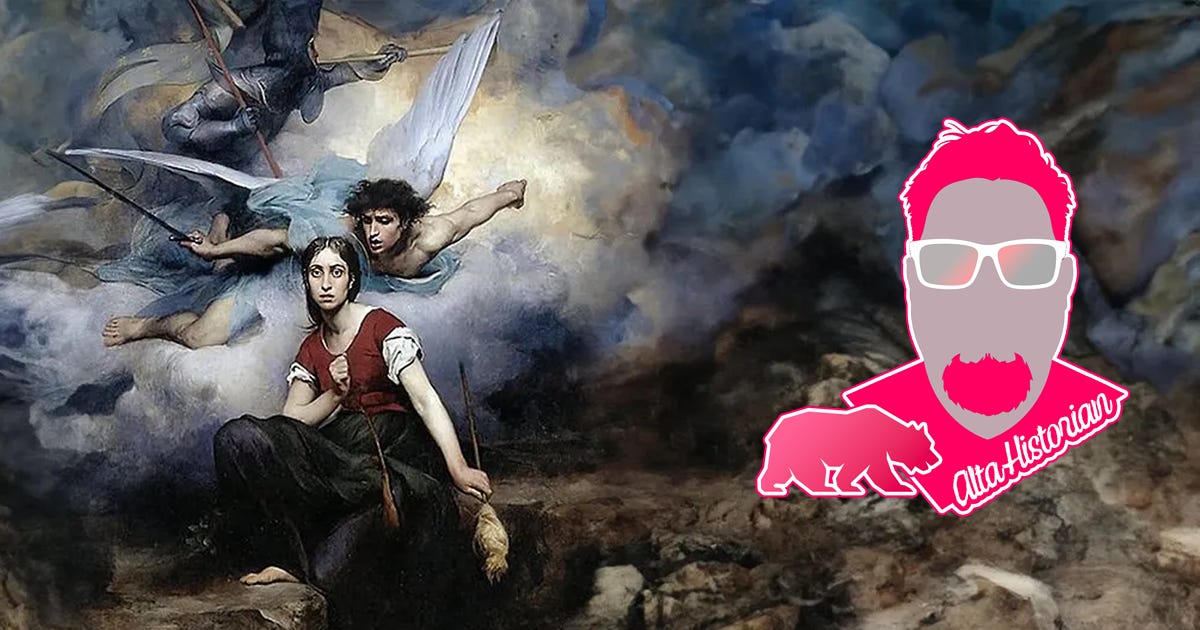
In the war’s later phase, a new and unexpected figure emerged. Joan of Arc, born in 1412, appeared upon the historical stage in 1429, claiming divine guidance in her mission to aid Charles VII of France against the English. Her leadership helped lift the Siege of Orléans that same year and cleared the path for Charles VII’s coronation. Yet her triumph proved brief. Captured by Burgundian allies of England, Joan was placed on trial and executed in 1431, her fate bound inseparably to the political and religious tensions of the war itself.
Taken together, the narrative presents the Hundred Years’ War not simply as a prolonged military rivalry but as a force that magnified the wider crises of the fourteenth century. It strained economies already weakened by famine and plague, unsettled the foundations of feudal society, and stirred social unrest among populations struggling to survive. Within this convergence of war, disease, and environmental hardship, Europe moved gradually toward a new historical threshold. By the time the conflict ended in 1453, the medieval order had begun to give way to something different — a transformation whose outlines were still emerging.
Source
[Colby Introduction]: Joan of Arc is the most phenomenal and attractive personage of the Hundred Years' War on either side. Those whom she led to victory believed that she was inspired of God, and the English, not denying her inspiration, believed that it was of the devil. A full and authentic report of her trial remains, and from it is extracted the passage in which she answers questions relative to her Voices. She maintained that she raised the siege of Orleans in obedience to the divine call, and that all her important acts were prompted by a voice from heaven. Her trial for witchcraft at Rouen was conducted by Peter Cauchon, Bishop of Beauvais, to whom she had been handed over by the English for that purpose. She was little more than nineteen years old at the date of her execution.
We next required and admonished Joan, appearing before us in the said place, to take, under penalty of law, the oath which she had taken the day before; and that she should swear simply and absolutely to tell the truth in answer to what was asked her in the matter concerning which the charge had been brought and which was generally known. To this she answered that she had sworn yesterday and that was enough. Again we required that she should swear; for every one, though he be a prince, when required to take the oath on a point of faith cannot refuse. And she answered again: "I took the oath for you yesterday; that should suffice you quite well. You burden me too much." Finally she swore to tell the truth in whatever related to faith.
Then a distinguished professor of sacred theology, Master John Beaupère, acting by our order and behest, questioned Joan on the points which follow. And first he urged here to answer his questions truly, just as she had sworn to do. Whereupon she replied "You might very well ask me one sort of question which I would answer truly, and another sort which I would not answer." And she added: "If you were well informed about me, you should wish that I were out of your hands. I have done nothing save by revelation."
Next asked about her age when she left home: she said that she did not know. Asked whether in her girlhood she had learned any art: she said yes, that she had learned to sew linen cloth and to knit; and that she did not fear any woman in Rouen when it came to knitting and sewing. She further confessed that, through fear of the Burgundians, she left home and went to the town of Neufchâteau in Lorraine [Colby: seven miles south of Joan's birthplace, Domremy] to live with a woman named La Rousse, where she stayed a fortnight; adding furthermore that when she was at home she was exempt from household work nor went with the sheep and other animals to pasture.
Again asked whether she confessed her sins each year: she answered yes, to her own curé; and when the curé was hindered she with his permission confessed to another priest. Sometimes also, twice or thrice as she believed, she confessed to the friars. And this was in the said town of Neufchâteau. And she had been in the habit of receiving the Eucharist at Easter. Asked whether she had been in the habit of receiving the Sacrament of the Eucharist at any other feasts save Easter: she told her questioner to pass on. She further confessed that when she was thirteen years old she had a voice from God to aid her in self-discipline. And the first time she was greatly afraid. And this voice came about noon in summer in her father's garden, and she had fasted the day before. And she heard the voice on her right hand toward the church, and she seldom heard it without a light. Which light comes from the same side as the voice, but is usually great. And when she came to France she often heard this voice. Asked how she saw the light which she said was there present when it was on one side; to this she answered nothing, but passed to other things. She moreover said that if she were in a grove she distinctly heard voices coming to her. She also said that the voice seemed to her worthy, and she believes that it was sent by God; and after she had heard it three times she knew that it was the voice of an angel. She also said that it always guarded her well, and that she knew it well.
Asked about the teaching which her voice gave her respecting the salvation of her soul, she said that it taught her to govern herself well, to go often to church, and that it said she also must go to France. And Joan added that the questioner would not this time learn from her in what guise the voice had appeared to her. She furthermore confessed that the voice told her twice or thrice a week that she must leave home and go to France; and that her father knew nothing of her departure. She also said that the voice told her to go to France, and that she could no longer remain where she was, and that the voice told her that she should raise the siege of Orleans. She further said that her voice had told here that she should go to Robert de Baudricourt, Captain of the fortress of Vaucouleurs, and he would give her attendants; and she then answered that she was a poor girl who knew not how to ride a horse nor head a campaign. She also said that she went to her uncle and told him that she wished to stay with him for a little while; and she stayed there about eight days; and she then told her uncle that she must go to the fortress of Vaucouleurs; and he conducted her.
She also said that when she came to Vaucouleurs she recognized Robert de Baudricourt, although she had never seen him before; and she recognized him by the aid of her voice, for the voice told her that it was he; and she told Robert that she must go into France. Twice he denied and withstood her, and the third time he took her and gave her attendants; and so it happened even as her voice had said. . . . Moreover she confessed that in leaving Vaucouleurs she put on men's dress, wearing a sword which Robert de Baudricourt had given her and no other arms. Accompanied by a knight, a shield-bearer and four servants, she reached the town of St. Urbain, and there passed a night in the abbey.
She also said that in this journey she passed through the town of Auxerre and there heard mass in the cathedral, and at this time she was often wont to hear her voices. Asked to say by whose advice she put on men's dress, she refused several times to answer. At last she said that she would not laden any man with this; and she several times changed her answer. She also stated that Robert de Baudricourt made those who took her swear that they would convey her well and safely, and Robert on parting with her said: "Go, go, and let whatever good can, come of it."
She also said that she well knew that God loved the Duke of Orleans [Colby: Charles, Duke of Orleans, son of Duke Louis who was murdered in Paris, 23rd Nov., 1407]; and that she had had more revelations about him than about any living man, save him whom she called her king. She said, too, that she was obliged to change her own dress for a man's. She also said that she believed that she had been well advised.
She said that she sent letters to the English before Orleans telling them to raise the siege, just as is set down in many letters which have been read to her in this town of Rouen, save for two or three words in them; for instance, "yield to the Maid" should be "yield to the King." These words also occur there which were not in the original letters, "body for body," and "head of the war."
Joan further said that she went to him whom she called her king [Colby: the Dauphin, the future Charles VII] without hindrance, and when she reached to town of Ste. Catharine de Fierbois she was sent to Chinon, where he whom she called her king was. She reached this place about noon and lodged in an inn; and after dinner she went to him whom she called her king who was in the castle. She also said that when she entered his chamber she knew him from the rest by the revelation of her voice. And she told her king that she wished to go making war against the English.
Asked if when the voice disclosed the king, there was any light in the place: she answered: "Pass on." Asked whether she had seen an angel above her king: she answered: "Spare me, pass on." Still she said that before her king gave her a charge she had many beautiful visions and revelations. Asked how the king regarded the revelations and visions: she answered: "I shall not tell you this. This is not to be answered you; but send to the king himself and he will tell you." Joan also said that the voice promised her that as soon as she came to her king he would receive her. She said that they on their part well knew that the voice came to her from God, and that they had seen and known her voice, stating that she was confident of it. She further said that her king and several others had heard and seen voices coming to her; and Charles de Bourbon with two or three others were present.
She moreover said that there was no day when she did not hear this voice, and that she stood in great need of it. She said that she had never asked from her voice any other final reward except the salvation of her soul. She further confessed that the voice told her to remain at the town of St. Denis in France; and she had wished to remain there; but they had led her out against the will of this master. Nevertheless if she had not been wounded she would not have retired; and she was wounded in the trenches before Paris after she had gone there from St. Denis; but in five days she was healed. She confessed that she had directed an attack, called in French a skirmish, before Paris. And when she was questioned whether that were a feast day: she answered to that to the best of her belief it was. Asked if she approved of this: she answered: "Pass on."
After these things had been thus transacted, because it seemed quite enough for one day, we, the said bishop, postponed the trial until Saturday next following, at eight o'clock in the morning.

Bibliography | Notes
Charles W. Colby, ed., Selections from the Sources of English History, B.C. 55 - A.D. 1832 (London: Longmans, Green, 1920), pp. 113-117.
Kordas, Ann, Ryan J. Lynch, Brooke Nelson, and Julie Tatlock. World History, Volume 1: to 1500. Houston: OpenStax, Rice University, 2023.
.