

To Alta California: Coronado, Alarcón, Díaz
California History

Cortés was not the only European explorer to make inroads into North America. One particularly significant incursion was undertaken by Francisco Vázquez de Coronado, who sought the fabled Seven Cities of Cibola. Coronado’s expedition, which took place in 1541, traversed present-day Arizona, New Mexico, Texas, Oklahoma, and Kansas. Hernando de Alarcón accompanied Coronado’s expedition, sailing up the Gulf of California with supplies and utilizing small boats to ascend the Colorado River as far as Yuma, Arizona.
At this location, Alarcón recorded observations of the indigenous inhabitants, whom he described as tall and robust, armed with bows, arrows, and clubs. The Natives were likely intrigued by Alarcón’s physical appearance, characterized by pale skin, a full beard, and a balding head. The Native people were also noted to have painted their faces with coal and worn masks and deer-skin helmets adorned with decorative feathers.
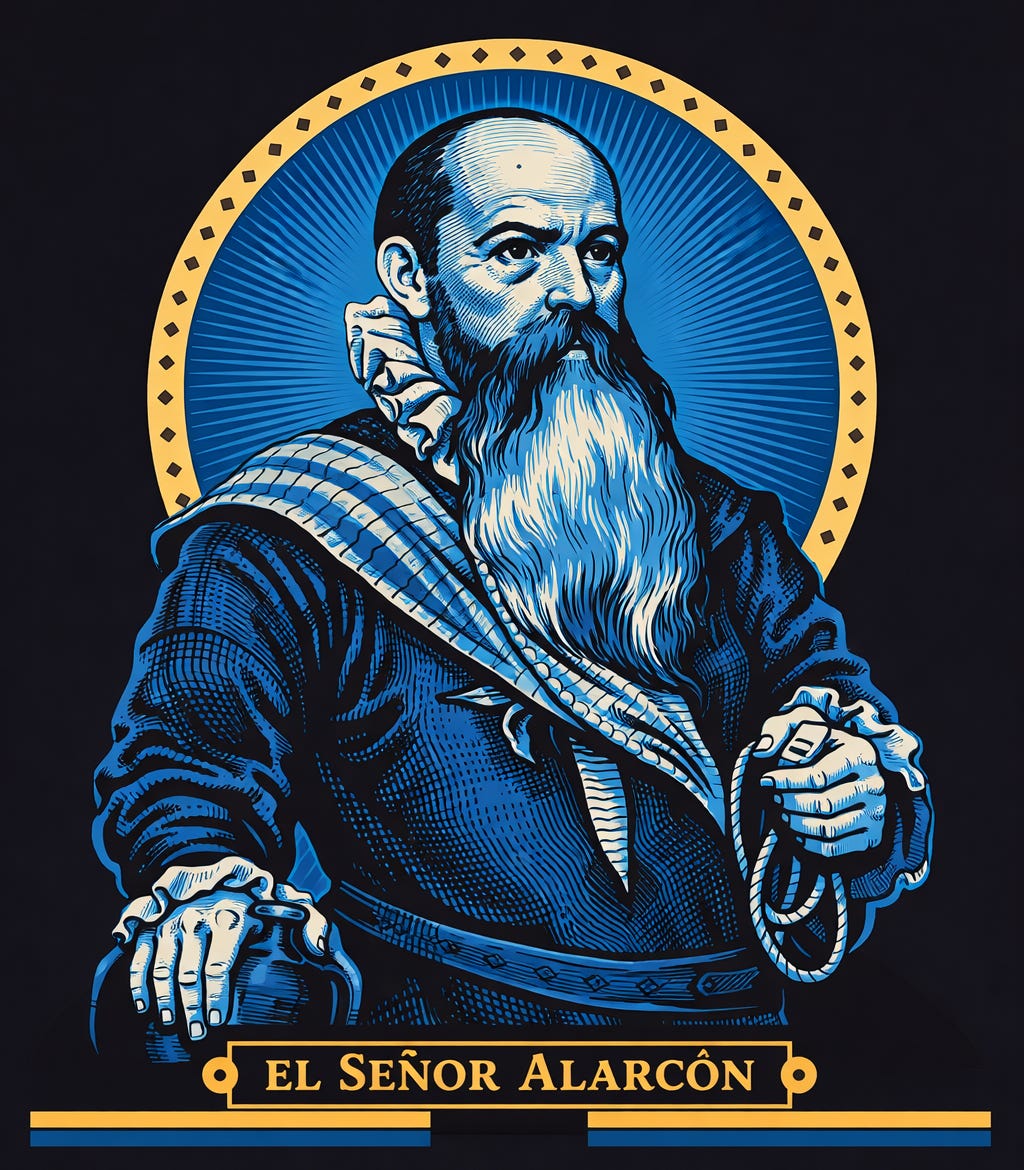
Hernando de Alarcón instructed his men to remain calm as they encountered a group of curious Native warriors, and to refrain from making any sudden movements. The number of Natives slowly grew to approximately 250 individuals, but Alarcón’s strategy of maintaining a peaceful demeanor proved effective. The situation de-escalated to the point where the Europeans could approach, and one of Alarcón’s interpreters attempted to engage in dialogue, though mutual comprehension was not achieved. The failure to communicate led the Native warriors to renew their cries of alarm.
Alarcón maintained contact with the Native warriors, and the Native warriors eventually engaged in a reciprocal exchange of Native shells for European beads, marking the initiation of interactions between the groups. The following morning, Alarcón observed the Native people gathering on the riverbanks at sunrise, which led to another exchange of gifts, including corn cakes, furs, and beads. Alarcón sought to demonstrate strength by having a fifer and a drummer accompany him during his arrivals and departures.
Alarcón would keenly and strategically come to demonstrate an understanding of the Native people’s worship of the Sun, and presented himself as a messenger from their God, claiming to be the “Son of the Sun” — Alarcón noted, “I gave them to understand that I came from the sun, at which they were amazed”— a move that astonished the Natives. Alarcón’s actions were not without guilt, evidenced by his distribution of small wooden and paper crosses to the Natives he encountered, most certainly influenced by his desire not to lose favor with his own God in his return to Colima, Mexico — a journey where he was certain to (and did) encounter conflict with Native tribes. Alarcón would leave a monument visible to any crossing his historic path: a wooden cross with letters buried at the base outlining his progress during the expedition. Despite this, the Viceroy was so dissatisfied with Alarcón’s conduct during the expedition that he was compelled to retire and passed away shortly after that.
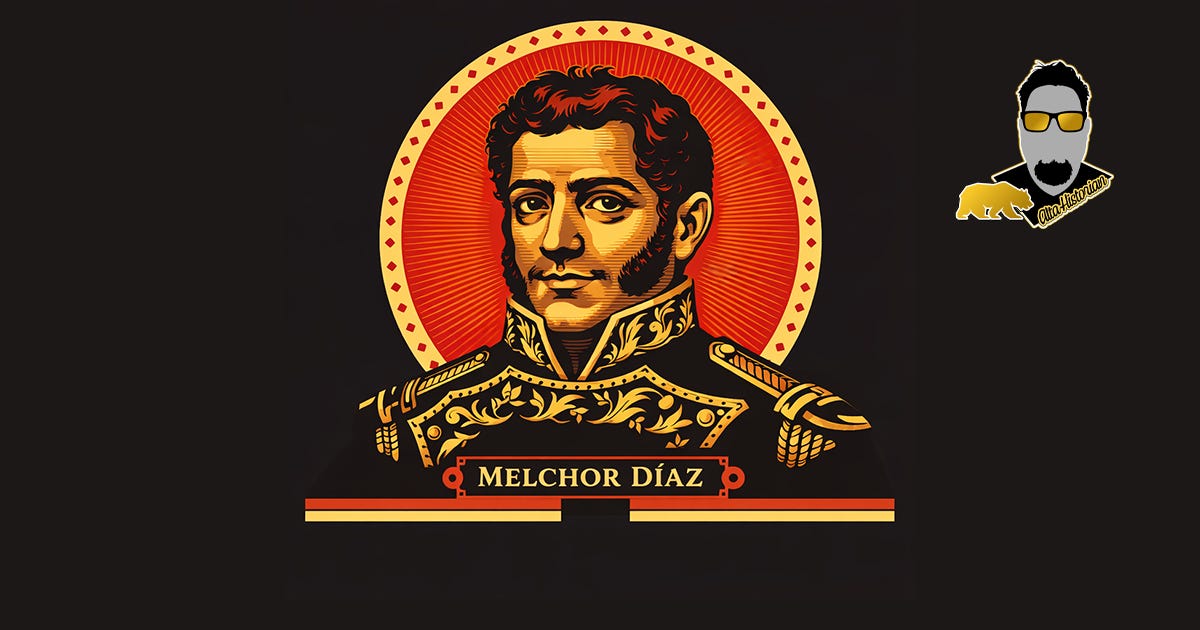
The story of Melchior Díaz, another member of the Coronado Expedition, is a significant and noteworthy tale among the early accounts of California. Coronado assigned Díaz to locate Alarcón’s supply train along a previously agreed-upon latitude line. Díaz and his group, which included 25 soldiers, 80 horses, Native allies, African men (likely slaves), and a greyhound dog, traveled beyond the Sonora River and Corazones along the Camino del Diablo. They crossed the Colorado River, which Díaz named the Río del Tizon (River of Firebrands) after observing Native people traveling at night with firebrands. The challenging, mountainous terrain damaged the sheep's hooves, requiring the abandonment of some of the animals.
Many African slaves, Native allies, and horses also succumbed to exhaustion. Díaz discovered the wooden cross and letters left by Alarcón and, upon realizing that he and the remaining members of his crew would be unable to meet up with Alarcón, set out to disprove Ulloa’s assertion that California was a peninsula. However, the Native people who had previously been friendly towards Alarcón now sought to kill Díaz, forcing him to flee to avoid their hostility.
One of the most notable aspects of Díaz’s journey was the later account written by Spanish narrator Captain Pedro Monge, who claimed that the Díaz patrol encountered “men with kinky hair.” What is the significance of this encounter? It was less about their hair and more about the metal from slag they were working from an unknown location in the interior, which they claimed was steel. The mysterious men communicated to Díaz’s men using signs indicating they were from Asia. They also claimed that they arrived in an exotic vessel with “carved golden pelicans as figureheads.” However, this story was never written down by Díaz, as aggressive Natives pursued him and his men.
Later in their expedition, Díaz and his men stumbled upon the mud volcanoes and hot springs near what is thought to be the Cocopa Mountains in Baja, California. After briefly escaping pursuit, Díaz’s greyhound chased one of the few remaining sheep that served as their food supply. In the chase of his dog, Díaz accidentally impaled himself through the leg with his lance when his horse was unable to stop on the slippery lava rock. Despite this injury, Díaz continued fleeing from Native pursuit and survived for another 28 days before his death.
Díaz passed away on January 18, 1541. Díaz was buried somewhere between the Sonoran Valley and the Gulf of California, taking his secrets to the grave. Some historians have even speculated that Díaz’s death was not an accident but rather a result of mutiny by his men, a theory supported by the fact that it took his men a long time to report his death. Díaz’s story seems more probable, and mutiny was a primary concern and persistent problem for leading conquistadors.
But what of the story of men with “kinky hair”? Were there individuals of Asian descent, potentially of Chinese origin, who were present in North America during Spanish exploration? The reputation of the conquistadors supports this conjecture, as demonstrated by LiDAR technology used to verify the existence of the large Amazonian cities described by Gonzalo Pizarro and Francisco de Orellana during their exploration of the Amazon River. Additionally, accounts of Coronado’s Expedition make similarly unbelievable claims in Kansas, including a large population in the region and the “lost city of Etzanoa, home to perhaps 20,000 people between 1450 and 1700,” making it one of the biggest cities in North America pre-American Revolution. Coronado’s claim has been proven true, now how should we view Díaz’s expeditionary claims?

Bibliography | Notes
Bean, Walton, and James J. Rawls. California: An Interpretive History. New York: McGraw-Hill, 1973.
Burney, James. A Chronological History of the Discoveries in the South Sea or Pacific Ocean. London: Luke Hansard Printing, 1803.
Calloway, Colin G. One Vast Winter Count: The Native West Before Lewis and Clark. Lincoln: University of Nebraska Press, 2003.
Cutter, Donald C. “Plans for the Occupation of Upper California: A New Look at the ‘Dark Age’ from 1602 to 1769.” The Journal of San Diego History 24, no. 1 (Winter 1978).
https://sandiegohistory.org/journal/1978/january/plans/.
Gutiérrez, Ramón A., and Richard J. Orsi. Contested Eden: California Before the Gold Rush. Berkeley: University of California Press, 1998.
Heizer, Robert F. “Francis Drake and the California Indians, 1579.” University of California Publications in American Archaeology and Ethnology 42, no. 3 (March 20, 1947): 251–302.
Kelly, David. “Archaeologists Explore a Rural Field in Kansas, and a Lost City Emerges.” Los Angeles Times, August 19, 2018.
https://www.latimes.com/nation/la-na-kansas-lost-city-20180819-htmlstory.html.
Kessell, John L. Spain in the Southwest: A Narrative History of Colonial New Mexico, Arizona, Texas, and California. Norman: University of Oklahoma Press, 2013.
Montalvo, Garcí Ordóñez de. Las Sergas de Esplandián. First published 1510.
Moriarty, James R. “The Discovery & Earliest Explorations of Baja California.” San Diego Historical Society Quarterly 11, no. 1 (January 1965).
https://sandiegohistory.org/journal/1965/january/discovery-2/.
National Park Service. “Juan Rodriguez Cabrillo.” Last modified October 4, 2022.
https://www.nps.gov/cabr/learn/historyculture/juan-rodriguez-cabrillo.htm.
Niemann, Greg. Baja Legends: The Historic Characters, Events, and Locations That Put Baja California on the Map. San Diego: Sunbelt Publications, 2002.
Oswalt, Robert L., ed. Kashaya Texts. Berkeley: University of California Press, 1964.
Pourade, Richard F. The History of San Diego, Volume I: The Explorers. San Diego: San Diego Historical Society, 1960. https://sandiegohistory.org/archives/books/explorers/.
Sanchez, Joseph P. “From the Philippines to the California Coast in 1595: The Last Voyage of San Agustín Under Sebastián Rodríguez Cermeño.” Colonial Latin American Historical Review 10, no. 2 (Spring 2001): 221–254.
San Diego History Center. “Sebastián Vizcaíno.” Accessed n.d.
https://sandiegohistory.org/archives/biographysubject/vizcaino/.