

Virginia in Year 1572
Murder of Spanish Missionaries in Virginia

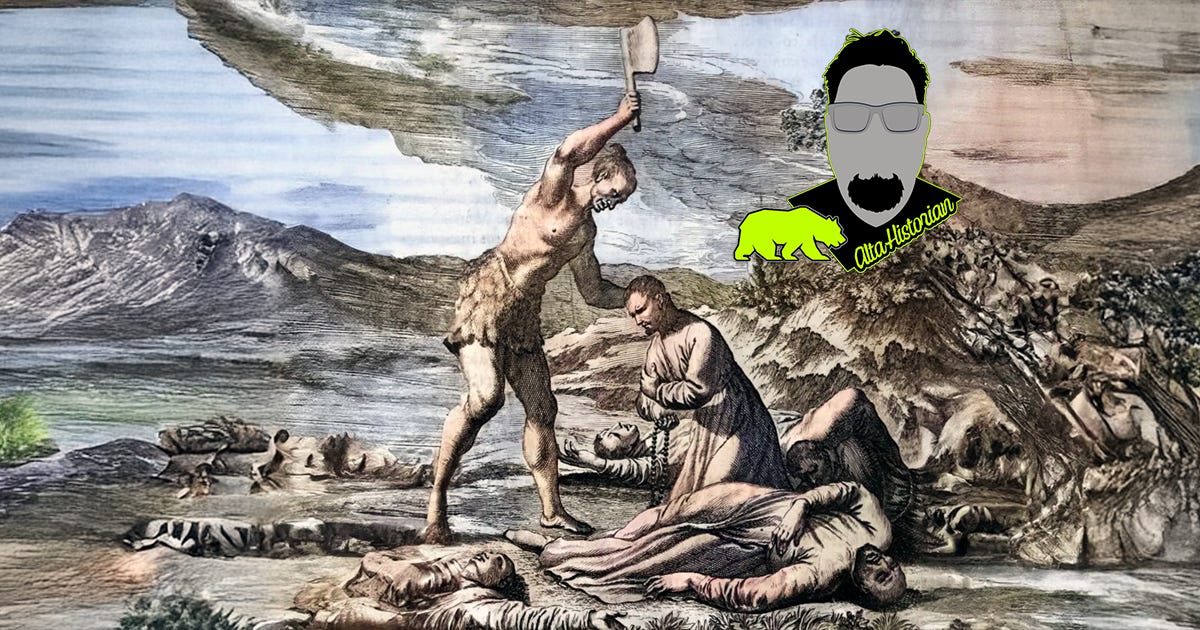
It began, as so many stories of the New World began, with a ship fixed against the horizon. The year was 1561. The vessel was a Spanish caravel named Santa Catalina. She moved deliberately through the waters where the James River met the Chesapeake Bay, her sails swollen with Atlantic wind, her hull cutting into a coastline at once verdant and unknown. Along her rails, Spanish eyes searched the shore for signs of life. They found them — two men, Virginia Indians, standing at the water’s edge. What followed would become a matter of centuries-long debate.
Were the men taken by force, seized in the manner of empire? Or did they board willingly, drawn by curiosity, by diplomacy, by the promise — or illusion — of another world beyond their own? The record does not settle the matter. What is certain is departure. One of the two was named Paquiquineo, a member of the Algonquian people. For him, the horizon did not close — it widened.
The Santa Catalina carried him across the Atlantic to Spain — to Seville, that imperial artery through which the lifeblood of American silver and gold flowed into Europe. The Empire was not abstract there. It pressed itself into the air and stone: in the churches thick with incense and conquest, in the treasure houses heavy with American wealth, in the very architecture of ambition. From Seville, Paquiquineo journeyed south to Cádiz. In May of 1562, he boarded another vessel, this one bound westward under the command of Pedro Menéndez de Avilés, toward Spain’s American dominions. The destination, as he understood it, was home.
By August 10, the ship reached San Juan de Ulúa in New Spain — present-day Mexico. Yet history, which so often turns on illness as much as on war, intervened. In Mexico City, the high-altitude capital, Paquiquineo fell gravely ill. Vulnerability became opportunity. The Spaniards baptized him, renaming him Don Luís de Velasco, after the viceroy of New Spain. In that act, a second identity was imposed upon the first. From that moment forward, he carried two names — one born of the Chesapeake, the other of imperial design.
Recovery did not resolve his fate. Instead, it opened debate. The Dominican friar Pedro de la Feria urged King Philip II to keep Don Luís in Mexico, to use him as an instrument in a missionary venture directed toward his homeland. Across the ocean, Pedro Menéndez de Avilés, now governor of La Florida, perceived a different possibility — one aligned with Spain’s strategic ambition to secure a permanent foothold in the Chesapeake. King Philip II consented. The empire chose.
In August 1566, Don Luís sailed aboard La Trinidad. Storms scattered their intentions and drove the expedition far south of its aim. They made landfall instead in what is now North Carolina, formally claimed the territory for Spain, and turned back. On October 23, La Trinidad limped into Cádiz. The Chesapeake remained beyond their grasp — deferred, but not forgotten.
Four years passed. Spain tried again.
In the summer of 1570, Jesuit priests prepared a new mission, this time with Don Luís as guide and intermediary. Father Juan Baptista de Segura led them — a man persuaded that peaceful conversion, not military conquest, would secure Christian triumph among the peoples of the Chesapeake. They sailed from Havana and arrived on September 10, establishing a small settlement near the mouth of the bay. They named it Ajacán (a phonetic rendering of an Algonquian name for the area).
At first, confidence prevailed. The priests dispatched letters home, describing their progress. They built their mission. They trusted providence.
But nearly a decade had passed since Don Luís had left his homeland. He had traversed oceans, absorbed languages, and seen the machinery of empire from within. He returned not as a simple emissary of Spain but as a man altered by experience — one who understood both worlds and belonged fully to neither. Soon, he left the Jesuits, disappearing into the forests to rejoin his people.
On February 4, 1571, the fragile experiment collapsed. Three Jesuits traveled to Don Luís’s village to confer with him. They did not return. Shortly thereafter, Don Luís and his warriors descended upon the mission. The assault was swift and final. Father Juan Baptista de Segura — the advocate of peaceful evangelization — was killed. In the end, all but one were slain: a young altar boy named Alonso de Olmos.
When Spanish resupply ships arrived in the spring, they encountered silence where a mission had stood. A skirmish followed. Two Indians were taken prisoner. They confirmed what the ruins already implied — the mission had been destroyed, and the attack had been ordered by Don Luís himself.
Spain answered as empires answer — with force. In August 1572, a military expedition entered the James River, seeking Alonso de Olmos and vengeance upon Don Luís.
Several Indians were hanged. Alonso de Olmos was found alive. Don Luís was not. He had vanished into the forests and into uncertainty. Whether he fled deeper inland, assumed another name, or reabsorbed himself into the life of his people, no Spaniard saw him again.
Yet disappearance does not extinguish memory. Among later Jamestown settlers, whispers circulated about an aging warrior who spoke of Spain — a figure known as Opechancanough. Could the two men have been the same? Some historians have entertained the possibility, though certainty remains elusive.
Spanish chroniclers, in need of moral clarity, cast Don Luís as a traitor — a man who had accepted baptism and benefaction only to repay them in blood. The language of betrayal suited imperial narrative. It restored moral order to imperial loss. But the truth may have been less theatrical and more complex. One modern scholar has proposed that Don Luís’s actions reflected not treachery but a response to the violation of indigenous systems of gift exchange. The Spanish misunderstood the economy of obligation and reciprocity that structured these communities. In that reading, Don Luís — Paquiquineo — was not destroying order but restoring it, correcting imbalance in the only terms his world recognized.

Bibliography | Notes
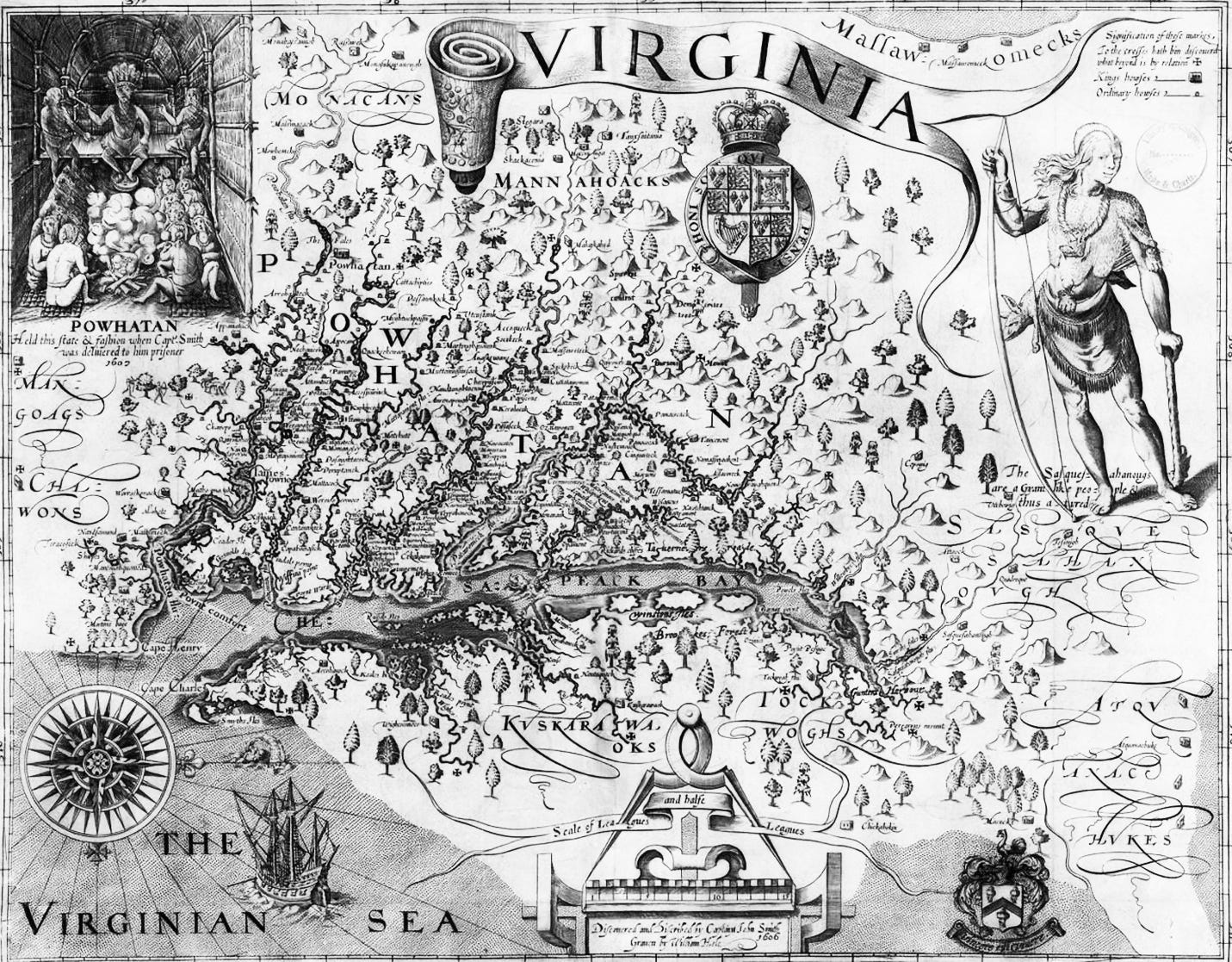
Smith, John. Virginia. London, 1624. Map. Library of Congress, Geography and Map Division, Washington, D.C. Accessed February 7, 2025.
Wolfe, Brendan. “Don Luís de Velasco / Paquiquineo (fl. 1561–1571),” Encyclopedia Virginia.