


John C. Frémont and Andrés Pico were born thousands of miles apart, yet the distance between them was merely geographic. Both were military men and successful politicians — highly ranked officers, risk-takers, and hard drinkers with something to prove. Each carried ambition, honor, and a lived faith in republicanism into a frontier where sovereignty was unsettled — and power was always provisional.
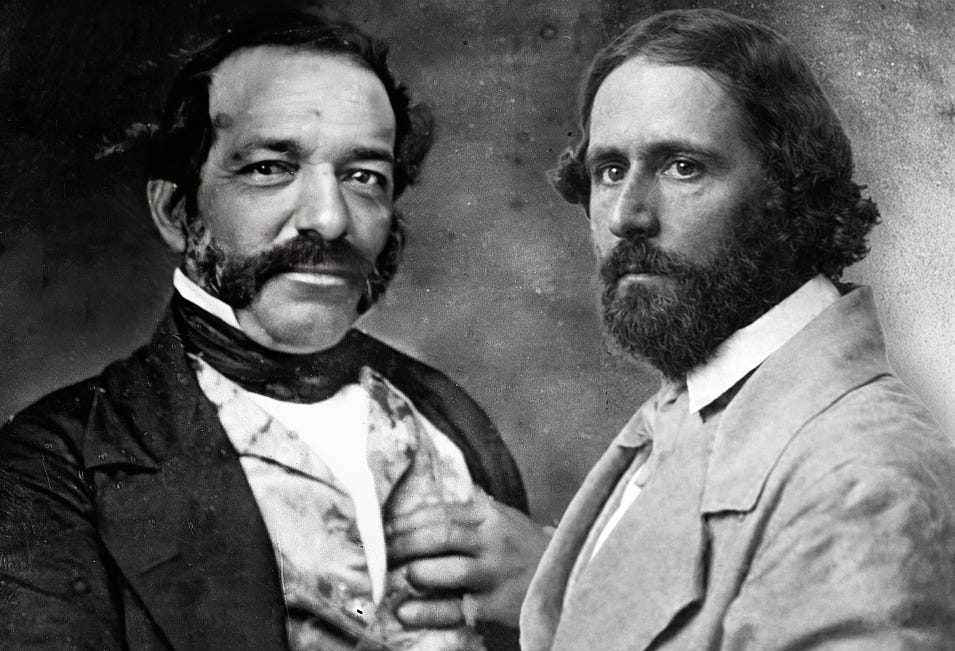
They met as adversaries during the Mexican War and emerged from it as friends, despite cultural, linguistic, and national detachments that should have kept them apart. Republicanism was not an abstraction for either man — it was a tool, a language, and a source of legitimacy they both learned to wield. That shared republican grammar did not arise independently. Though republican and liberal ideas long predated both Frémont and General Pico, the ideological bridge between them ran through a rooted figure — Joel Roberts Poinsett — and through an institutional vehicle that carried his influence into Mexican political life: York Rite Freemasonry.
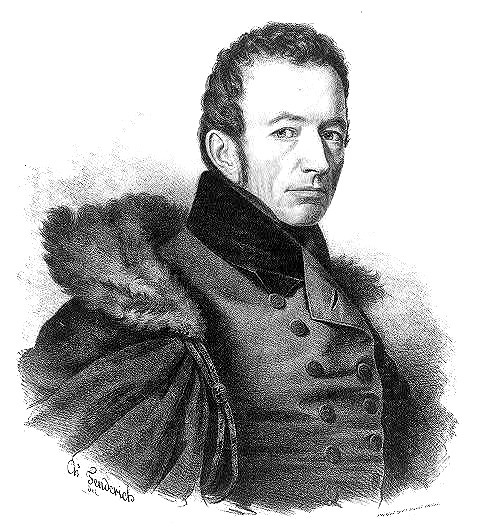
Republican ideas already circulated among the second and third generations living in Mexico’s northern provinces, but Yorkino Freemasonry supplied organization, cohesion, and momentum. It did more than disseminate ideology — it forged bonds of family, friendship, and political culture across borders that were themselves still being imagined, named, and enforced. This was the shared, peculiar, and little-known connection between Frémont and General Pico: Joel Roberts Poinsett, American republican thinker, politician, world traveler, and one of the first United States envoys to Mexico following its independence.
Poinsett’s career exposes a defining contradiction of the early American republic — a nation that imagined itself a yeoman commonwealth while depending on relentless territorial expansion. During his diplomatic service in Chile in the 1810s and Mexico in the 1820s, Poinsett sought to distinguish the United States from European empires by promoting republican culture and institutions abroad. Yet this effort was inseparable from an increasingly aggressive pursuit of American national advantage, revealing how the language of liberty and civic virtue could function not as a restraint on power, but as one of its most effective instruments.
By the time President James Monroe announced what became known as the Monroe Doctrine (1823), Poinsett had already spent years in South America and Mexico advancing the argument that the United States represented a fundamentally different kind of power — not an empire of conquest, but a republic with a moral stake in the political independence of the hemisphere. That argument appears almost verbatim in the doctrine’s core logic: Europe must not recolonize the Americas, and the United States would assume a special guardianship over the hemisphere’s political future.
Poinsett was appointed U.S. Minister to Mexico in 1825 and arrived in Mexico City at a moment of extraordinary volatility. Mexico was newly independent, politically fragile, and ideologically fluid — and Poinsett stepped directly into that instability, backing federalists (the Yorkinos) against centralists (the Escoceses). Though the Yorkino framework was described as “federalist,” Poinsett stood firmly within the Jefferson–Madison–Atlantic republican tradition. His influence aligned seamlessly with the hemispheric vision crystallizing in the Monroe Doctrine: republican sovereignty defended by American moral authority.
This four-year window (1825–1829) proved decisive. It was during this period that Poinsett’s republican influence took root and radiated outward, eventually reaching Alta California through men like José María de Echeandía. Poinsett dispatched far more than diplomacy into Mexico City. Over the course of two decades, he slowly infiltrated Mexican political culture with what the Escoceses decried as “radical” republicanism. One of history’s quieter ironies is that the poisonous poinsettia was introduced into the United States by Poinsett himself in 1825, the work of an amateur botanist.


Frémont encountered Poinsett at just twenty years old. Poinsett lifted him from obscurity, perhaps recognizing in Frémont a familiar vigor and relentless will. The two men bonded first through botany, but their deeper connection was ideological. Frémont and Poinsett shared the republican tradition — federal in structure, national in loyalty, suspicious of oligarchy and inherited power. In many ways, Poinsett rescued Frémont from the scrap heap. Frémont never forgot it. The experience hardened his ambition and sharpened his sense of purpose. Backed by the ideological confidence of a like-minded nation, Frémont positioned himself as a vessel of American expansion — the Pathfinder, with “the carriage of a soldier and the face of a poet… he was unlike other men — something bigger and finer, made for some great purpose.”
Poinsett’s influence on Andrés Pico and the Californios was more indirect, but arguably more consequential. His republican seed, carried through York Rite Freemasonry into the political soil of Mexico City, would shape a century of turbulence. The Yorkino became not merely a faction, but a political identity. With the appointment of Yorkino José María de Echeandía as territorial governor of Alta California, Poinsett’s ideological legacy began restructuring how the next generation of Californios understood authority, citizenship, and their place on the Mexican frontier.
Alta California was ripe for republican thinking. Young Californios watched their fathers labor beneath church authority and government-imposed inferiority enforced through the Sistema de Castas. Missionaries and merchants controlled the economy, while Californio families survived on poor wages and rationed food. The men who protected the land — land taken through blood — remained penniless from cradle to grave, without a single acre to call their own.
Through Poinsett, via Echeandía, Yorkino ideology emboldened Californios to seize the body politic, to shift definitions of worth away from caste, and to refashion themselves in a republican image. In the name of federalist rights, backed by the Mexican Constitution of 1824, they rose in rebellion and took what they believed was theirs under the cloak of liberty. As Yorkinos, they justified the seizure of labor, land, and trade as a birthright — a Manifest Destiny of their own.
Few historians have fully reckoned with this ideological throughline between American republicanism and Alta California. Yorkino thought was not merely rebellious — it was structural. It bridged the Mexican and American periods of California’s history. Republicanism fostered a hyper-political environment, Californio insurgency, and a durable political identity.
Californios like General Andrés Pico understood the machinery of the United States Constitution through their Yorkino foundation. That fluency enabled General Pico’s negotiated citizenship under the Treaty of Cahuenga. Without it, Californios would have exited the Mexican War on the margins — and with it, the idea of a “Mexican-American” — their history swallowed by the advancing tide of Manifest Destiny in 1847. Even with citizenship secured on paper, the Mexican-American Californio emerged forged — and scarred — in the fire of the American landscape.

Bibliography | Notes
Anna, Timothy E. Forging Mexico, 1821–1835. Lincoln: University of Nebraska Press, 1998.
Cathey, H. Marc. “A Blooming Industry: Poinsettias Lead the Way in Sales.” Agricultural Research 40, no. 12 (January 1992): 5.
Fischer, Ernest G. Robert Potter: Founder of the Texas Navy. Gretna, LA: Pelican Publishing Company, 1976.
Freed, Feather Craword. Joel Poinsett and the Paradox of Imperial Republicanism: Chile, Mexico, and the Cherokee Nation, 1810–1841. Master’s thesis, University of Oregon, 2008.
Rolle, Andrew F. John Charles Frémont: Character as Destiny. Norman: University of Oklahoma Press, 1999.
Salomon, Carlos Manuel. Pío Pico: The Last Governor of Mexican California. Norman: University of Oklahoma Press, 2010.